Reflections on the Perspectives of Nature Conference

Notes on the importance of collaboration and connection.

Last Friday on the 1st of December I was standing on a stage at the Creative Centre at York St John University in the heart of York and something magical happened. As I read aloud my observations of the natural world on stage, a musical score began playing, bringing my words to life. I was participating in an event called Perspectives of Nature, a collaboration between myself, Ewan East (Currently studying for a PhD in Music Composition) and Alice Baxter (Currently studying for a Practice based PhD Fine Art and Contemporary Poetry) .

Me and Ewan opening the Perspectives of Nature event.

Last February I and a group of nature writers (from the Naturewrights collective) produced some written observations of the natural world for composer Ewan East. Ewan was was looking for inspiration to compose a collection of music that drew on the natural world and took the listener on a journey of their own creation, travelling through the music to different areas of the country to experience observations of nature.
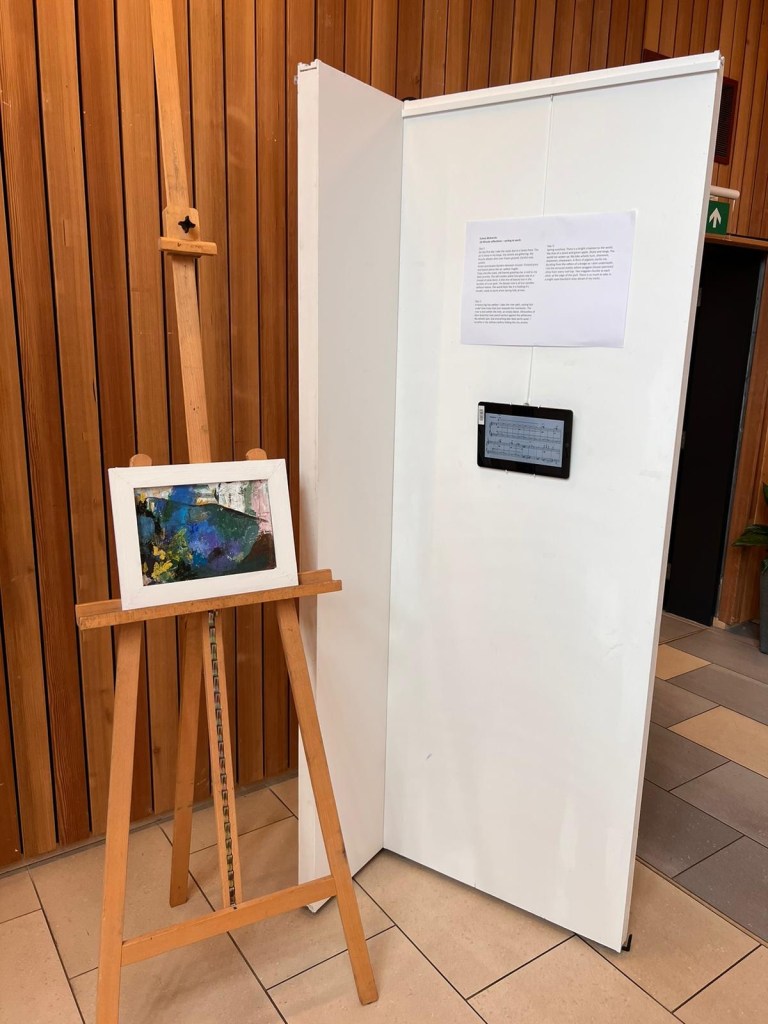
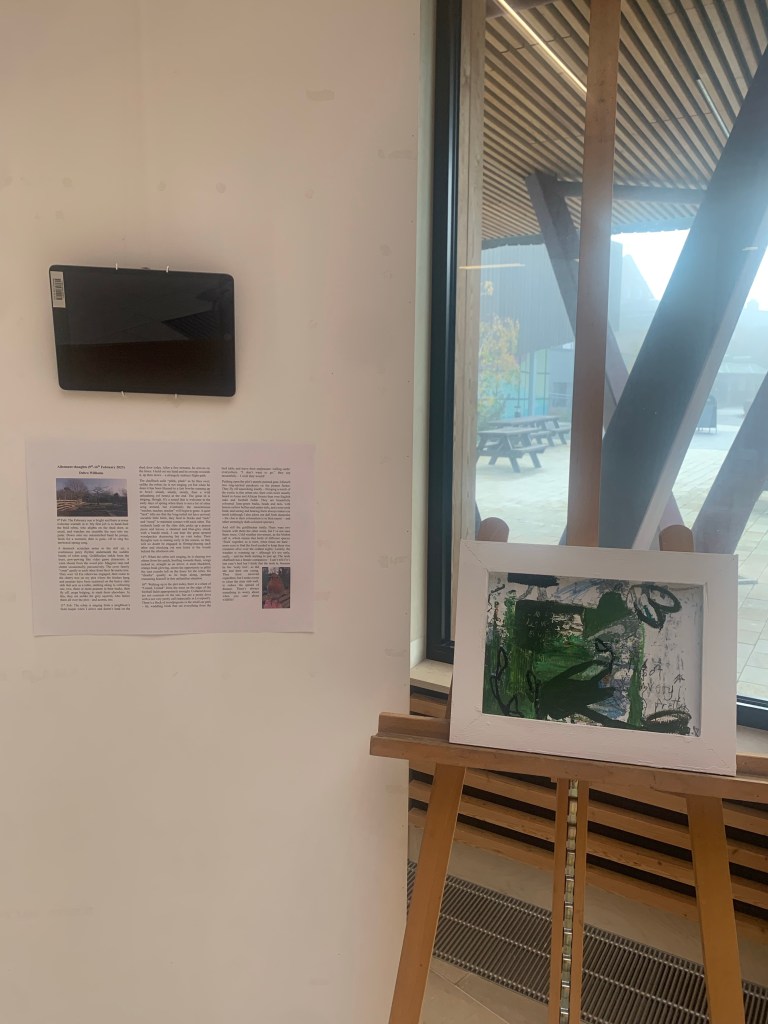
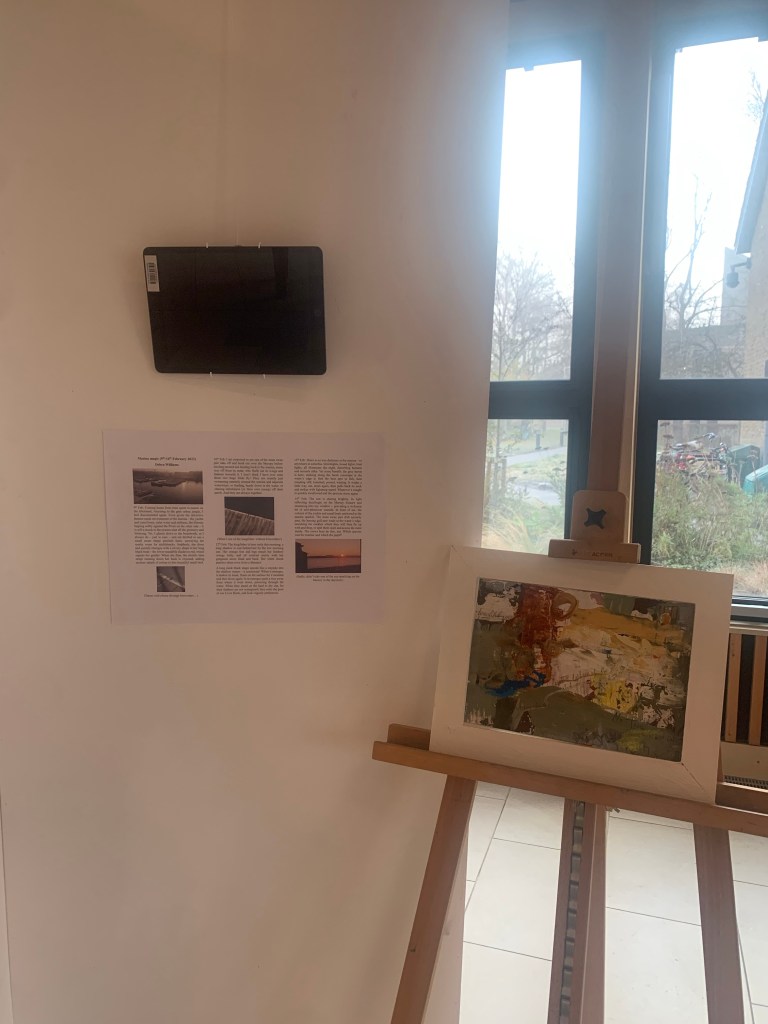
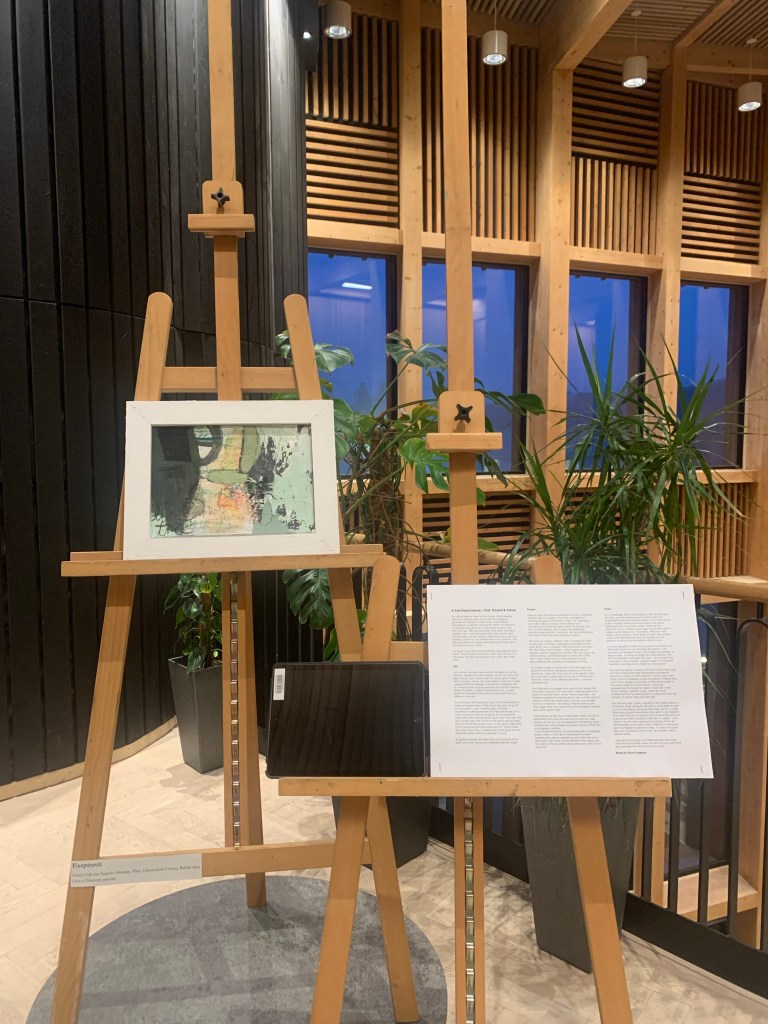
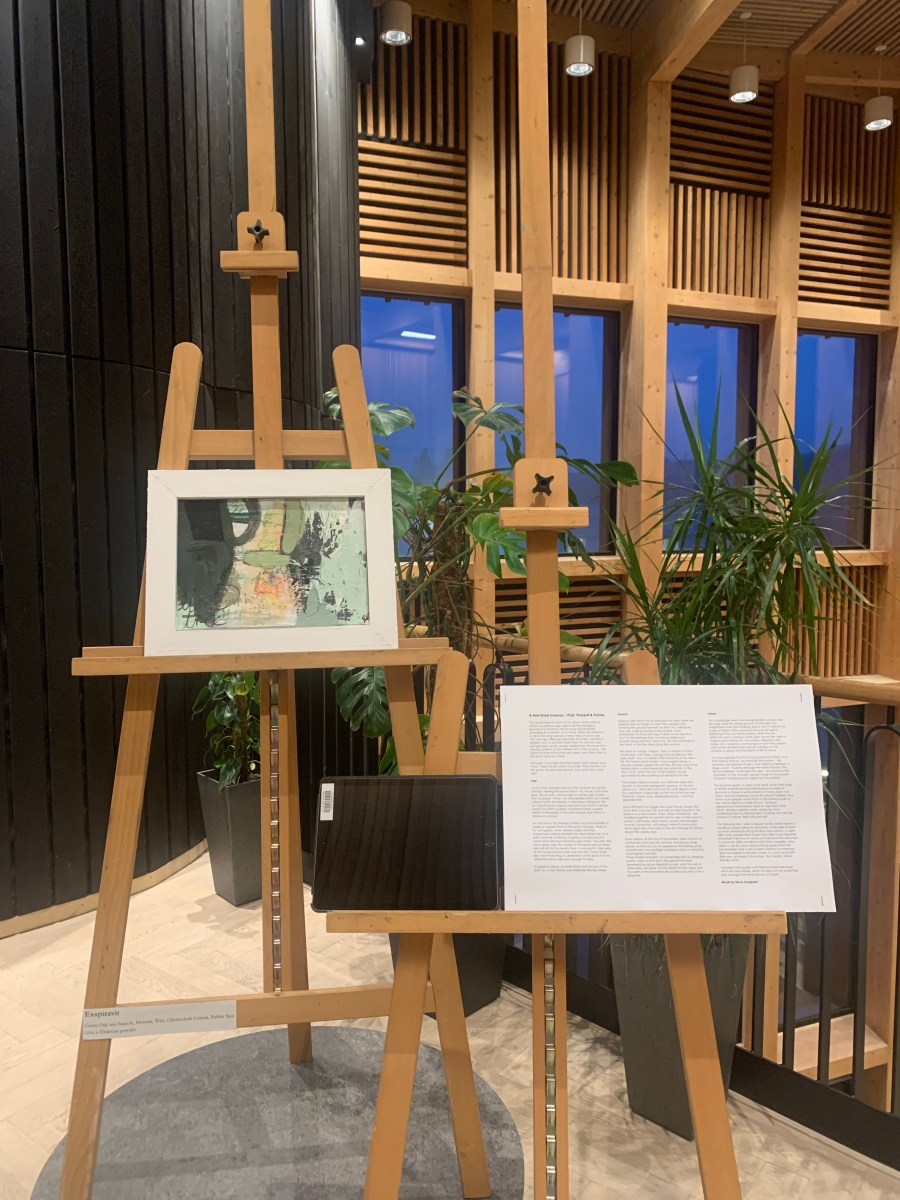
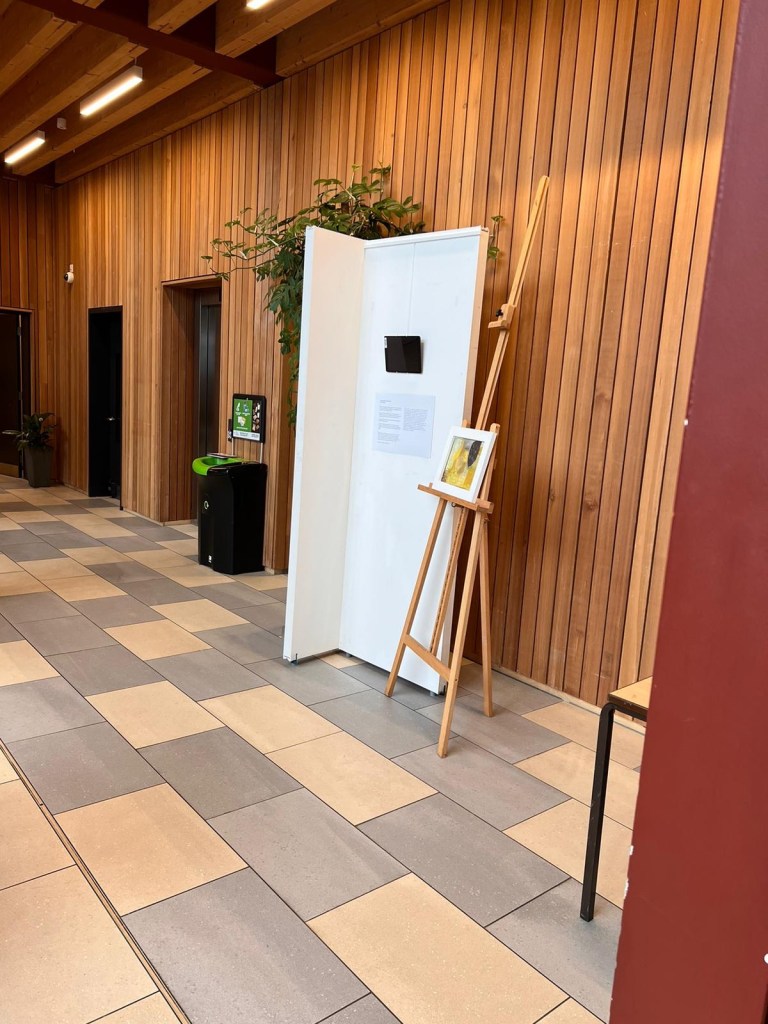
My piece of writing and Alice’s art. The iPads played the musical score for each piece of work giving the viewer a rounded experience of the moment.

Ewan took our words and translated them into a musical score called Journey. He then asked artist Alice Baxter to take the music and words and translate them into Art. The end result was a beautiful and 3D collection of music, words and art that recreated the awe of interactions with the natural world and that we showcased at the event Perspectives of Nature, which was beautifully curated by Simon Ellwood. Journey showcased encounters that in our busy modern lives we so often fail to notice. The music touched my soul, a visceral moment of awe and spirit brought to life.
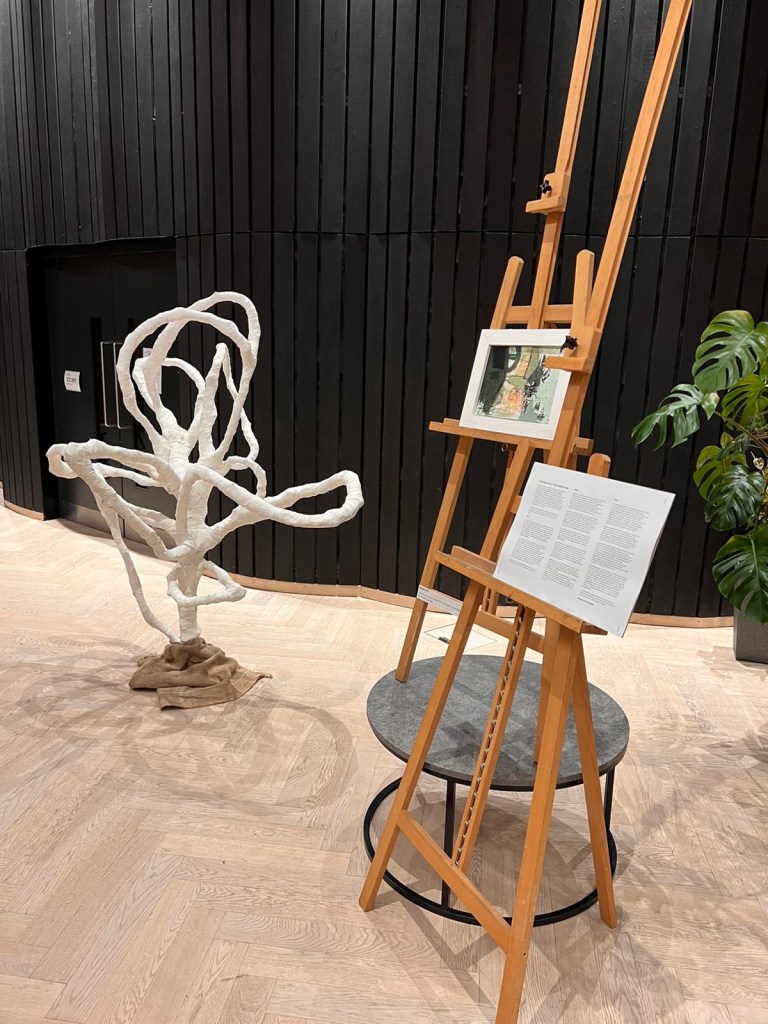
Alice’s art touched my heart, abstract patterns and colours, patterns etched onto board with paint and mixed media that transported me back into nature.

I started teaching Nature writing during 2015 after I left a very stressful role in the NHS. I offered my services on a voluntary basis to teach ecotherapy nature writing to support people struggling with mental health illness to make a deeper connection to the natural world as part of a recovery journey. When I started running the classes I had a love of both writing and nature but had no formal training in either. However, through the months and years of running the class I found that using writing as a tool to connect people to the landscape transformed both mine and my class participants connections with the natural world, and opened up how much nature can play a huge part in our lives – even living in a city.
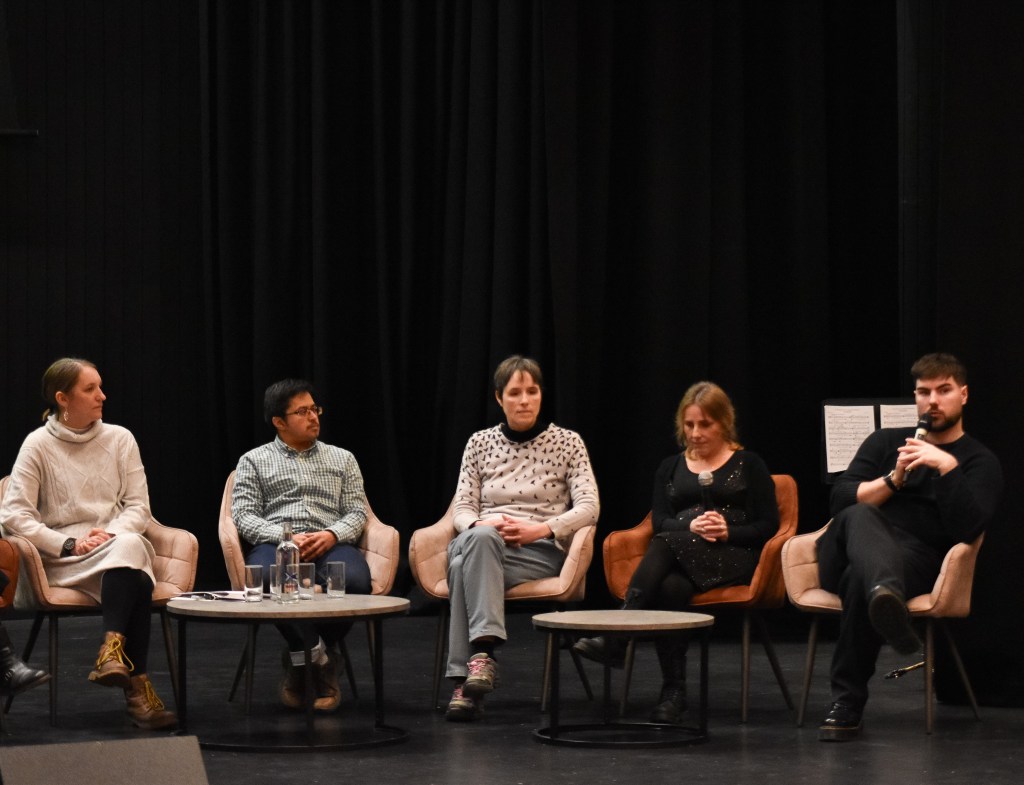
The panel of Naturewrights writers and Ewan East

Leading the ecotherapy class and using narrative to explore themes of nature, such as the beauty of nature in the dark winter months started to open up a world of exploration. Through storytelling and creation I became curious about so many natural wonders and my sense of awe and connection increased. That journey led me to complete an MA in creative writing and now a practice led PhD. My PhD is looking at the desperate need for humanity and compassion to be at the forefront of mental health care. I am writing a novel that takes the reader through a mental health experience, demonstrating that good mental health is about spirit and connection, so much of which is stripped out by clinical processes and environments. Somewhere we have lost who we are, and we have lost our roots. Continued engagement with nature writing and collaboration has been key to keeping my own mental health in balance whilst studying this theme.

Something beautiful happened at the end of the conference. A friend who has been struggling with depression sat with me in the audience to watch Michael Malay read from his amazing book Late Light. My friend said to me at the end of the performance that being part of the event had been like being part of a community for the day, and that he felt there was something that he could take away in terms of connecting to nature independently, but still feeling connected to others as part of that relationship.
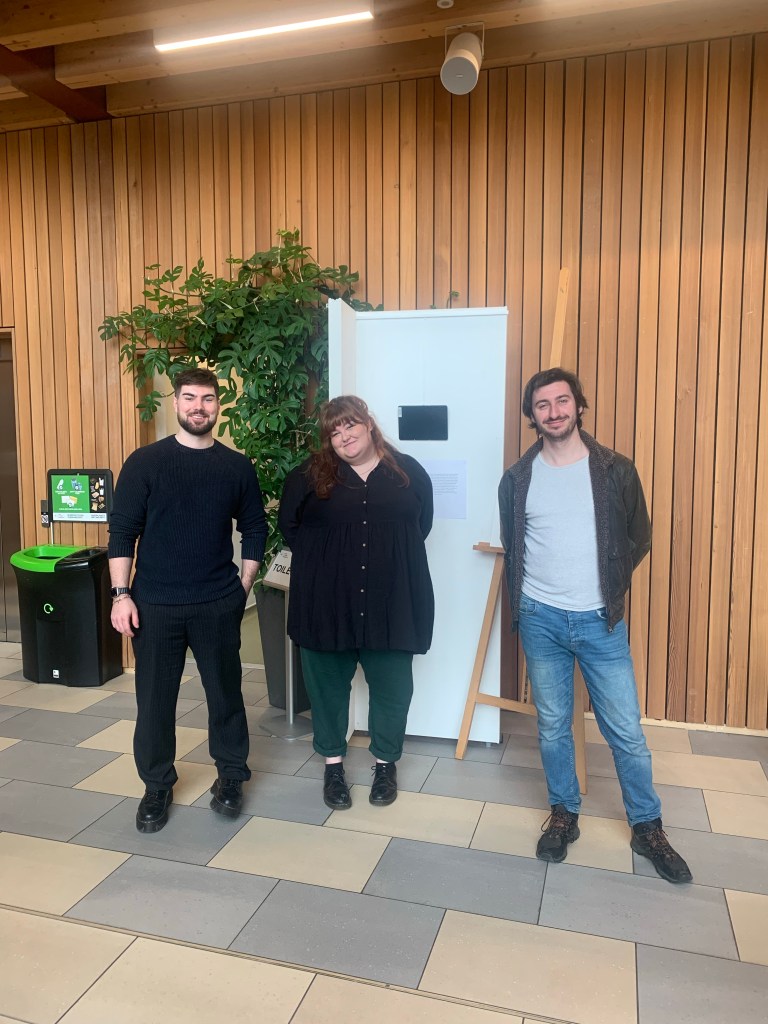
Ewan, Alice and Simon.

Nature is providing me with the opportunity to re-engage with others in a way that celebrates awe and wonder of the world. I wonder if more people engaged in this way how differently we would spend our time and consume things in this world? 

One of the most wonderful things that has happened time and again since I have been teaching nature writing is that I have been approached by students who say:

‘It’s not the same now Emma, I have to introduce my family and friends to walk like you, they just want to rush by everything.’

What they mean by that is that by spending time noticing, they have formed a connection and a curiosity that wasn’t there before.

I engage with nature as an act of non-violence and stillness, a spiritual experience which can be as simple as a nod to the trees that line the river on the cycle path to work, or the moment of noticing two blue tits hopping from branch to branch in the honeysuckle that is growing from a pot in my city back yard. I spend time writing and creating art out in nature, a meditation on my place in the world and my connection to the landscape. I recently read a fascinating blog post by Ellen Vrana in The Examined Life called Stillness As Art in Times of Chaos: Toni Morrison on Art as Human Necessity. 

Vrana has drawn on the writing of Toni Morrison and others to investigate how we react to chaos and trauma. Varma discusses the way that Toni Morrison has described an answer to violence and chaos as stillness, the act of creating meaning and understanding. This was echoed during our conference by Anita Sethi who read form her book I Belong Here: A Journey Along the Backbone of Britain in which Anita describes how a racial attack on a train led her to walk The Pennine Way as a way of reconnecting with the landscape in which she belongs and as a stance against the violence that she experienced against her.

Collaborating as artists gave me the sense of bringing together and communicating something essential. A translation of the natural world into something beautiful and engaging that hopefully was an awakening or a heightening of that sense of awe and connection for others that attended the event.

Today I teach freelance nature writing for the Field Studies Council alongside leading a project called Converge which aims to support people to re-access education to reclaim identity and human spirit.
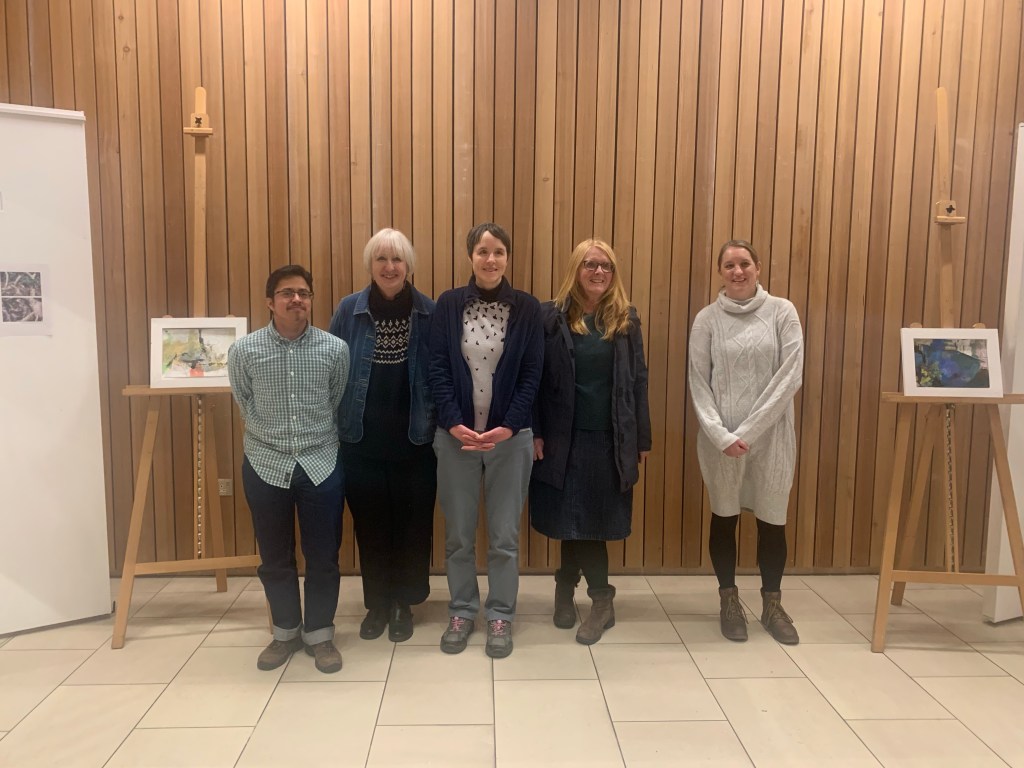
Some of the Naturewrights collective. (Left to right: Gurnam, Nicky, Berenice, Sarah and me)

Continued connection with nature is essential to me as part of keeping me well and grounded, if you are interested in engaging with the work that we produced you can experience Journey here. Last Friday was the first time that I had met with the writers from the Naturewrights collective in person, we have been working together online after the group originally formed from one of my first cohorts of students with the FSC. The Perspectives of Nature conference has opened up my eyes to how much more can be done to re-connect people with the natural world through the arts and humanities, and to the raw and beautiful power of creativity in giving a voice to so many and to our experiences in the world.

Thank you to Ewan for making this event possible and creating such inspirational music to accompany our pieces of writing and to Alice for the beautiful art work and to Simon for helping us to curate the event and to make it happen.

With huge thanks also to:

William Davidson for chairing the Perspectives of Nature Panel.
Claire Hind for chairing the contributions.
Michael Malay for his brilliant end note speech and reading.
Anita Sethi for sharing her work.
Max Stephens - Performing Seasons

Contributors:
Dr Carolyn Drever
Berenice Tregenna
Amy Ertena
Stephen Jackson

Last but not least - my wonderful Naturewrights contributors:
Nicky Hutchison
Christine Surridge
Berenice Tregenna
Sarah Drysdale
Dr Carolyn Drever
Kate Ruth
Debra Williams
Steven Songhurst
and Gurnam Bubber for joining us to read Steven’s work.
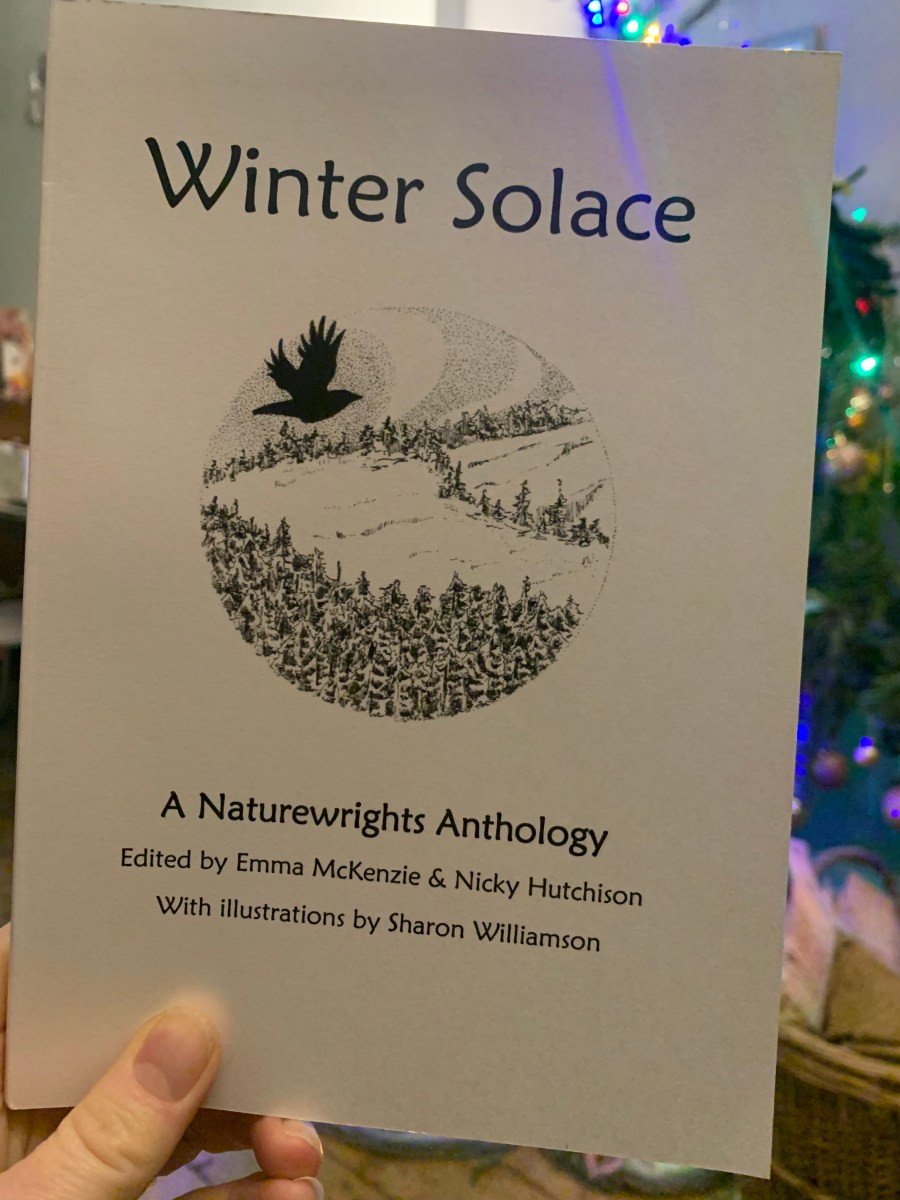
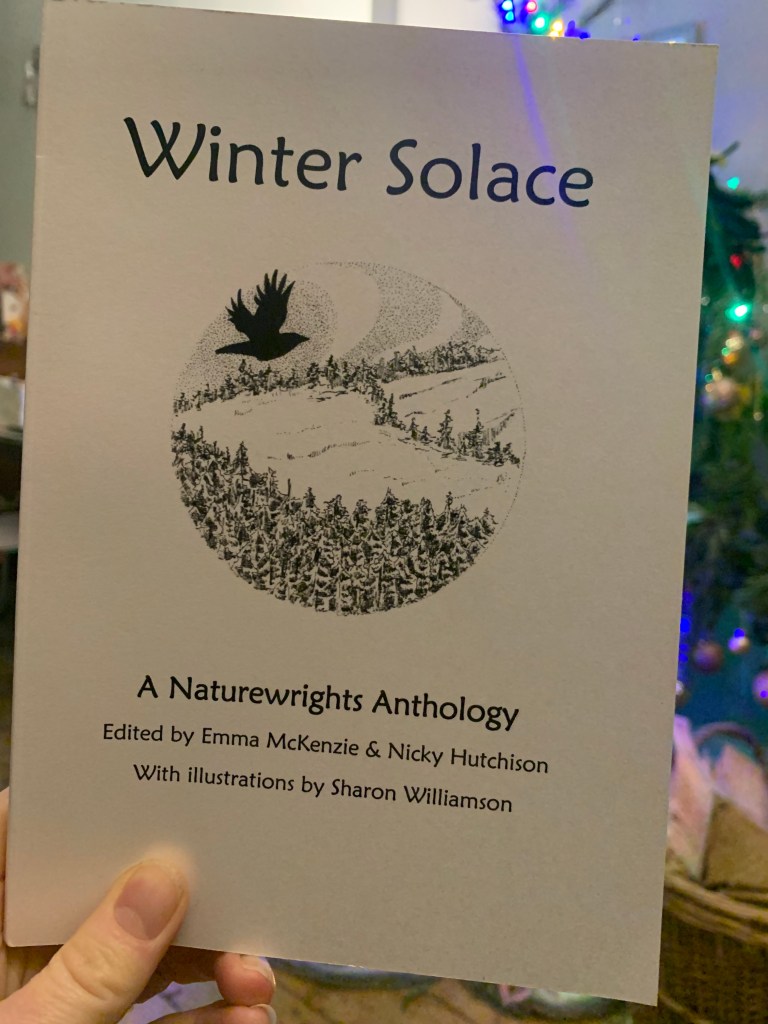
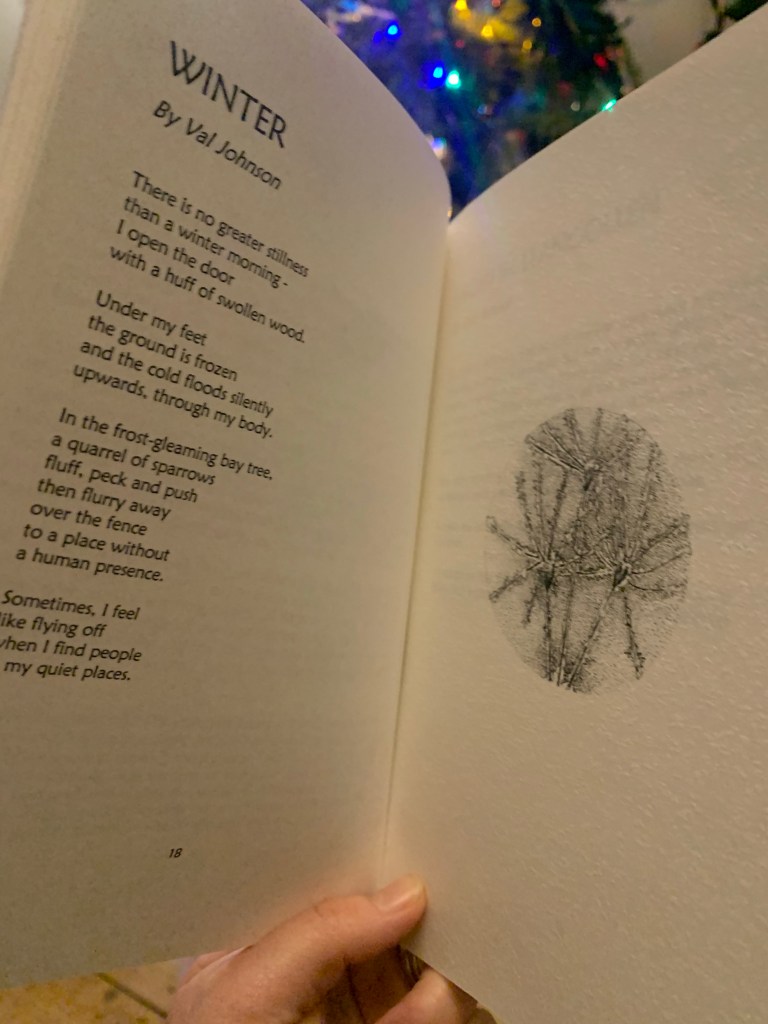
Winter Solace

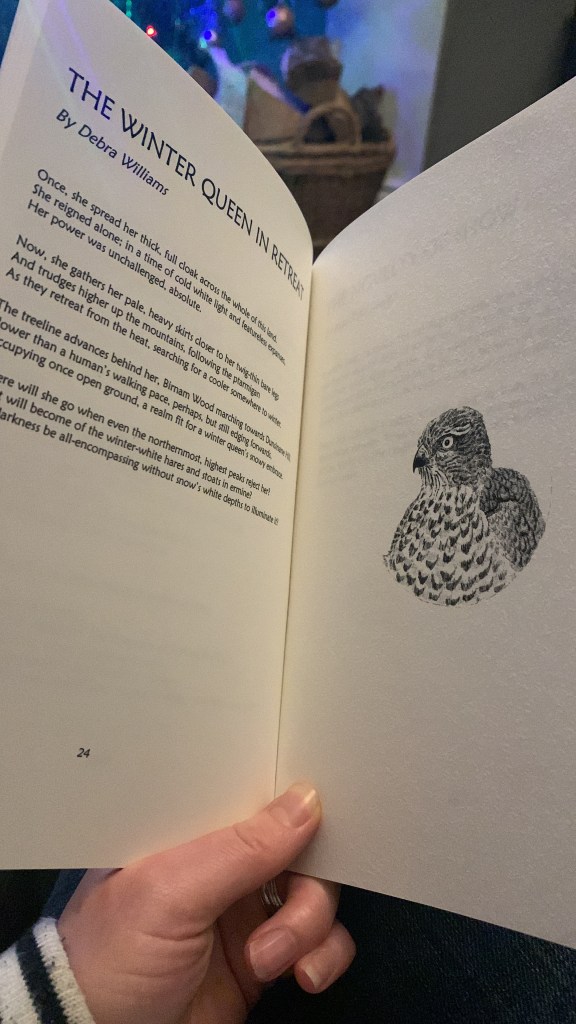
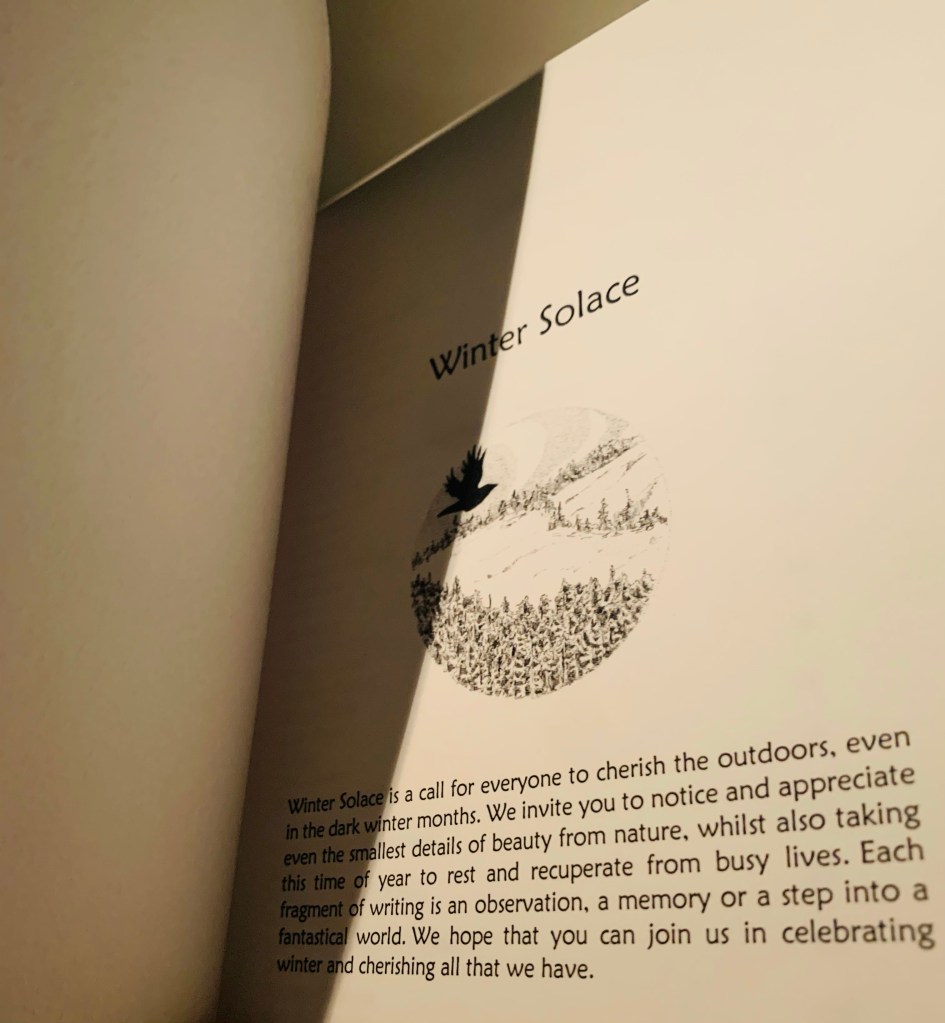
A New Year collection of writing celebrating the winter months.

Is anyone struggling with the cold damp weather? It’s so easy to feel dragged down by it and to trudge around with our heads down focusing only on placing one foot after the other; however if we stop to notice and observe – there are so many beautiful things around us in the natural world to notice.

This was the theme for a workshop that I ran in October with fellow writer Nicky Hutchison. Nicky creates and produces her own books which are beautifully hand-bound. We invited all workshop participants to submit their work for inclusion in a Winter Solace themed book as part of the NatureWrights online community involvement.

We are very proud of the result. Nicky will be making more of these publications to go on sale to the public soon!

Our resident artist Sharon Williamson did a really beautiful job of creating the art for the books. We are excited to run more workshops like this in the future 🙂

Happy New Year Everyone!!

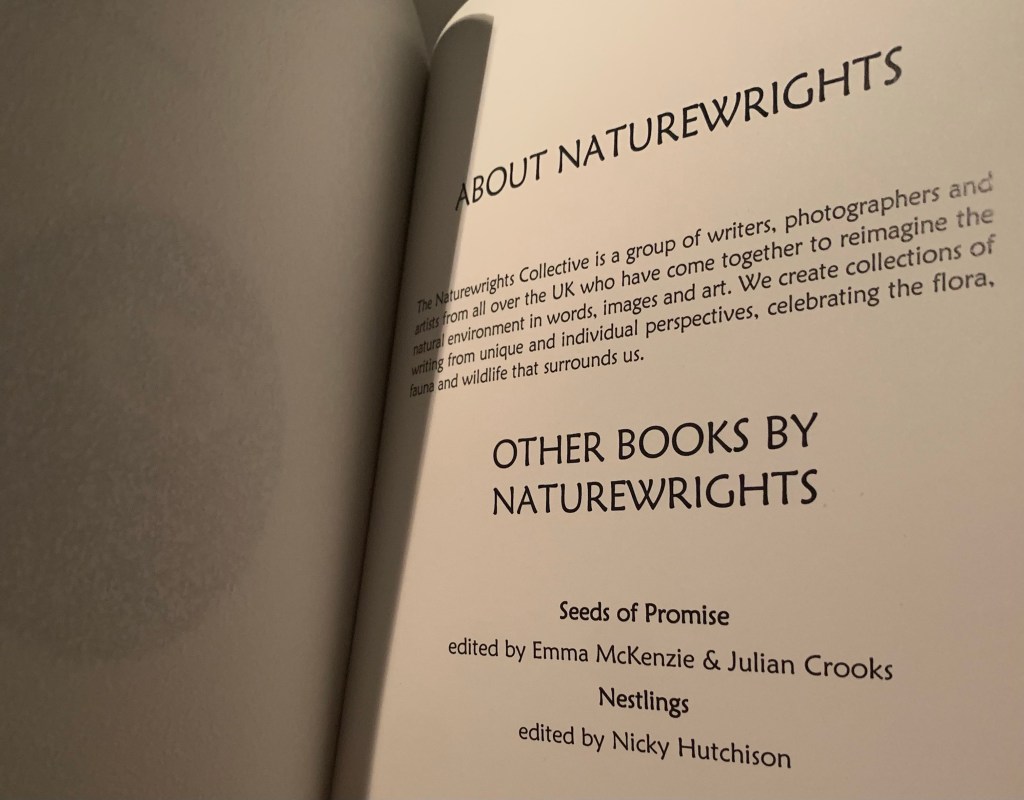
Book Launch! Seeds of Promise … a new adventure…

A year and a half ago, one of my students from the Field Studies Council courses approached me to see if I was interested in making an anthology of nature writing.

We hilariously thought it would take 3 – 6 months to complete! Hats off to all the publishers and editors out there …. we finally made it a year and a half later. I am so proud of the end result, it took a lot longer than we had planned because we were fitting it in around work and other commitments. We also approached publishers but ultimately decided to publish it ourselves so that all profits can go to environmental charities.

It was a huge learning journey, one I am so glad to have made. The icing on the cake is the beautiful illustrations by talented artist and writer Sharon Williamson.

You can find Seeds of Promise on Amazon, I promise it will take you on a journey of natural world discovery and intrigue. I also hope it will be a great point of inspiration to anyone looking at getting into nature writing. I’ve included a few pages at the back of the book specifically on getting started.

I hope you enjoy!

The art of ‘Showing not Telling’ in Creative Writing.

The Art of Showing, not Telling, in Creative Writing

I’ve recently been teaching a new term of Exploring Nature Writing for the Field Studies Council (https://www.field-studies-council.org/?s=explore+nature+writing ).The aim of the course is to support participants to explore nature writing, as well as honing their skills as writers. My students asked for some more info on the technique of ‘Showing not Telling’, so I thought I would include it here, as it might be useful to others.

So – what is ‘showing not telling’ in writing, and how can we practice this technique?

Have you ever read a novel, that you just can’t put down and you feel like you are living in the world of the story when you are reading, and you a desperate to find out what happens next? You have probably experienced writing that focuses on ‘showing rather than telling’.

An engaging piece of writing stays one step ahead of the reader. The reader is an active participant in building imagery and piecing together the story as they read. This makes the journey far more interesting and intriguing.

When we simply ‘tell’ a reader what is happening, we are giving them the story on a plate, with no work necessary. ‘Telling’ something is getting straight to the point, in a factual, matter of fact way.

Here is a brief example of telling versus showing:

Telling:

This week I encountered a wild deer when I was exploring woodland along the coast of Fife.

Showing:

As I made my way along the track I left the sound of the waves behind me and climbed steadily through lines of silver birch and sycamore trees. The undergrowth snagged at my ankles and the breeze dropped as we left the open shoreline. Celandine flowers shone like a blanket of stars in the dim light. The shrill cry of a wren called out from a blanket of ivy that wove its way around the roots of an ash tree and covered the whole trunk in a carpet of green.

Stopping to breathe for a moment, I noticed something flicker with movement from the corner of my eye. There, ahead of me, a deer, as still as a statue, ears pricked, wide eyed, staring straight at me. It leapt into action, gone, as fast as it had entered my line of sight. I blinked, a second later and I would have missed it.

In this brief example, you will notice in the ‘showing’ section that I did not mention specifically that I had been walking along the coast. I indicated this with the ‘sound of the waves’. Instead of saying ‘I walked through woodland’ I tried to give the feeling of the woodland, showing that it was a broadleaf wood by naming the trees and the foliage and creatively painting the scene in the readers imagination ‘celandine flowers shone like a blanket of stars in the dim light’. I used details such as the wren singing to bring the woodland to life through the senses.

I tried to recreate the fast encounter with the deer by using short sharp descriptions, punctuated with commas which built the suspense and action.

I didn’t mention that I was in Scotland, but if I had been building this into the story, I could have shown the reader this through other means, perhaps talking about an encounter with a person and building in local dialect or showing the reader through the types of buildings or a mention of the history of the area.

Personally, I think there is a balance between showing and telling. As writers we need to find the sweet point between not dragging the description out so far that the reader becomes bored, but also not just telling everything so that there is nothing left for the reader to find out. I once saw an interview with Sarah Hall, discussing her brilliant book The Wolf Border. Sarah explained that she had completed extensive research into wolves as part of writing the book. One of the hardest parts of completing the story was deciding that she had to leave out a lot of the interesting information about wolves that she had discovered. Although it was fascinating for Sarah, she appreciated that an extreme level of detail about wolves wasn’t relevant to the story as a whole and would risk losing a reader’s interest.

Here are some top tips for ‘Showing not Telling’.

  1. Use the sensory world to bring your writing to life:

If you are struggling to show rather than tell, imagine that you are on the end of the phone describing something to someone who can’t be right there with you. Use your senses (sight, sound, smell, taste and touch) to accurately bring the scene to life. You are painting an image with words, so that your listener, or reader can also accurately see the scene in their minds eye and feel the world that they are in. Small details can show the reader a lot, such as the flowers in my example – which demonstrated what type of woodland I was walking in.

2. Be specific in your choice of descriptive words.

As Mary Oliver mentions in her book ‘A Poetry Handbook’, there is a difference between a ‘stone and a rock’. The word ‘stone’ sounds round and smooth, it draws on the vowel sounds of ‘o’ and ‘e’, whereas a ‘rock’ ends with the consonants ‘ck’ which give a hard, sharp sound. Rock. It sounds jagged. The words you use will paint a picture in your readers mind, being careful you can create very accurate imagery. Again, simplicity is key, use adjectives sparingly, too many will risk becoming overbearing for your reader.

3. Write then edit.

Don’t get hung up on getting it right the first time. The most important thing is to get words and ideas down on paper. You can go back and edit later. When you have completed a first draft of your work, read it back to yourself out loud. This may sound strange, but speaking the words help us to find snags and tripping points in the flow of the writing. They can also make us realise where we have skimmed over something by ‘telling’ rather than ‘showing’.

4. Test out your work on an audience.

If you can, find a few friends, or even better – a local writing group, who are willing to read and comment on your work. I would recommend finding others who are interested in writing too. You don’t need to give thousands of words, a few hundred to a maximum of a 1000 will do (no more than a couple of sides of A4). This will be plenty to demonstrate tone and voice and to gain valuable feedback on how your writing is received.

5. Read, read, read.

The best way to learn more about ‘showing rather than telling’ is to read a lot. We can learn so much from other authors. Read as widely as you can. We can identify which work really speaks to us, as well as what doesn’t work for us. Having a go at writing in the style of different authors can also help us to understand technique in just the same way many art schools ask budding artists to practice in the styles of the great masters. This doesn’t mean we are going to plagiarise their work, or copy them in our final pieces, but it can help us to explore and understand the craft of writing in closer detail.

For anyone interested in finding out more – I have found the following books useful:

  • A Poetry Handbook by Mary Oliver (A dive into figurative language and the construction of poetry. I found this book a little heavy at first, but took my time, making notes as I went along and have found it to be one of the most useful books that I have read in considering language and sounds in constructing imagery.)
  • On Writing by Stephen King (I think this book is a must for every budding writer. Part memoir, part creative writing course book I really liked that Stephen King gives examples of exactly how he edits his work and also his long journey into writing. This book is a great starting point.)
  • The Creative Writing Course Book, Eds – Julia Bell and Paul Magrs (I just got this book out of the university library, each chapter has a contribution from a different author examining different aspects of writing. There is some excellent advice on ‘training the eye’ in observation and detail.)

On a final note – writing doesn’t have to be with the aim of publishing. It can also be done for the simple act of observing more closely, or for our own enjoyment, don’t get caught up in comparison with others, write for a love of language first. Everything else will follow.

And just for fun ….here is a pic of my lovely dachshund!