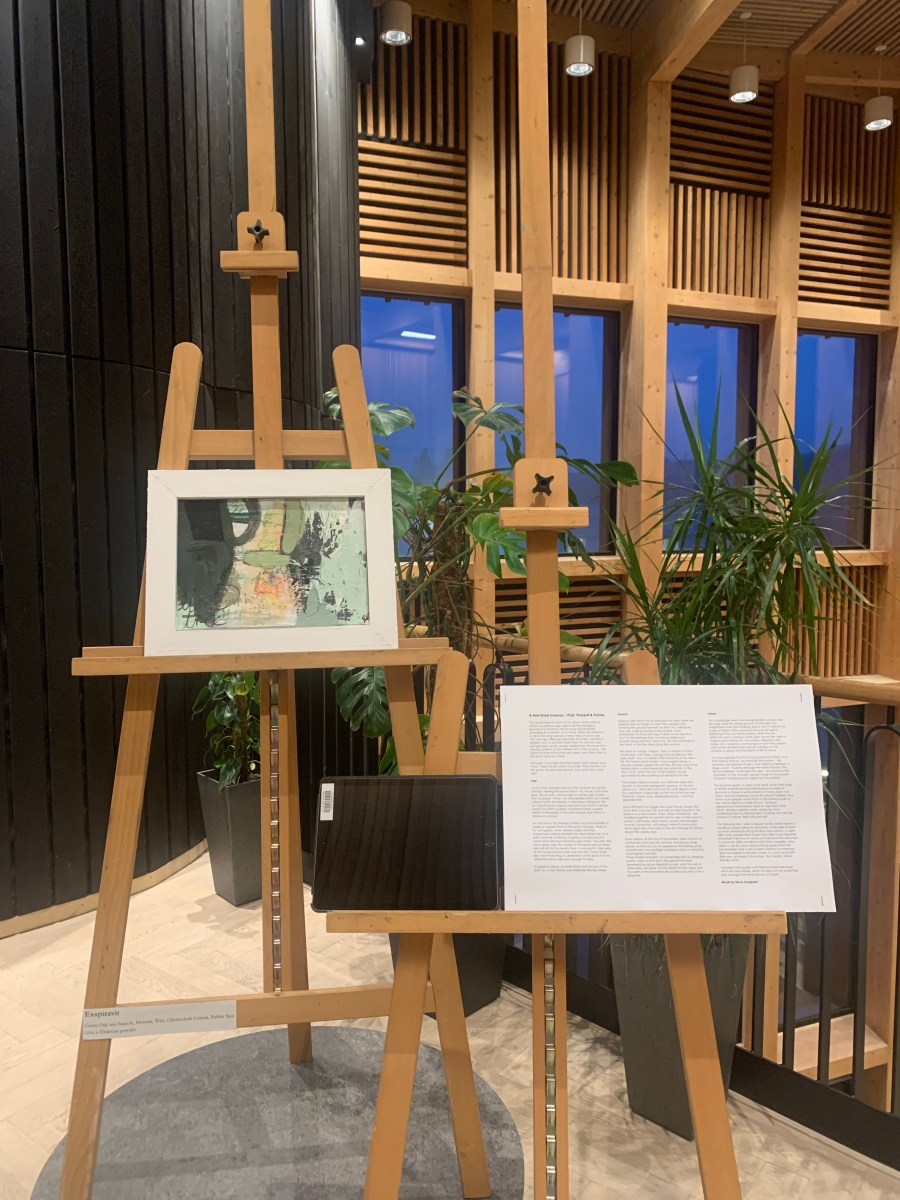
Reflections on the Perspectives of Nature Conference

Notes on the importance of collaboration and connection.

Last Friday on the 1st of December I was standing on a stage at the Creative Centre at York St John University in the heart of York and something magical happened. As I read aloud my observations of the natural world on stage, a musical score began playing, bringing my words to life. I was participating in an event called Perspectives of Nature, a collaboration between myself, Ewan East (Currently studying for a PhD in Music Composition) and Alice Baxter (Currently studying for a Practice based PhD Fine Art and Contemporary Poetry) .

Me and Ewan opening the Perspectives of Nature event.

Last February I and a group of nature writers (from the Naturewrights collective) produced some written observations of the natural world for composer Ewan East. Ewan was was looking for inspiration to compose a collection of music that drew on the natural world and took the listener on a journey of their own creation, travelling through the music to different areas of the country to experience observations of nature.
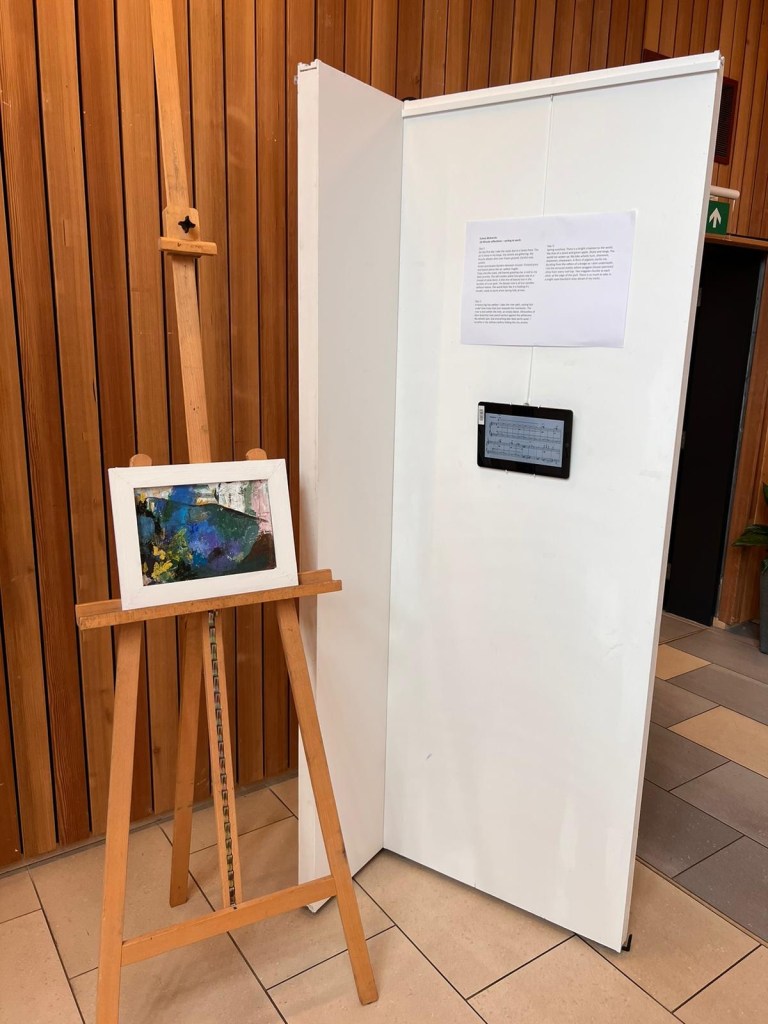
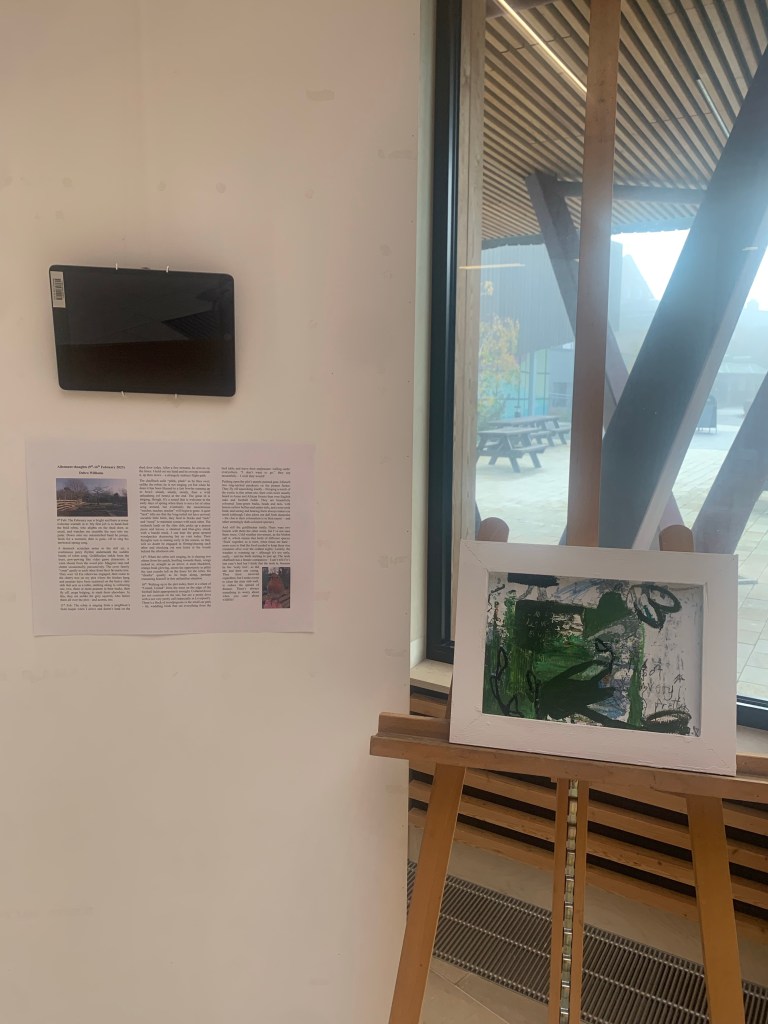
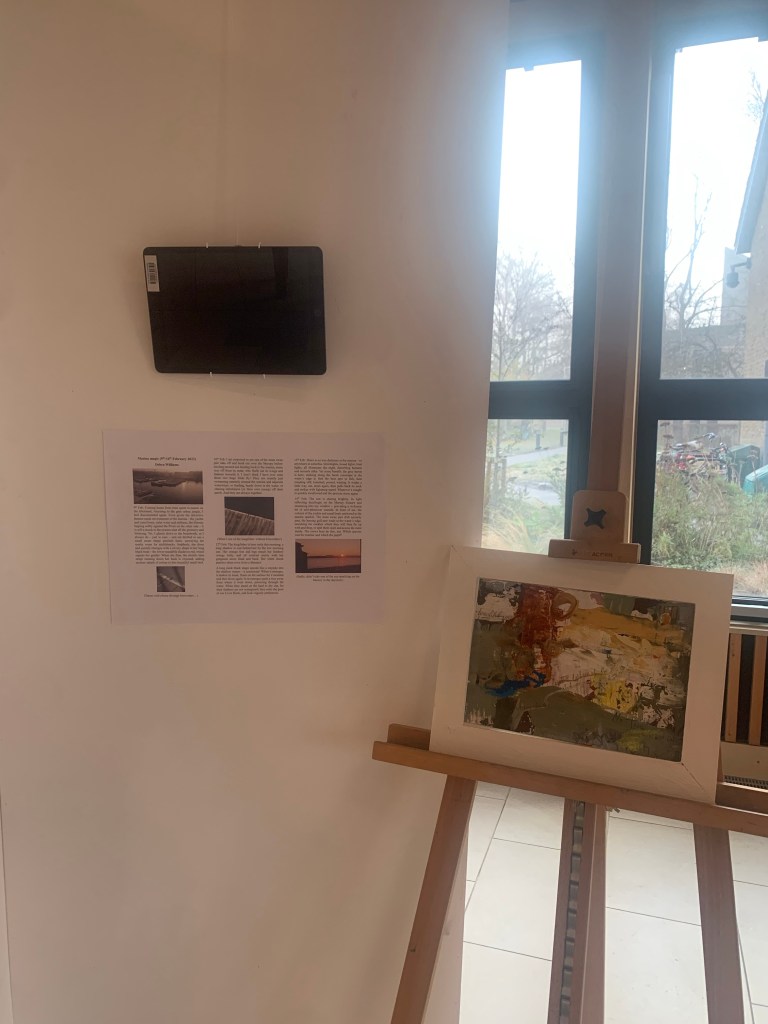
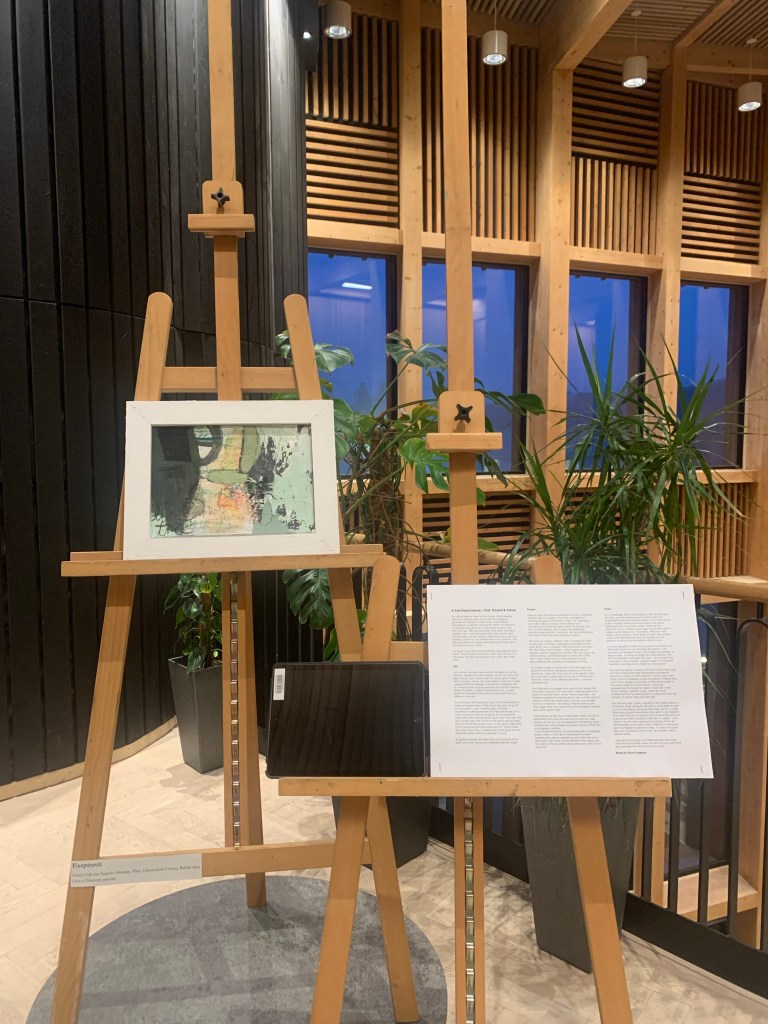
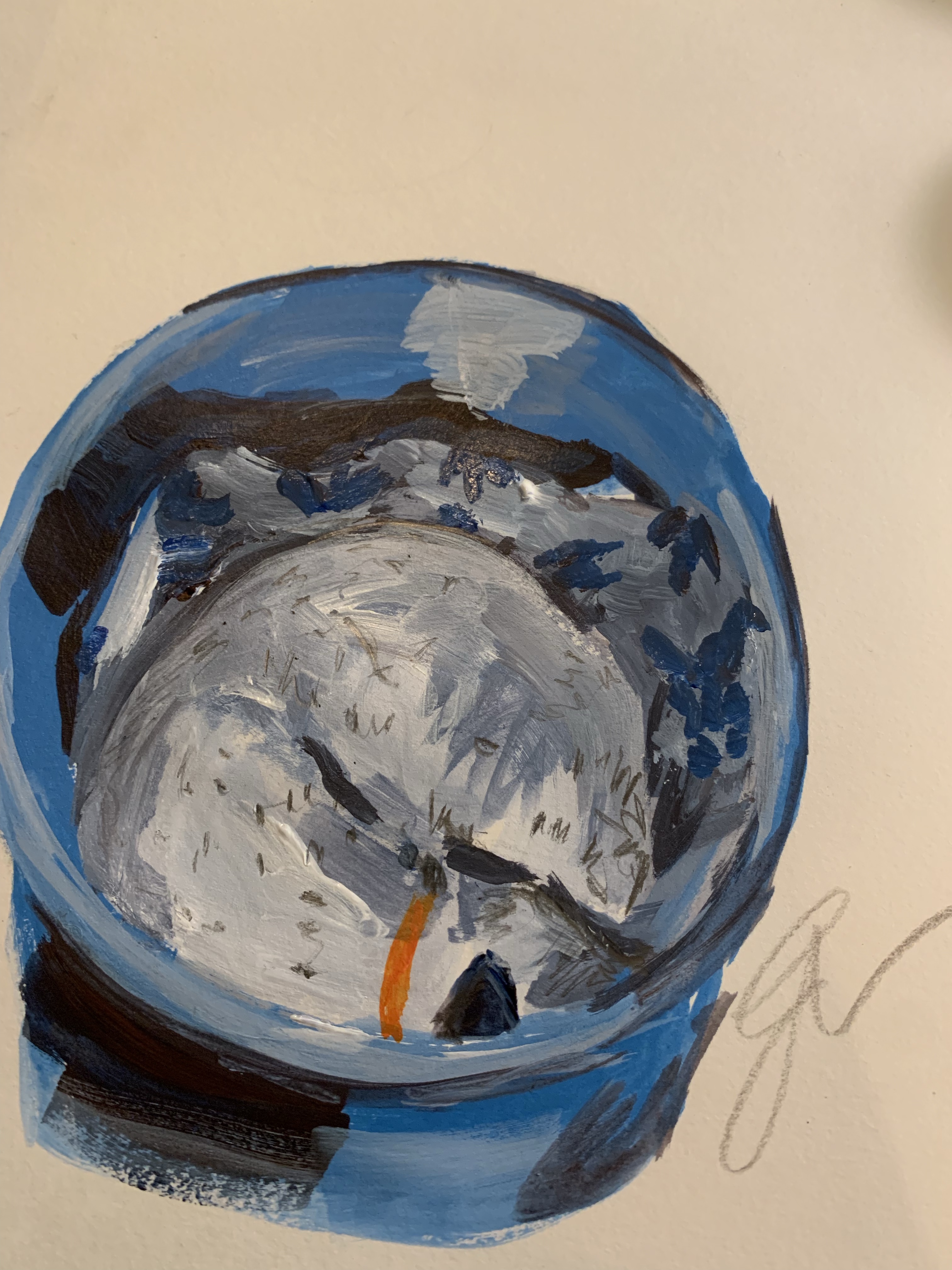
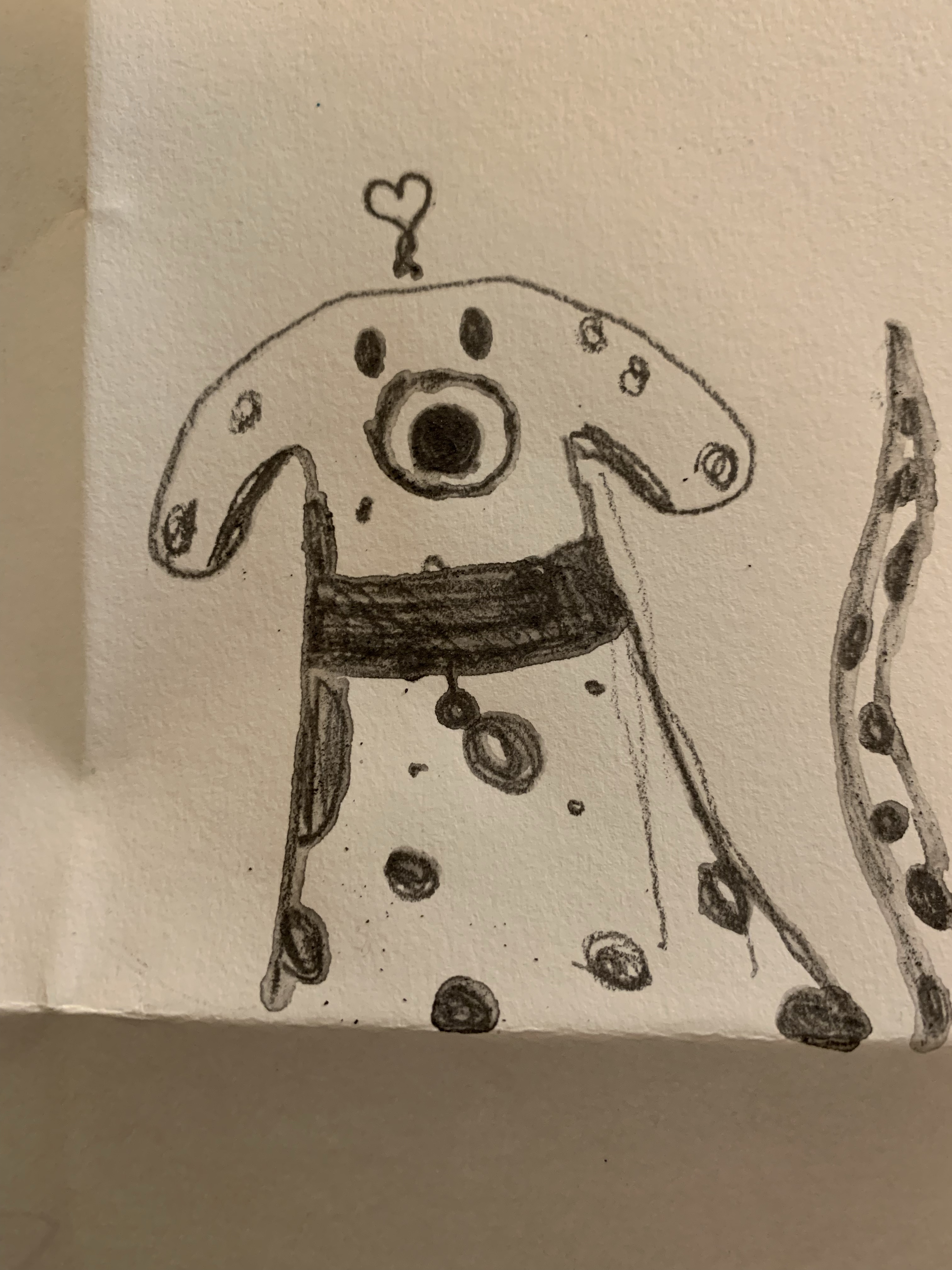
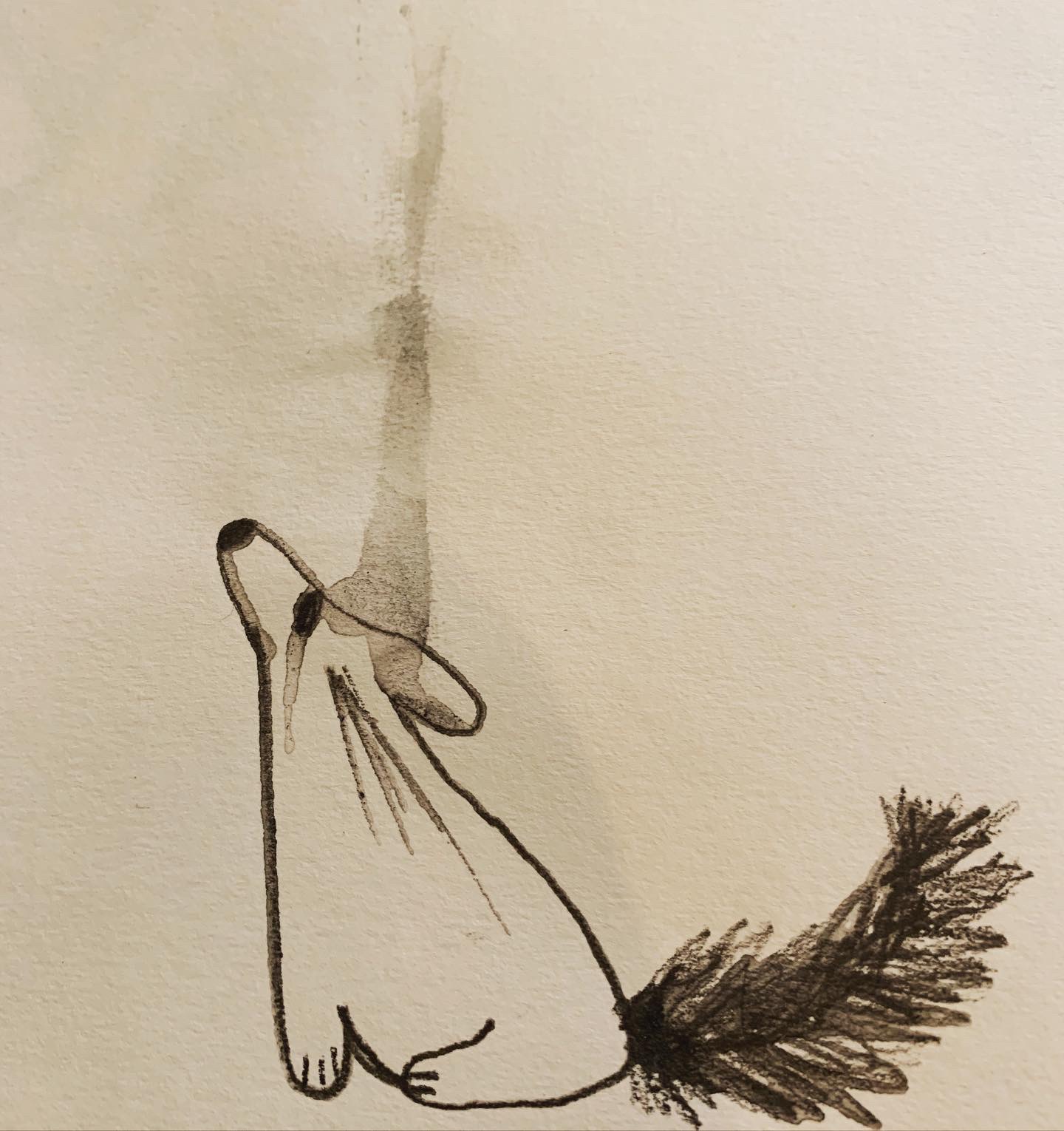
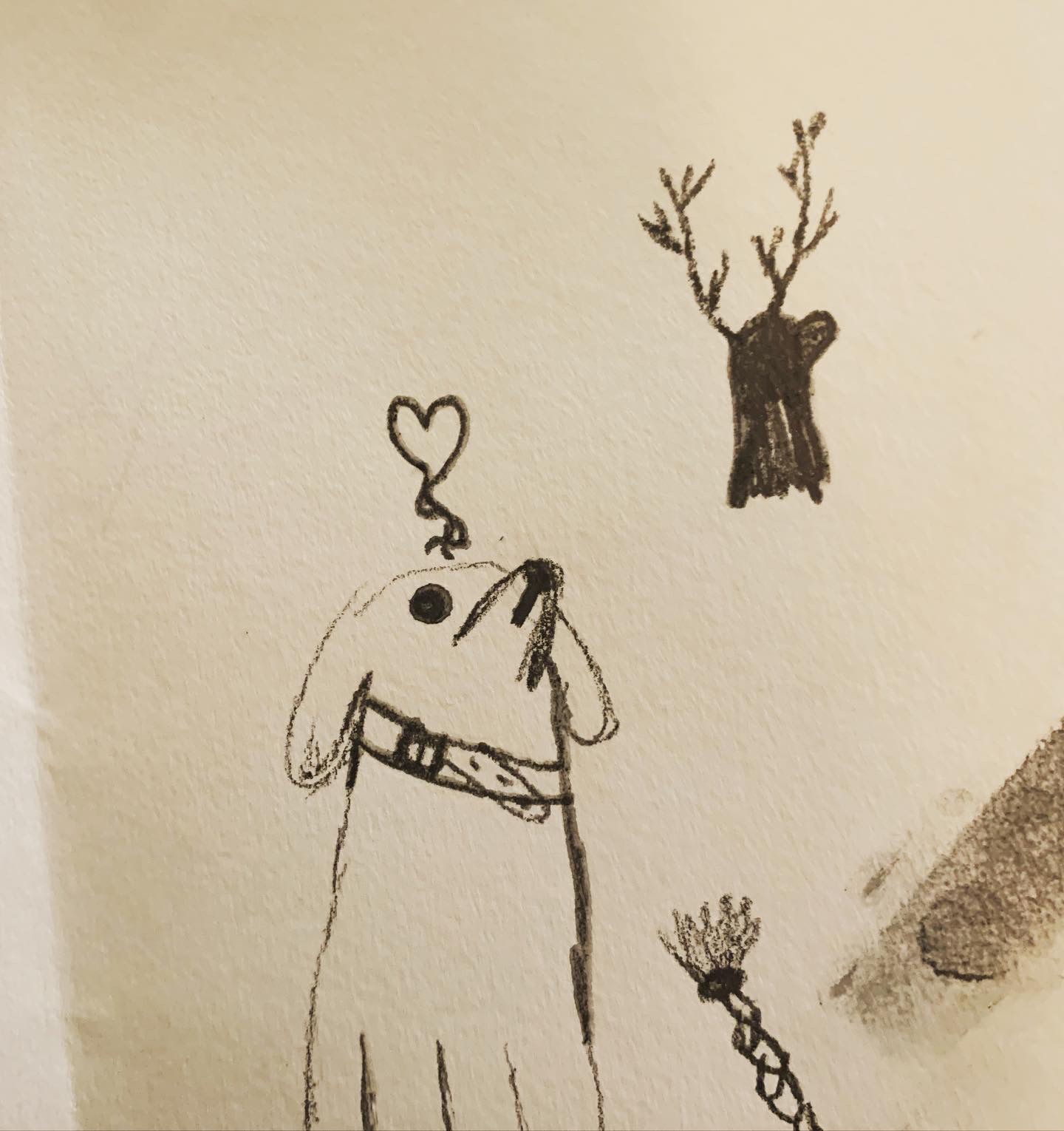
My piece of writing and Alice’s art. The iPads played the musical score for each piece of work giving the viewer a rounded experience of the moment.

Ewan took our words and translated them into a musical score called Journey. He then asked artist Alice Baxter to take the music and words and translate them into Art. The end result was a beautiful and 3D collection of music, words and art that recreated the awe of interactions with the natural world and that we showcased at the event Perspectives of Nature, which was beautifully curated by Simon Ellwood. Journey showcased encounters that in our busy modern lives we so often fail to notice. The music touched my soul, a visceral moment of awe and spirit brought to life.
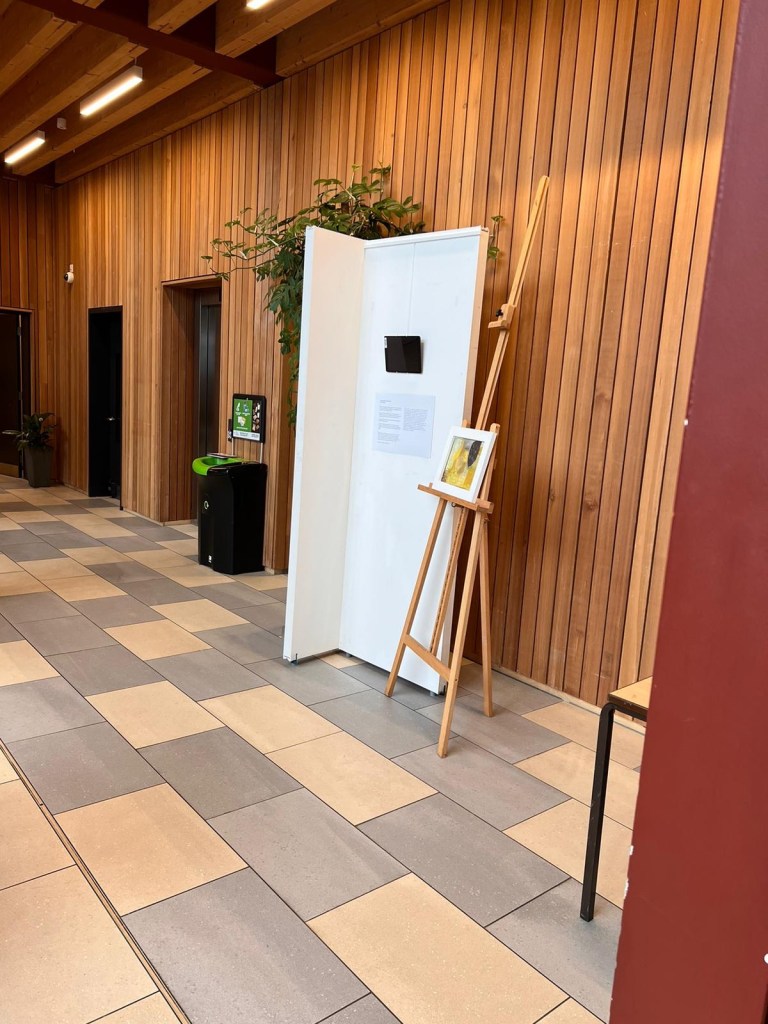
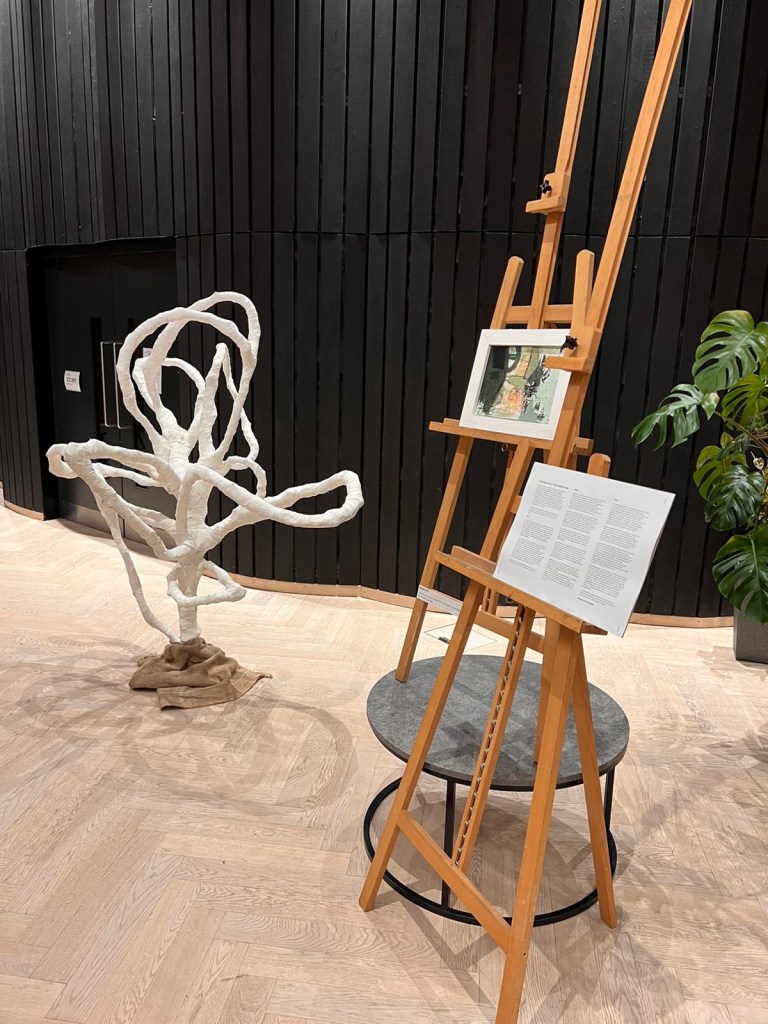
Alice’s art touched my heart, abstract patterns and colours, patterns etched onto board with paint and mixed media that transported me back into nature.

I started teaching Nature writing during 2015 after I left a very stressful role in the NHS. I offered my services on a voluntary basis to teach ecotherapy nature writing to support people struggling with mental health illness to make a deeper connection to the natural world as part of a recovery journey. When I started running the classes I had a love of both writing and nature but had no formal training in either. However, through the months and years of running the class I found that using writing as a tool to connect people to the landscape transformed both mine and my class participants connections with the natural world, and opened up how much nature can play a huge part in our lives – even living in a city.
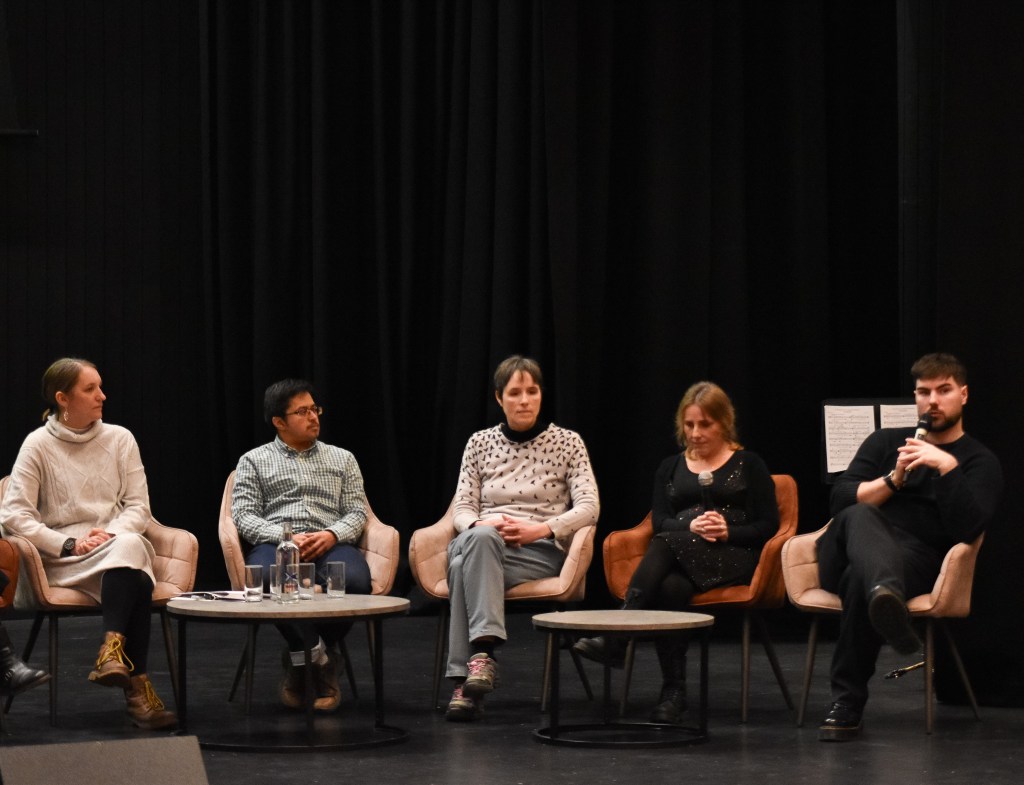
The panel of Naturewrights writers and Ewan East

Leading the ecotherapy class and using narrative to explore themes of nature, such as the beauty of nature in the dark winter months started to open up a world of exploration. Through storytelling and creation I became curious about so many natural wonders and my sense of awe and connection increased. That journey led me to complete an MA in creative writing and now a practice led PhD. My PhD is looking at the desperate need for humanity and compassion to be at the forefront of mental health care. I am writing a novel that takes the reader through a mental health experience, demonstrating that good mental health is about spirit and connection, so much of which is stripped out by clinical processes and environments. Somewhere we have lost who we are, and we have lost our roots. Continued engagement with nature writing and collaboration has been key to keeping my own mental health in balance whilst studying this theme.

Something beautiful happened at the end of the conference. A friend who has been struggling with depression sat with me in the audience to watch Michael Malay read from his amazing book Late Light. My friend said to me at the end of the performance that being part of the event had been like being part of a community for the day, and that he felt there was something that he could take away in terms of connecting to nature independently, but still feeling connected to others as part of that relationship.
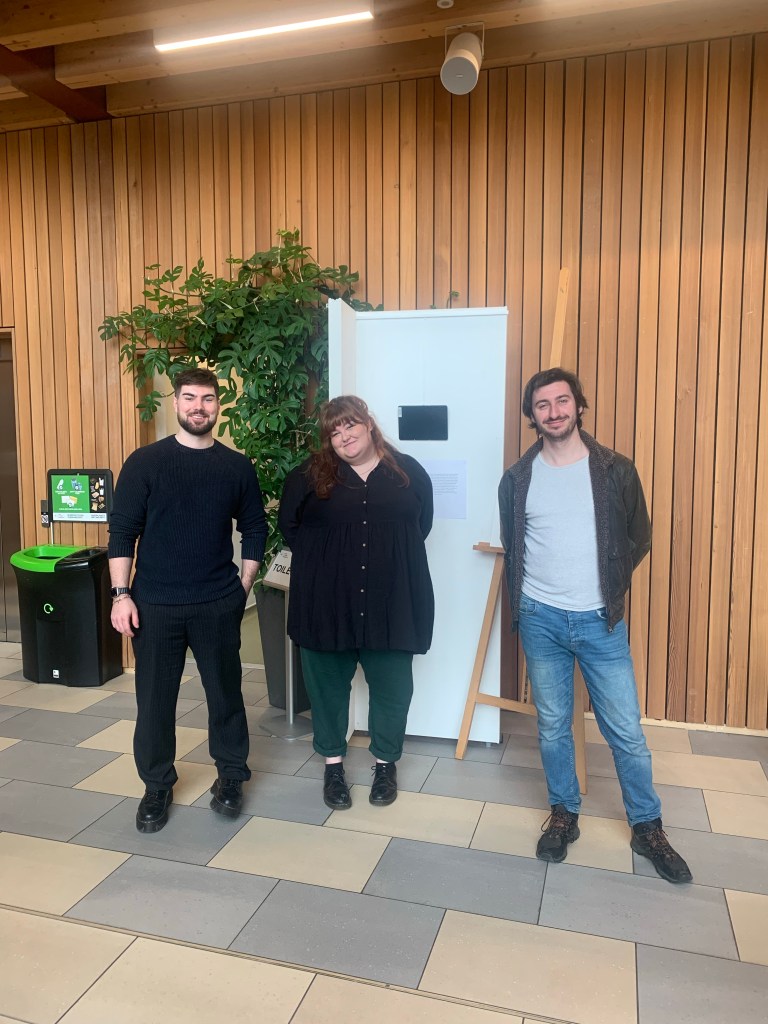
Ewan, Alice and Simon.

Nature is providing me with the opportunity to re-engage with others in a way that celebrates awe and wonder of the world. I wonder if more people engaged in this way how differently we would spend our time and consume things in this world? 

One of the most wonderful things that has happened time and again since I have been teaching nature writing is that I have been approached by students who say:

‘It’s not the same now Emma, I have to introduce my family and friends to walk like you, they just want to rush by everything.’

What they mean by that is that by spending time noticing, they have formed a connection and a curiosity that wasn’t there before.

I engage with nature as an act of non-violence and stillness, a spiritual experience which can be as simple as a nod to the trees that line the river on the cycle path to work, or the moment of noticing two blue tits hopping from branch to branch in the honeysuckle that is growing from a pot in my city back yard. I spend time writing and creating art out in nature, a meditation on my place in the world and my connection to the landscape. I recently read a fascinating blog post by Ellen Vrana in The Examined Life called Stillness As Art in Times of Chaos: Toni Morrison on Art as Human Necessity. 

Vrana has drawn on the writing of Toni Morrison and others to investigate how we react to chaos and trauma. Varma discusses the way that Toni Morrison has described an answer to violence and chaos as stillness, the act of creating meaning and understanding. This was echoed during our conference by Anita Sethi who read form her book I Belong Here: A Journey Along the Backbone of Britain in which Anita describes how a racial attack on a train led her to walk The Pennine Way as a way of reconnecting with the landscape in which she belongs and as a stance against the violence that she experienced against her.

Collaborating as artists gave me the sense of bringing together and communicating something essential. A translation of the natural world into something beautiful and engaging that hopefully was an awakening or a heightening of that sense of awe and connection for others that attended the event.

Today I teach freelance nature writing for the Field Studies Council alongside leading a project called Converge which aims to support people to re-access education to reclaim identity and human spirit.
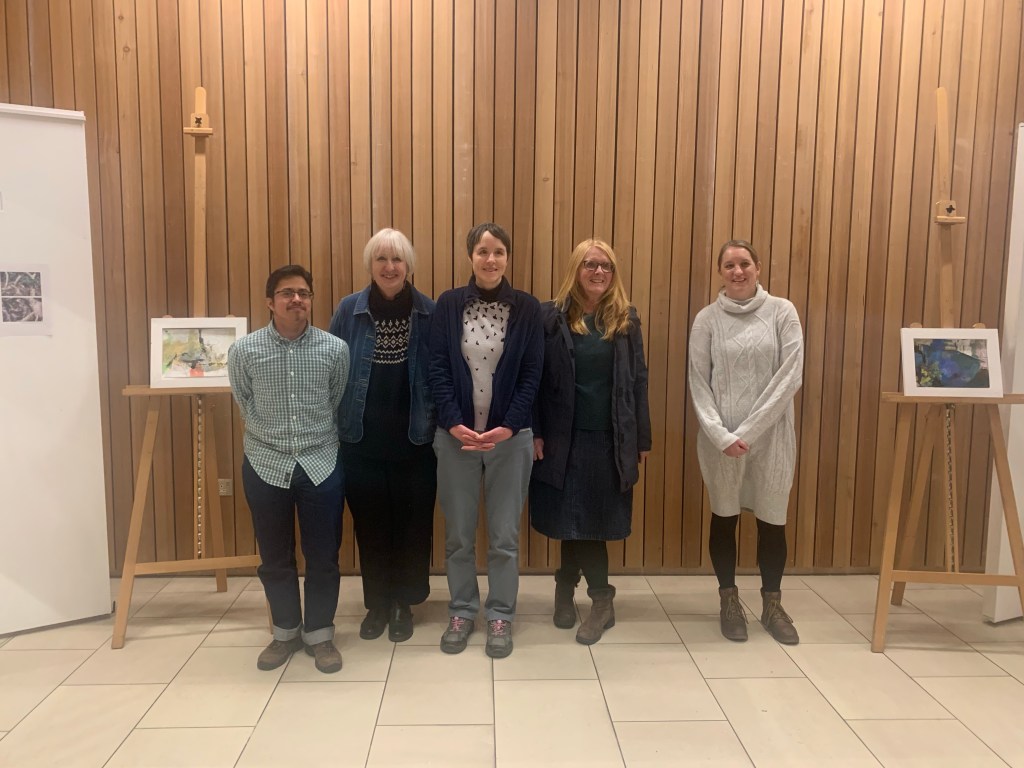
Some of the Naturewrights collective. (Left to right: Gurnam, Nicky, Berenice, Sarah and me)

Continued connection with nature is essential to me as part of keeping me well and grounded, if you are interested in engaging with the work that we produced you can experience Journey here. Last Friday was the first time that I had met with the writers from the Naturewrights collective in person, we have been working together online after the group originally formed from one of my first cohorts of students with the FSC. The Perspectives of Nature conference has opened up my eyes to how much more can be done to re-connect people with the natural world through the arts and humanities, and to the raw and beautiful power of creativity in giving a voice to so many and to our experiences in the world.

Thank you to Ewan for making this event possible and creating such inspirational music to accompany our pieces of writing and to Alice for the beautiful art work and to Simon for helping us to curate the event and to make it happen.

With huge thanks also to:

William Davidson for chairing the Perspectives of Nature Panel.
Claire Hind for chairing the contributions.
Michael Malay for his brilliant end note speech and reading.
Anita Sethi for sharing her work.
Max Stephens - Performing Seasons

Contributors:
Dr Carolyn Drever
Berenice Tregenna
Amy Ertena
Stephen Jackson

Last but not least - my wonderful Naturewrights contributors:
Nicky Hutchison
Christine Surridge
Berenice Tregenna
Sarah Drysdale
Dr Carolyn Drever
Kate Ruth
Debra Williams
Steven Songhurst
and Gurnam Bubber for joining us to read Steven’s work.
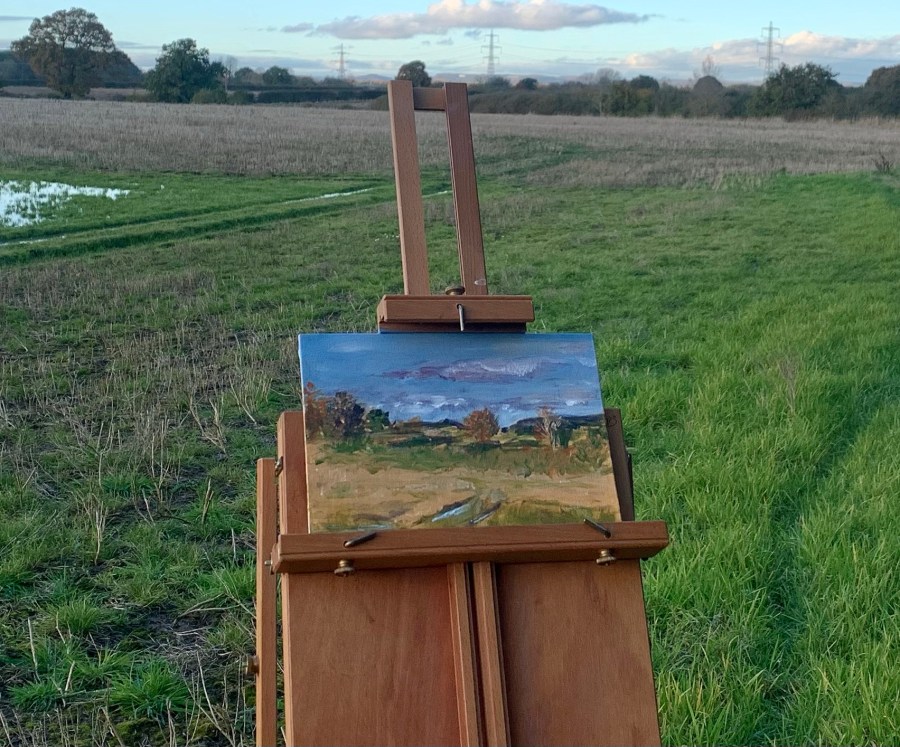
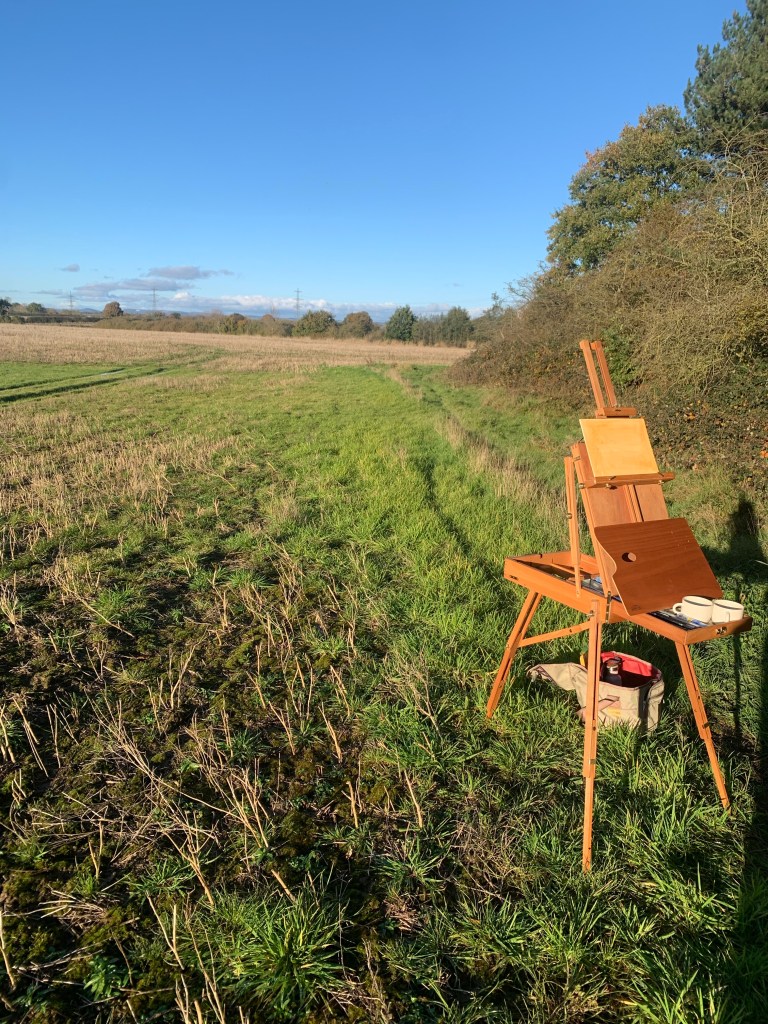
All the Gear and No Idea…

As a teenager I had a Saturday job at a surf shop. To be fair, it was more that a family friend humoured me- I didn’t do much work! I loved hanging out on the beach and helping out hiring out the surf boards and wetsuits. My sister was an avid surfer (actually making it on to the British surf team at one point), but I’ve always preferred drinking tea and cuddling the cat (a young fogey as my 90 year old friend lovingly calls me). But I did understand what I was talking about, I knew something about surfing and the geography of the beach. Occasionally you would get someone turn up with ‘all the gear and no idea’ as we would say. Keen as mustard, but before giving it a proper go has splashed all the cash on the image rather than learning the skill.

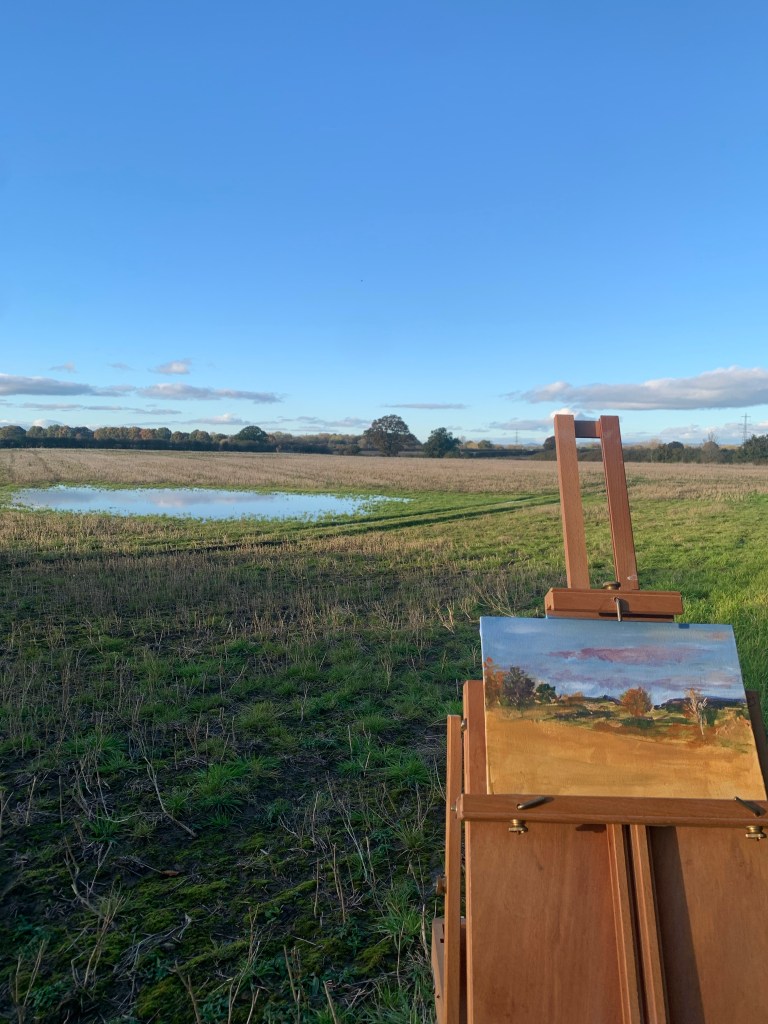
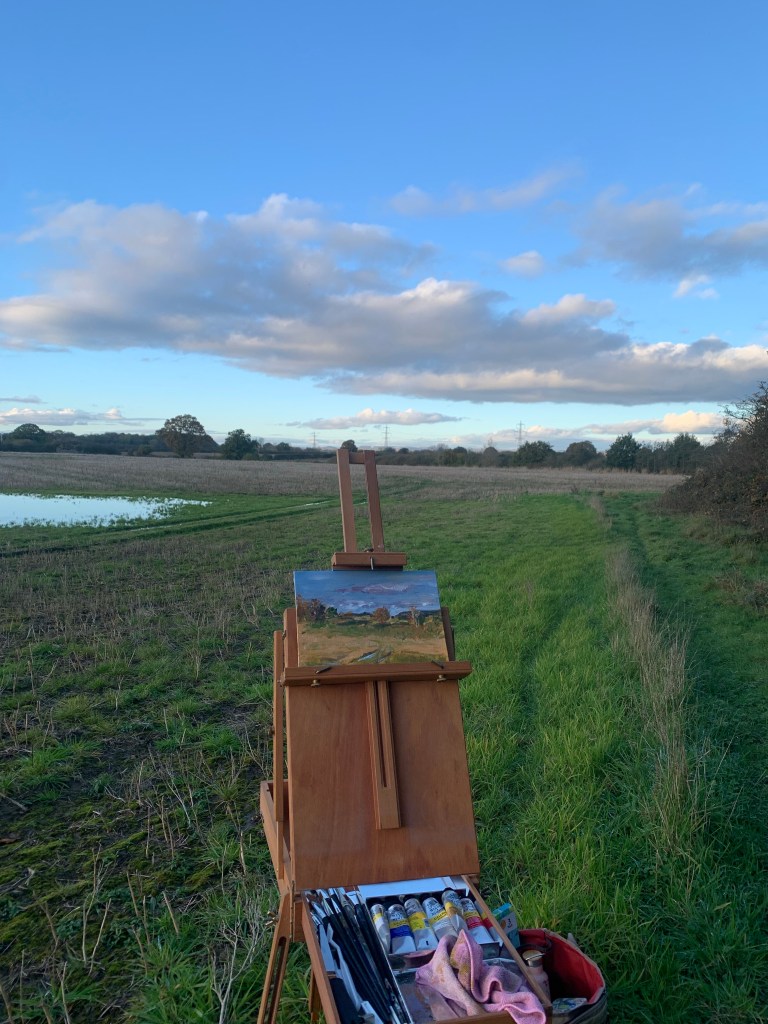
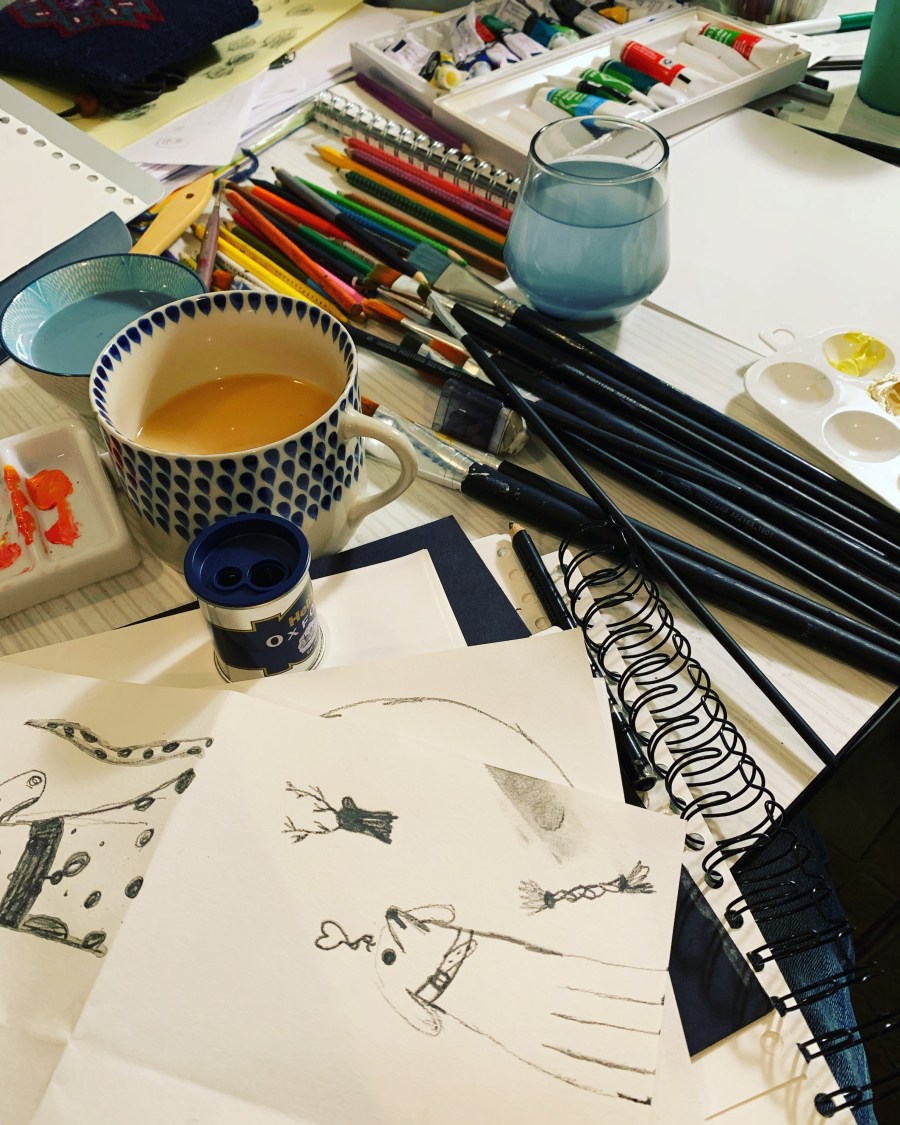
So….that’s how I’ve felt owning a very fancy Plein Air painting box. It was gifted to me by my Dad a few years ago, when he (like me) decided the comfort of his sitting room was more appealing than standing outdoors for long hours. He had never really used the box, other than the simple pleasure of kitting it out, filling out the little satisfying trays and dreaming about all the wonderful art that he might create.

The box has sat dormant in my house. A layer of cobwebs lining the grooves, the metal trays inside shop bought new and gleaming. A pristine layer of kitchen roll lining one, and a dried up roll of masking tape in another. I’ve been worrying that my skill level isn’t good enough to use it and instead spent at least four years dreaming about ‘one day’ when I might be ready.

So this morning, I was brave, I cleaned the box up, removing some shrivelled spiders in the process. Knowing I had an afternoon to kill while my son is at a Forest school, and also knowing I could paint in privacy – away from the judgement – I decided to christen the box and give it a go.

I can now proudly say, I have the gear… and some idea. Still a way to go, but I thoroughly enjoyed every minute 🙂 I am going to finish the painting at home, I will post it up here when I do along with some of the things that I learnt in the process, in case anyone else is gearing up to give it a go.

Plein-air painting, a lesson in bravery.

It’s been well over two years since I’ve taken out my acrylics or oils.

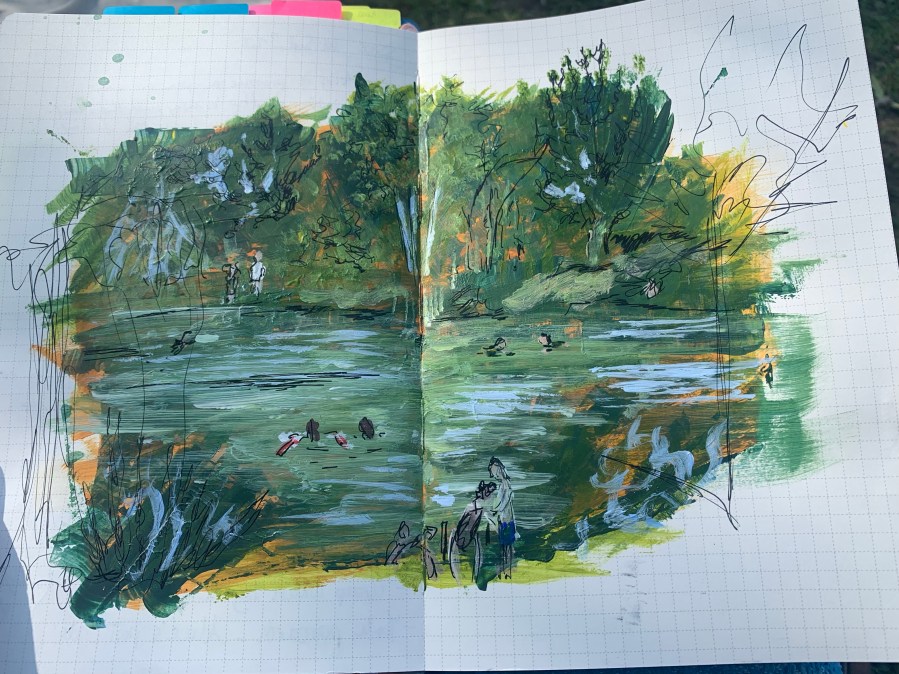
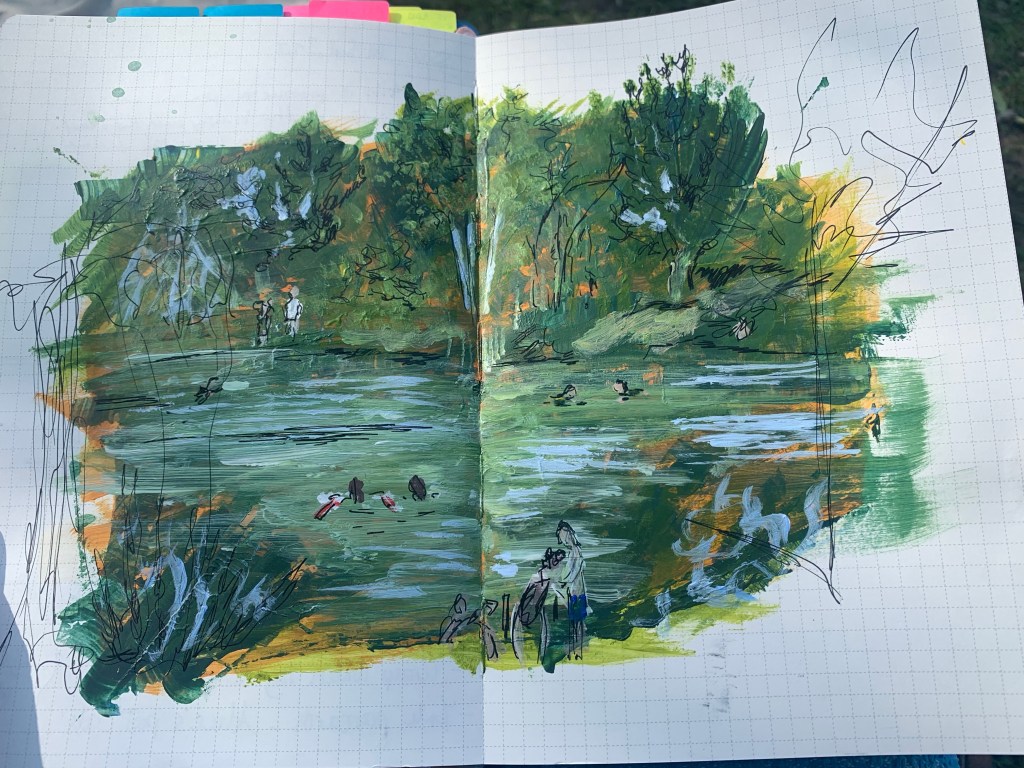
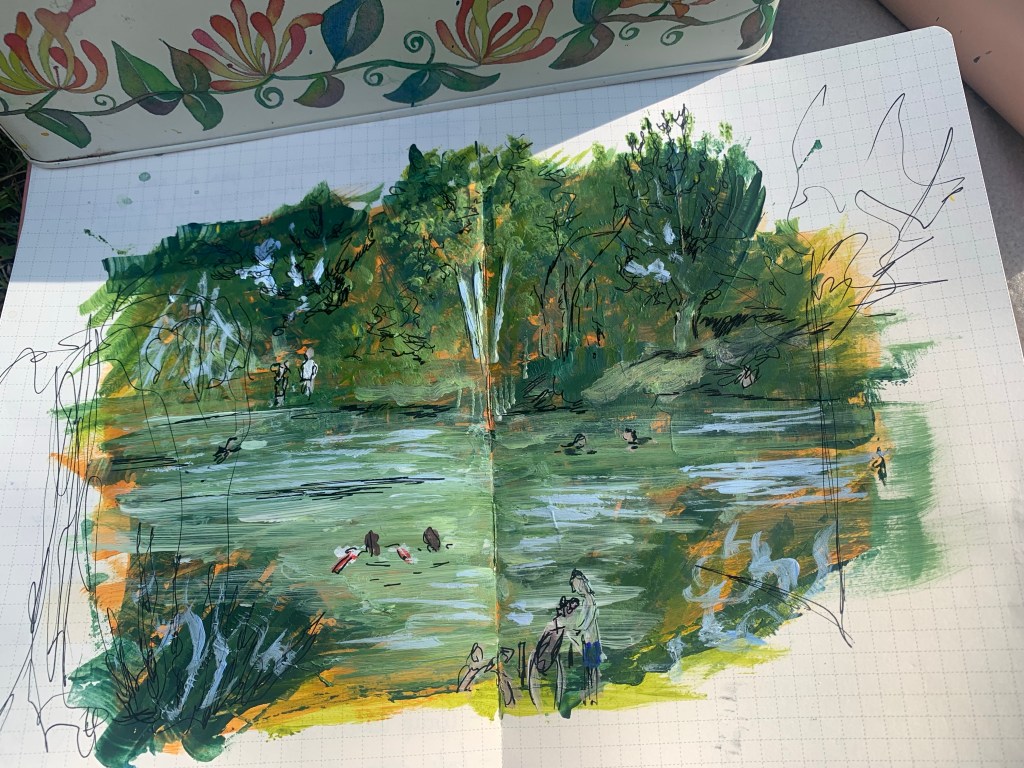
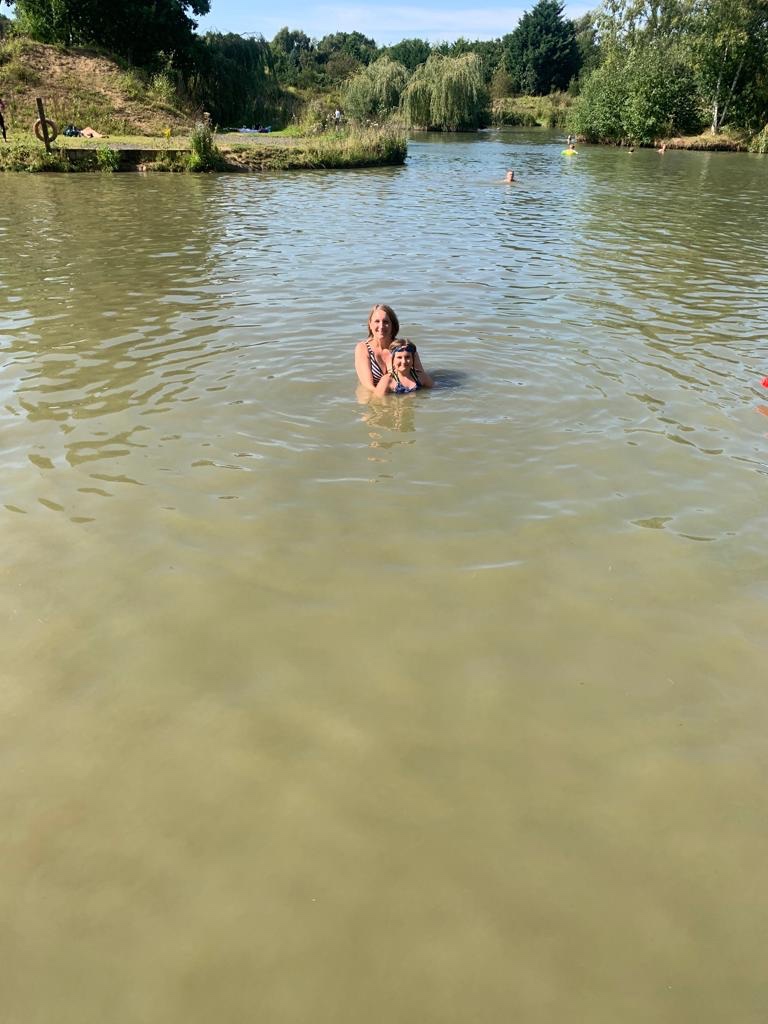
There’s also a big difference between painting from a photograph to painting a scene outdoors in situ. Today we visited Pool Bridge Farm for some wild swimming and I took my acrylics to dive back in head first to painting.

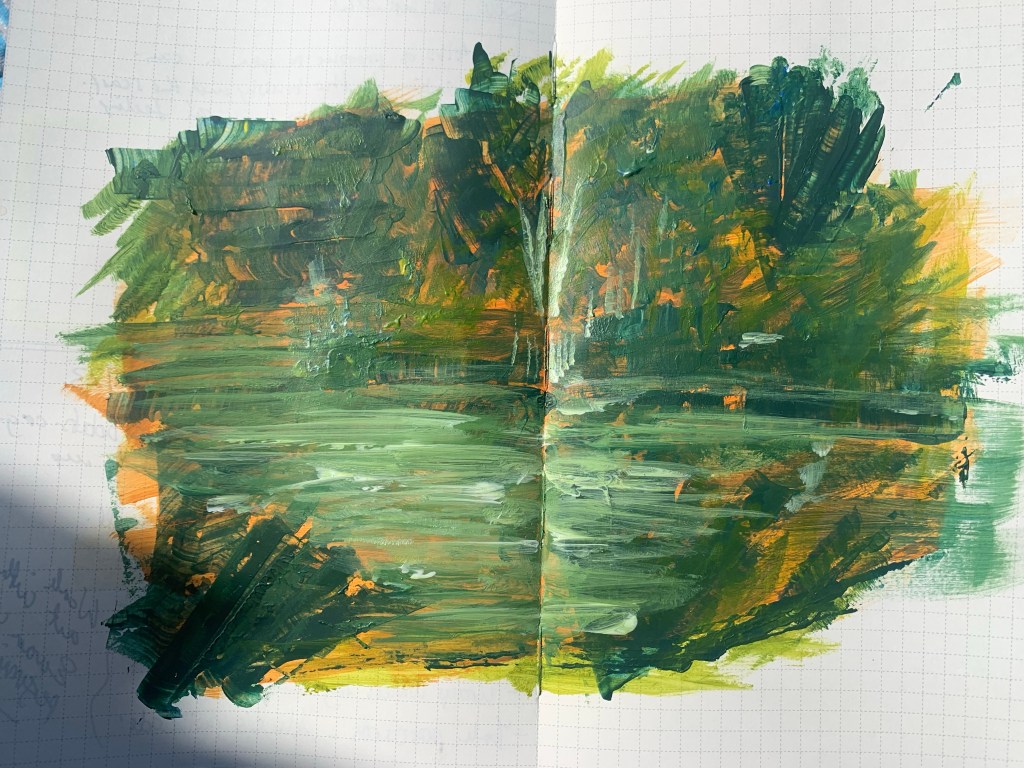
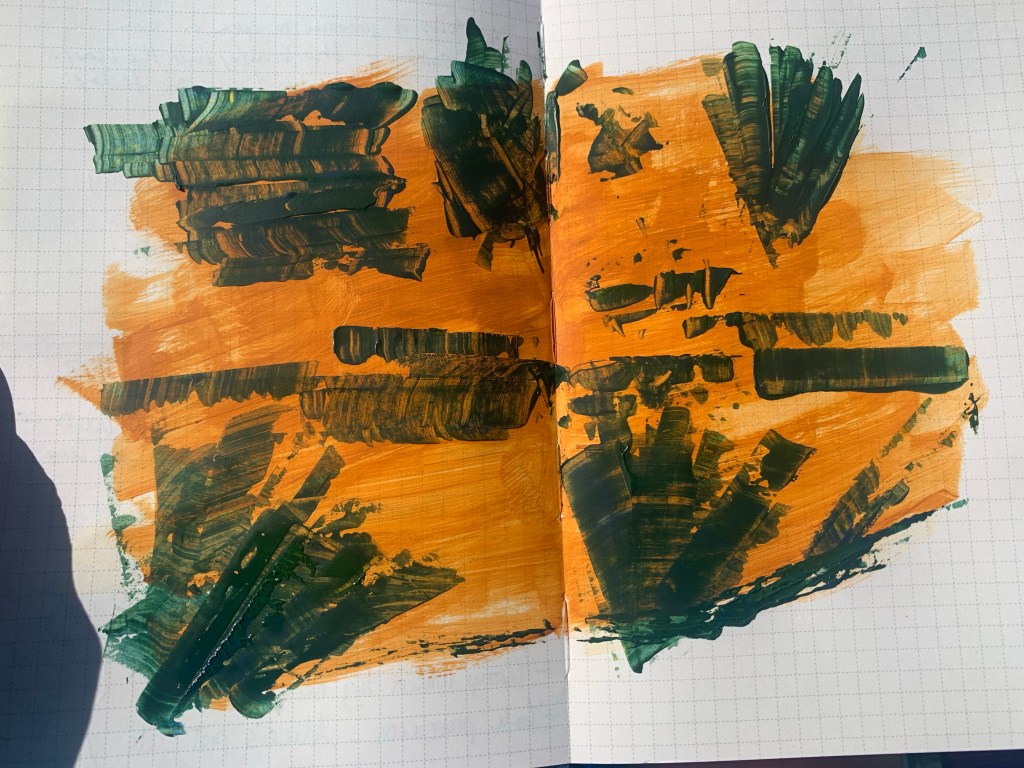
The hardest thing about painting outside is other people’s curiosity. I try and see it as a positive thing, but when you put down your undercoat and first blocks of shadows – it can be quite daunting when passers by are giving you funny looks (work down the pics to the last one – which is the first stage of my painting!).

Final sketch (I used titanium white for final highlights – which in hindsight was a bit much, I was going to work into it further at home, but sadly some of the paint stuck tog on the journey home and tore the sketch).

I’m always very heavy handed with oils and acrylics – I had also forgotten how quickly acrylics dry (note to self look into products to extend drying time).

I’m pleased I did it though. Painting for me – isn’t about being gallery worthy, it’s about relaxing and absorbing a scene, appreciating every detail.

It’s amazing how tiring it is trying to concentrate on painting. It makes you appreciate the skills of great artists who spend hours in the studio. This kept me entertained for well over an hour. At the end I reverted to my pen to add some finer details as this was just a sketch.

I’m glad I did it, and also glad I braved the icy waters for a dip, although I’m going to have to build up some tolerance again!

2nd stage of painting..

End result:

1st stage of painting, using an undercoat – which next time I would lighten, and blocking out shadows with an old credit card.
Braving the icy waters with my daughter 🙂

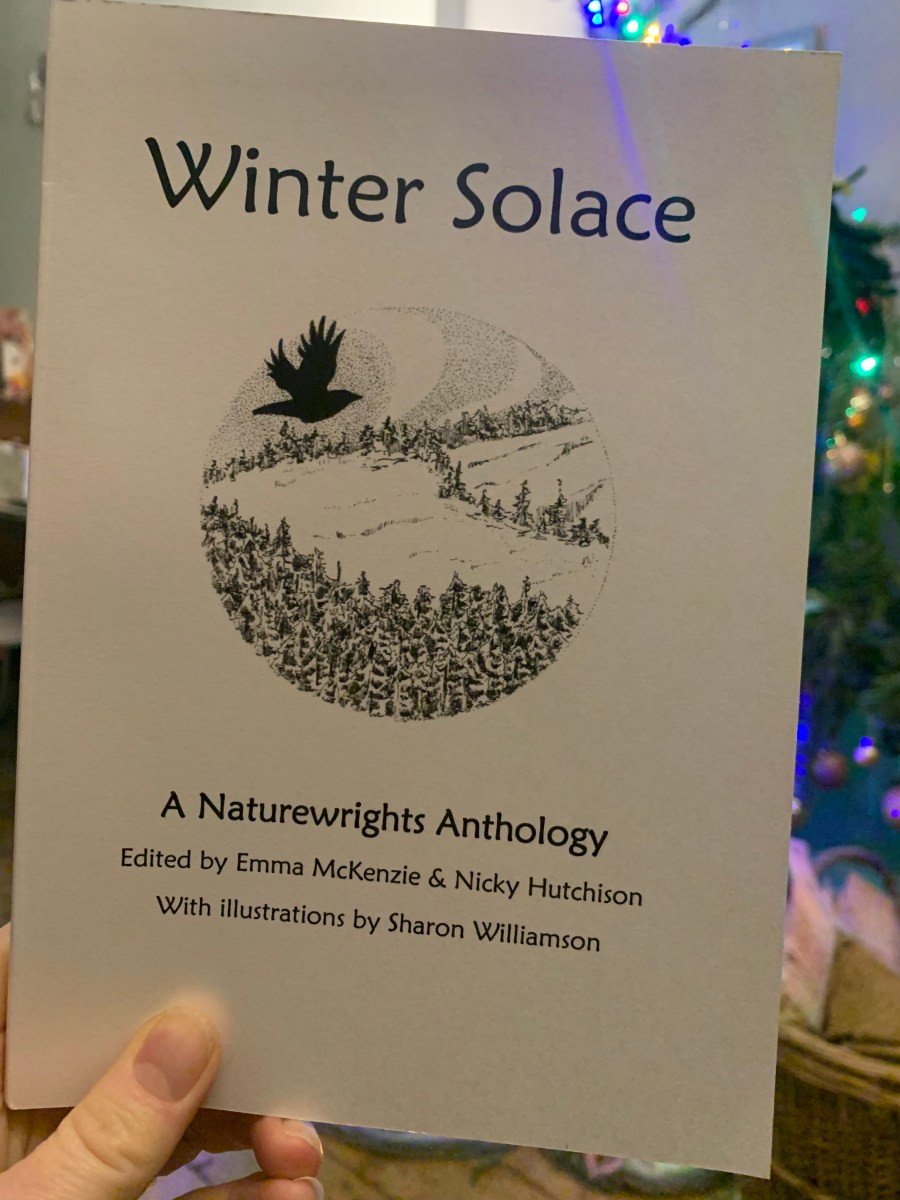
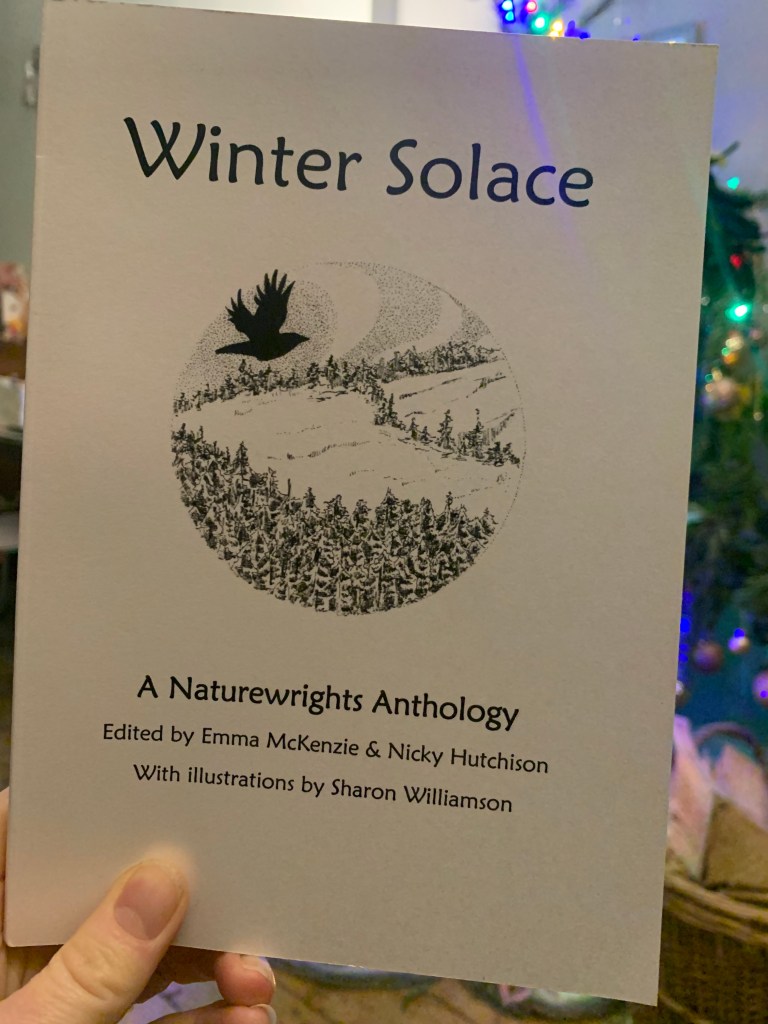
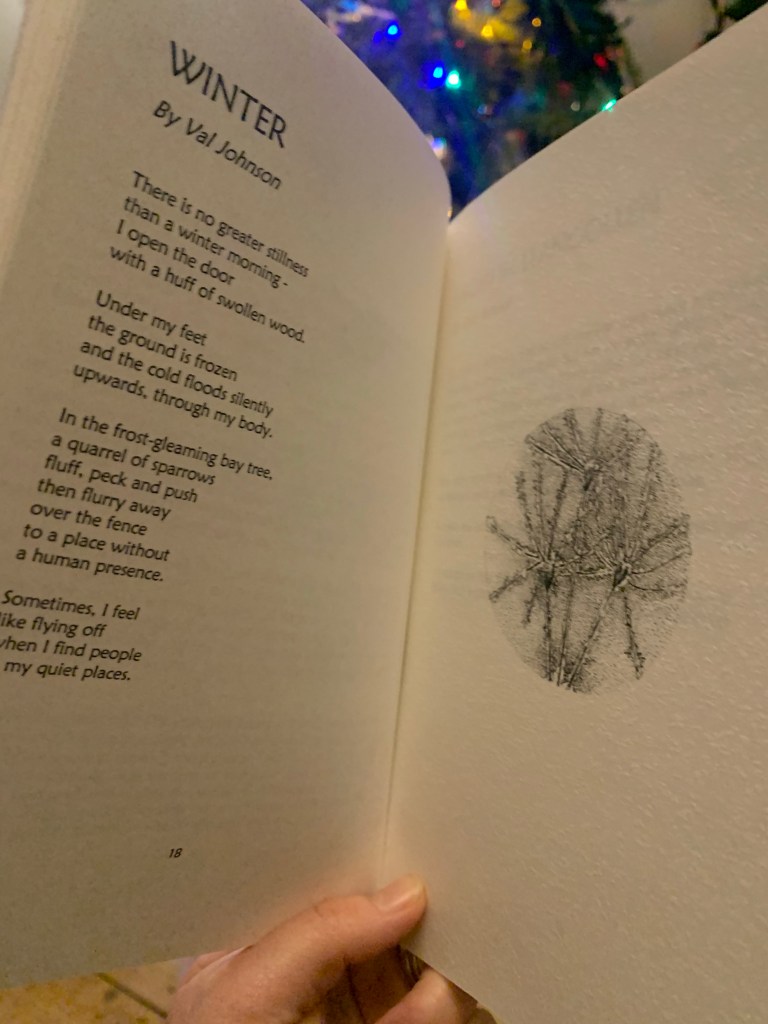
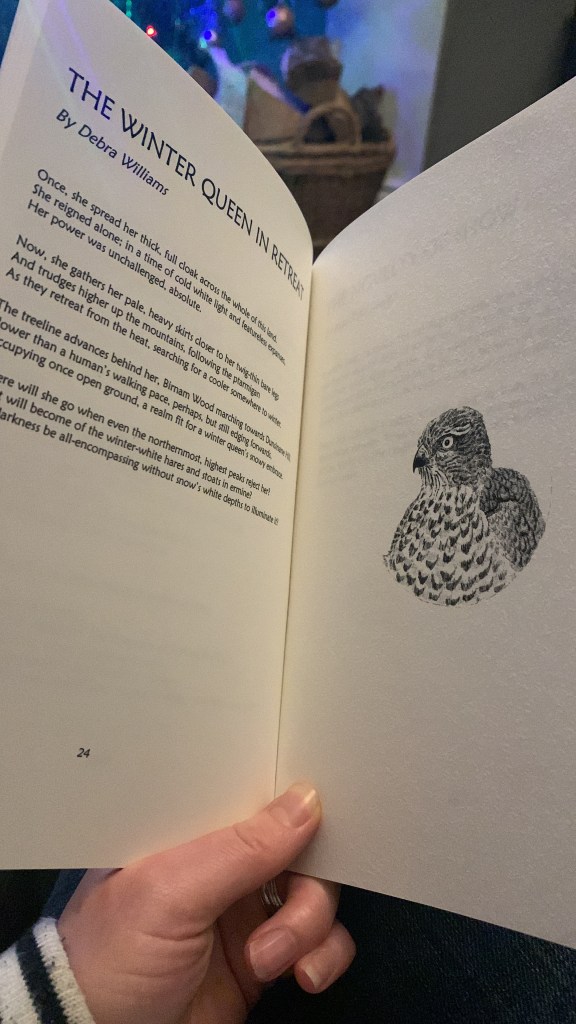
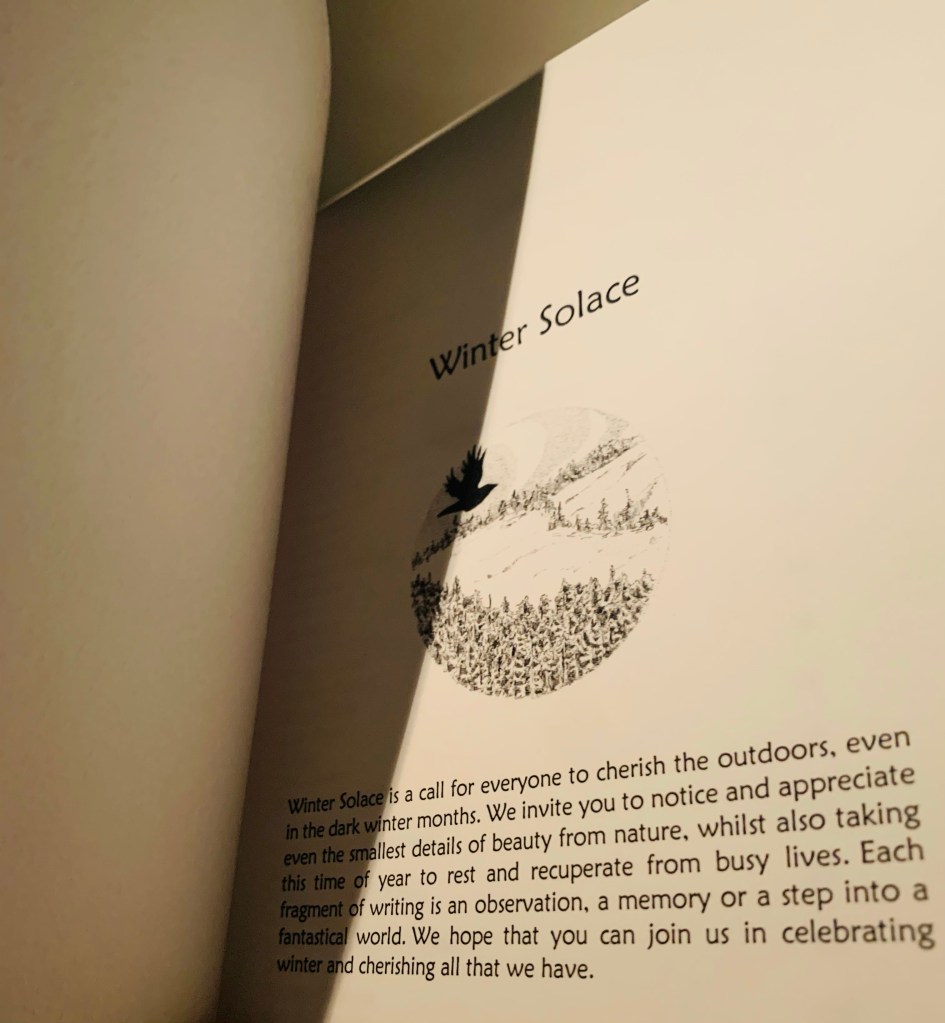
Winter Solace

A New Year collection of writing celebrating the winter months.

Is anyone struggling with the cold damp weather? It’s so easy to feel dragged down by it and to trudge around with our heads down focusing only on placing one foot after the other; however if we stop to notice and observe – there are so many beautiful things around us in the natural world to notice.

This was the theme for a workshop that I ran in October with fellow writer Nicky Hutchison. Nicky creates and produces her own books which are beautifully hand-bound. We invited all workshop participants to submit their work for inclusion in a Winter Solace themed book as part of the NatureWrights online community involvement.

We are very proud of the result. Nicky will be making more of these publications to go on sale to the public soon!

Our resident artist Sharon Williamson did a really beautiful job of creating the art for the books. We are excited to run more workshops like this in the future 🙂

Happy New Year Everyone!!

Book Launch! Seeds of Promise … a new adventure…

A year and a half ago, one of my students from the Field Studies Council courses approached me to see if I was interested in making an anthology of nature writing.

We hilariously thought it would take 3 – 6 months to complete! Hats off to all the publishers and editors out there …. we finally made it a year and a half later. I am so proud of the end result, it took a lot longer than we had planned because we were fitting it in around work and other commitments. We also approached publishers but ultimately decided to publish it ourselves so that all profits can go to environmental charities.

It was a huge learning journey, one I am so glad to have made. The icing on the cake is the beautiful illustrations by talented artist and writer Sharon Williamson.

You can find Seeds of Promise on Amazon, I promise it will take you on a journey of natural world discovery and intrigue. I also hope it will be a great point of inspiration to anyone looking at getting into nature writing. I’ve included a few pages at the back of the book specifically on getting started.

I hope you enjoy!

Why Write? How and Where to find Inspiration…

Writing is my passion; but sometimes, it is really difficult to know where to get started and it is also really difficult to stay disciplined to find time to write. One of my students recently asked me where to find inspiration, without a class, or a group, how do we motivate ourselves to feel inspired to sit down with pen and paper? Here are my thoughts:

Writing for the Pure Pleasure of Writing:

Writing for me didn’t start with fictional stories, it started at the age of six when I picked up a pen and started documenting the things that I found overwhelming or awe inspiring in the world. I also loved the physical act of making the letters and words on the page and found it soothing creating the loops and swirls of hand written text.

Nicole Wood Jouve (2001, p12) writes in her chapter: On Keeping a Diary, in The Creative Writing Course book, that ‘writing is a source of tactile and visual pleasure. I like the activity of writing, somewhat under threat in the computer age. I enjoy writing as a craft. Something material in which the whole body can be involved.’ I think this is something that we don’t talk about enough, as well as enjoying the act of writing I also love typing, the satisfying click of the keys and words forming on a blank screen. If I am struggling to find the words or time to write, then sometimes I create lists. I have a game with my children when we go on holiday – we try to find 100 words to describe where we are. These lists are a great way of writing quickly and also a great resource to return to and write in depth about a place. Also a useful warm up before starting prose. I also sketch a lot (also easier with children around and something they find easier to join in with). I have included a reference for my favourite learning to draw book (see bottom of this post), for anyone that might want to explore this further. My sketches often inform later pieces of writing.

Writing as a Way of Making Sense of the World:

Writing diaries and journals are a great way of reflecting and recording what is happening around us, as Jouve also discusses, writing diaries can be like talking something through with a friend, it can help a writer to find their voice. It might not be writing that we publish, but might act as a helpful reference point or memory to return to which we can then build into something else. Jouve also mentions diaries as a point of transformation, we can explore different perspectives and who we want to be in the world. If we have something which we are focused on, keeping a record and an inspirational journal of our progress can help us to stay focused. For me it helped me to feel free, to explore difficult things and to savour memories, to get things down and let them go. The challenge with diary keeping is that we can fall into the trap of just ‘telling’ what happened in our day: ‘Today it was cold, we went to….we saw….. etc’.

Here are some interesting ways in which you could journal instead:

  • Use a journal as a research tool. I keep a nature journal, if I find something interesting I often start with the facts about a species when nature writing and see where that leads me. Often as I build up information and what I like to call ‘sketches with words’ other more imaginative ideas start to form. I use my journals often as a reference point for poetry.
  • Try writing a record of your day as if you were showing someone your day without telling them about it. Imagine you are writing as if they are retracing your steps alongside you. We often think our lives are boring, but when we start to explore our day with a narrative voice it is often surprising the things that we can turn into an interesting story. Play with humour and drama through your writing.
  • ‘Found fiction and poetry’ – if you visit somewhere with information leaflets or hand outs – try using them as a source point of journalling. Take some ‘found words’ in the form of a leaflet and circle the words which stand out to you, or snip up the words and re-order them. See what arises from your subconscious. This is a great way of playing with words and vocabulary. We can all get stuck in language patterns and with our favourite words, this is a great way of shaking things up.

Writing as a way of Connection:

I think this is the main reason why most people write. We have something to say, or a story to share and we want to put our voice into the world. I often hear that writing is a solitary act and people comment that it must be lonely. I would disagree. Writing for me is like baking, when we have created something delicious there is nothing more rewarding than other people enjoying what we have created. Writing is my way of connecting with the world. I miss the days when everyone wrote physical letters, when the post would drop on the matt and I would carry a folded letter in my pocket for the day – a friend’s words close to me. The challenge is finding the right audience. We don’t want to over-saturate people with our voice and there is nothing more disheartening that entering lots of competitions or writing to publishers, only to be rejected and feel silenced. I think of it this way, publishing is the icing on the cake, but it’s not the only thing that my writing is riding on.

Ways to get started writing for connection:

  • Look for local writing groups, I struggled to find a long term group that met the level and depth of writing that I wanted to do, however there are now many more writing forums and groups happening online which offer much more variety. So I would encourage you to have a go. It’s great to meet with others interested in writing and sharing words. In particular, I love teaching nature writing not only for the work that is produced but also for the stories that are shared when we are discussing what we have written. Having a weekly group is a great way to carve out time to write and to keep the momentum going.
  • Explore education. I thought I had missed the boat in pursuing a writing career, until I discovered that you don’t have to have English degree to complete an MA in creative writing. Starting an MA in creative writing was the best thing that I have done. It gave me focus, inspiration, stretched me out of my comfort zone, but most importantly connected me with others who were as interested in creating writing as I was. I can not describe how inspiring and motivating this was and it was worth every penny.
  • Investigate publications, competitions and magazines that have writing prompts and inspiration. There are some great resources to help get you started. I have included a few ideas at the end of this blog. My word of caution would be that ‘comparison is the thief of joy’. Like great baking, enjoy other people’s writing for what it is. Beware of your inner critique who will tell you ‘You will never write like that, you will never get published etc etc’. This is just your inner self trying to protect you from upset, ignore it and keep going. If publication is the icing on the cake but not the end game focus, there is no harm in entering competitions and publication calls – but be sure to have other areas where you can share and receive feedback from your work. There is room for us all in the world and many other ways of connecting with people through words than just publication.
  • Finally and most importantly, read. Don’t be scared of losing your own voice. Reading is the best way to align yourself to the style and forms of writing that you enjoy. It helps us to understand what we do and don’t like, we need to taste other people’s work as a way of connection to inspire our own words. Reading with others and reviewing books is another great way of exploring the form and creating connections.

Writing with Purpose:

I’ve broken my own rule today, of only writing short blog posts. The reason I have this rule as I think many people make a habit of blogging just for the sake of writing and posting regularly without much thought about what they are sharing just for creating content. I try to write with purpose, when I have something important to share on my blog, but also try to keep it brief and easy to dip into.

A great way of getting inspired to write is to find a passion. For me it is the natural world. I will never get bored of exploring this incredible world. Writing helps us to examine things around us in more detail and properly observe what is happening. It’s a way of looking at the world with wonder and awe, remembering what it was like making new discoveries as a child.

Try examining Why you write. Complete a 5 – 10 minute free-writing exercise jotting down all the reasons that motivate you and what interests you in the world. This can be a great way of exploring what motivates you, whether it’s creating fiction, keeping a journal, poetry or a specific genre that interests you. For anyone struggling with allowing themselves creative time, The Artists Way by Julia Cameron is a lovely way to get started and to give yourself permission to nurture your inner creative self.

Some ideas for writing with purpose:

  • If you are interested in writing novels and fiction use the real world for inspiration. Take a notebook to a cafe or park, use your observations as start points for sketching out characters and ideas for storylines.
  • Look to the old stories (folklore, mythology and fairy tales) to inform your writing. Can you create a modern tale from old? Folklore can make a great foundational structure in which to build a modern tale.
  • Find a passion, look around your home, what things are you drawn to, what have you collected, what do you surround yourself with? Whether its particular art, plants, pets – explore this further through your writing.

Writing as a habit:

As Mary Oliver mentions in the Poetry Handbook, one of the first things we need to do is simply to show up! Being disciplined in writing time and pushing through the barriers, the inner critique and the why is one of the hardest steps. I like to start with one notebook and a commitment to fill it. I rely on timers to prompt me to write, I book writing time in my diary and set an alarm for a set amount of time to get me started. By making it a regular habit it will become easier to stay focused. If you choose a theme or purpose to your writing this will also help, so that you can build and re-visit different ideas as your writing journey grows.

Useful books and resources:

Creative Writing Books:

Magazines: (These are a few I have enjoyed, however a quick google search of ‘creative writing magazines’ will bring you a lot of options – so if you have a specific genre or interest such as poetry I would encourage you to delve a bit further as there are some great resources available)

  • The Literary Review a great way of delving into literature. I’ve made some great discoveries of texts I might not have come across through this magazine.
  • Mslexia a magazine (online and on paper) for women who write. Packed full of interesting articles, writing prompts and opportunities to enter your own work. I only discovered this recently but found it full of interesting ideas.
  • SpeltMagazine – this was recommended to me recently – A poetry and creative non-fiction magazine which celebrates the rural experience. A lovely resource for anyone interested in nature writing.

I hope that this blog post was useful!

Best wishes,

Emma

Easter break….

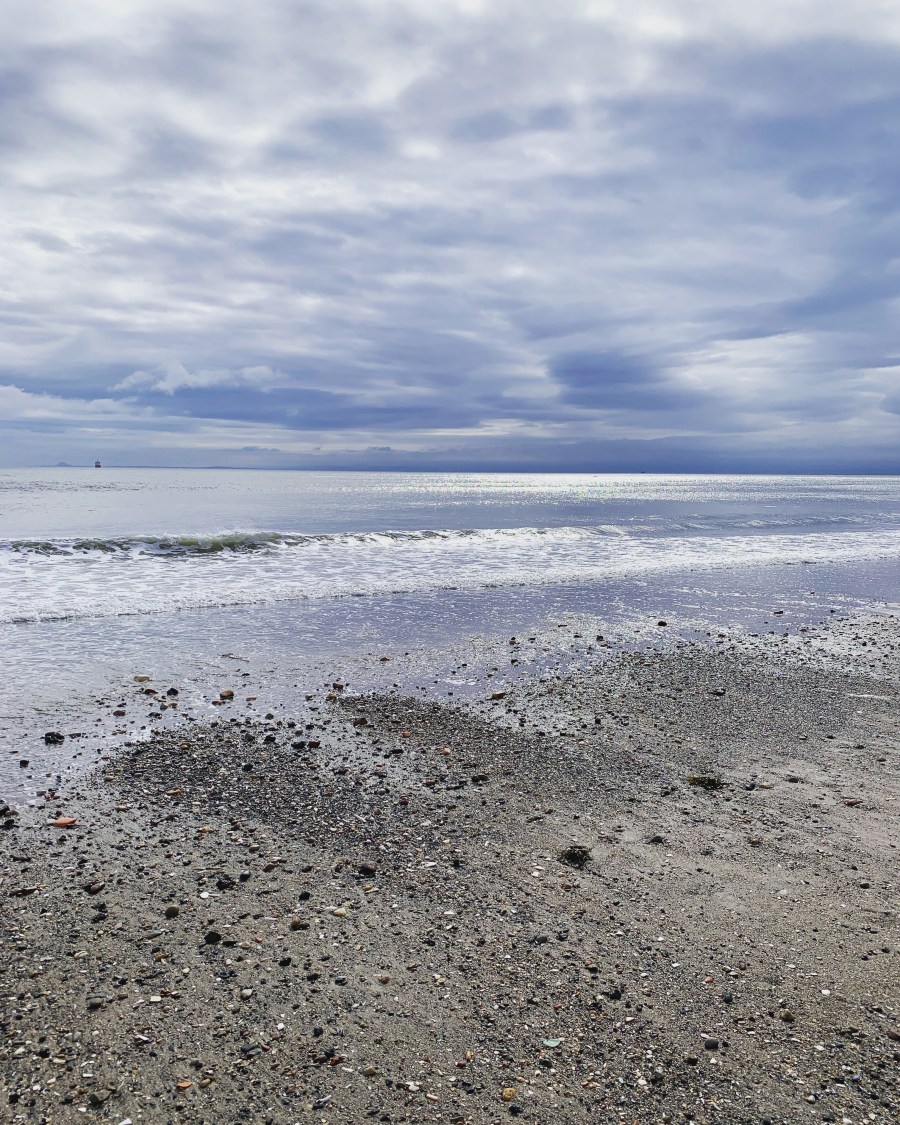
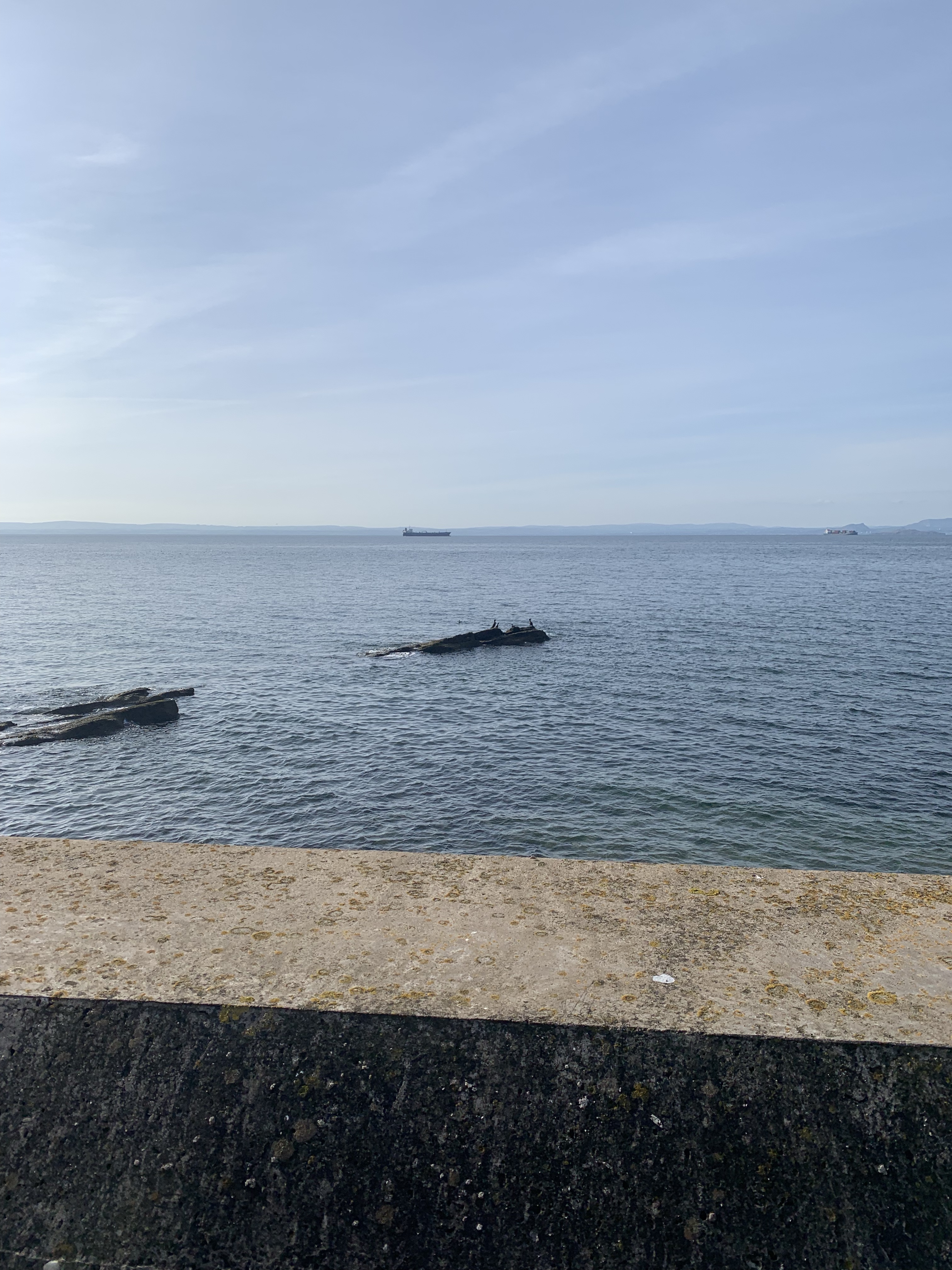
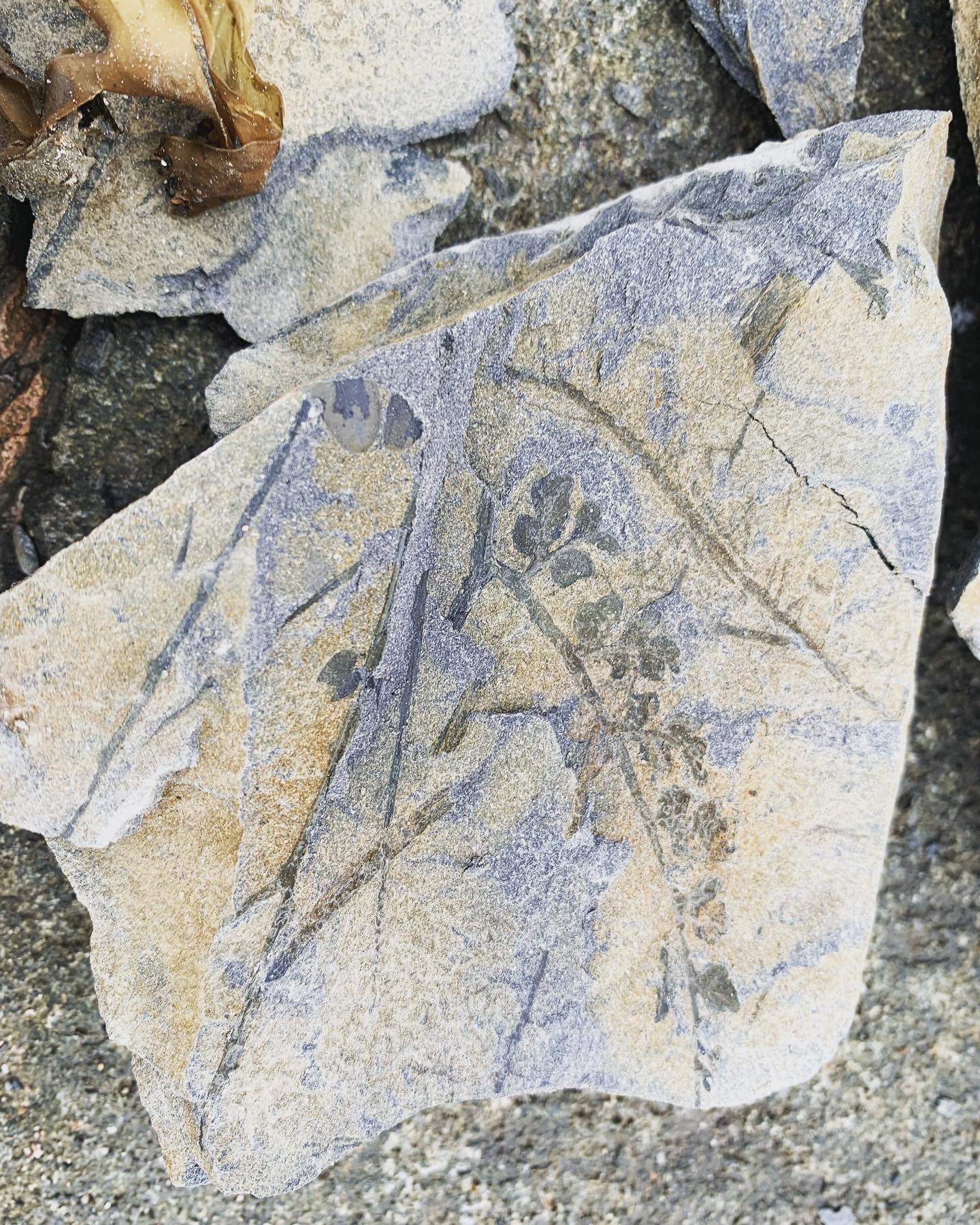
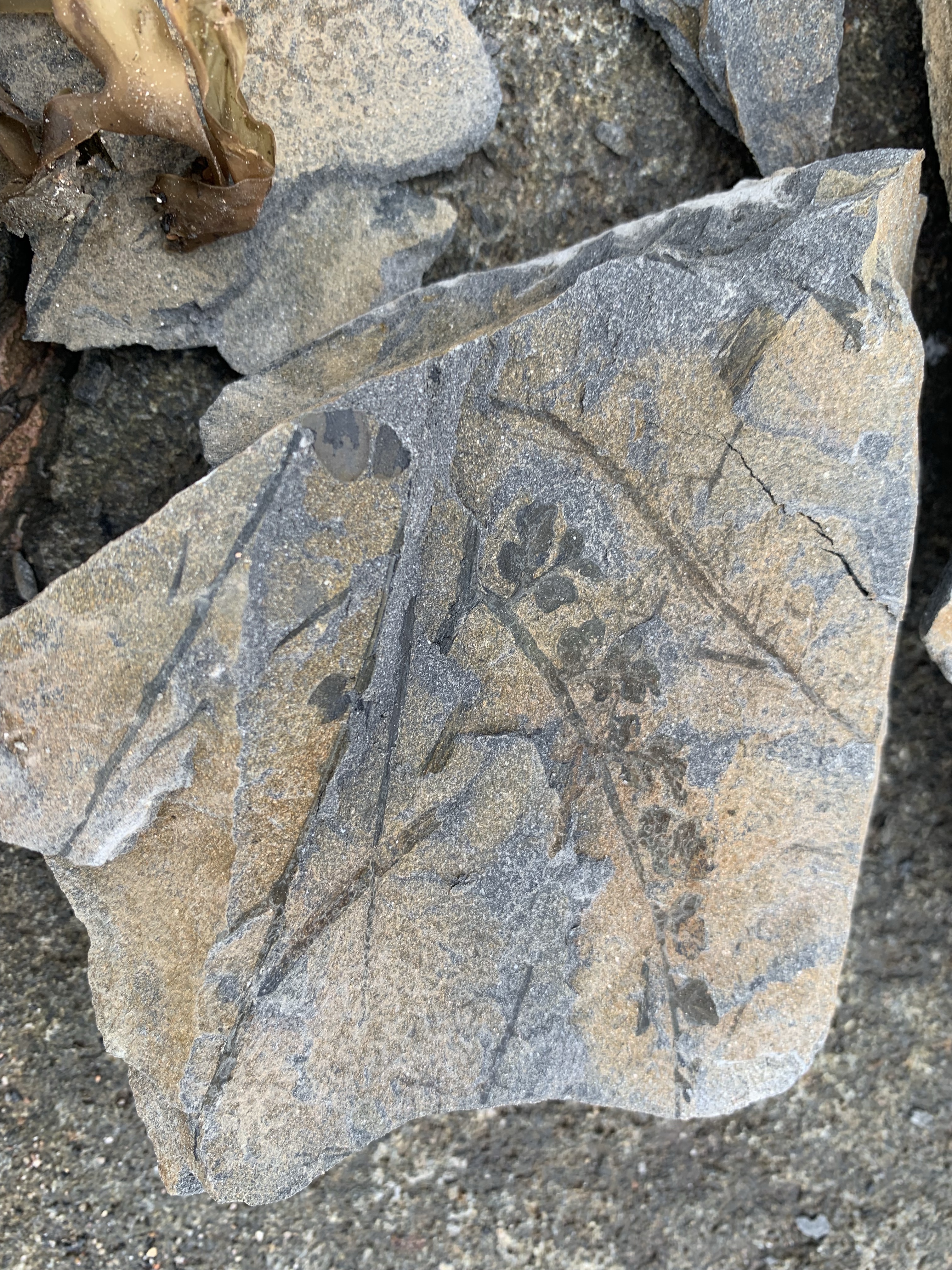
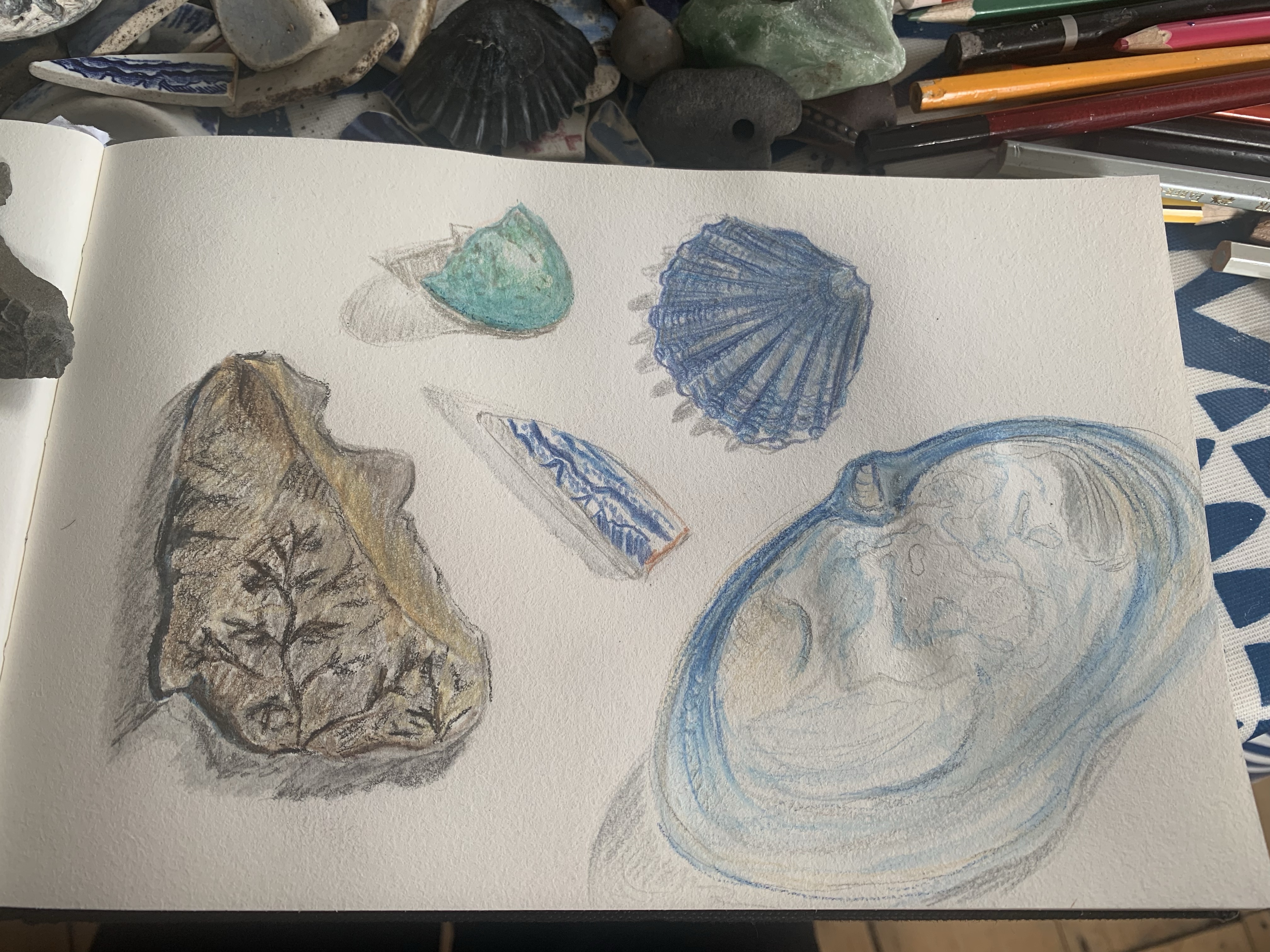
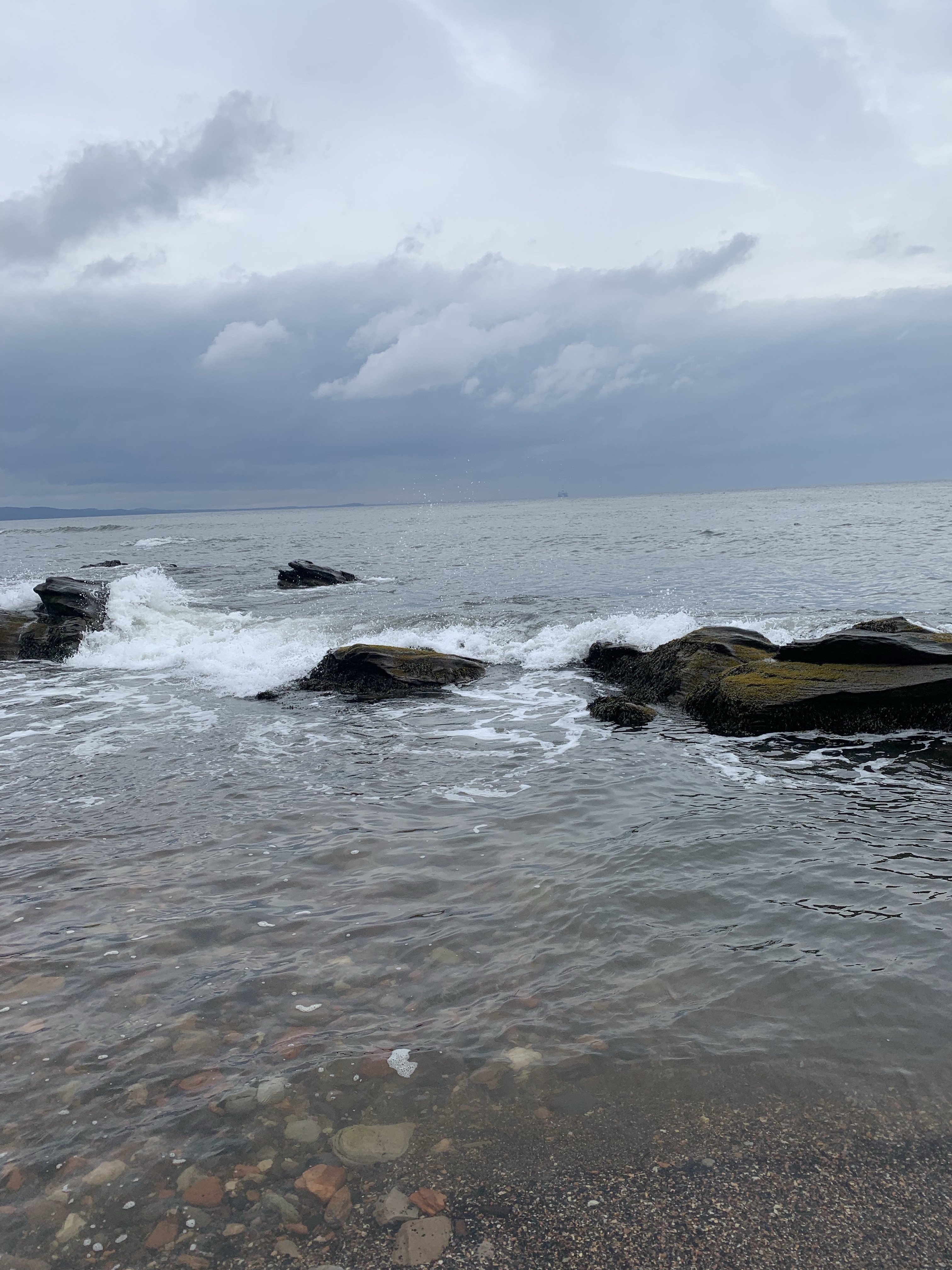
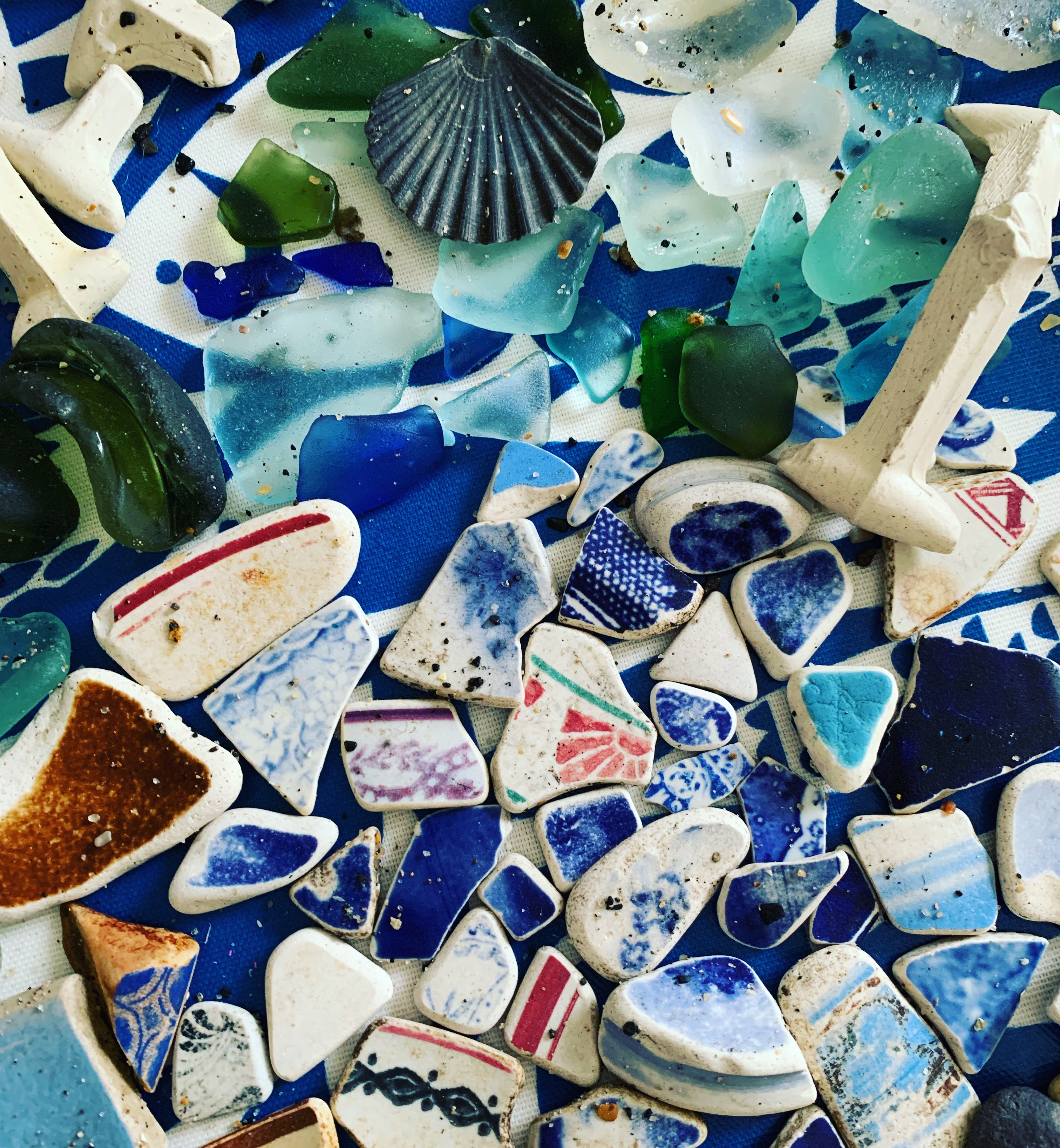
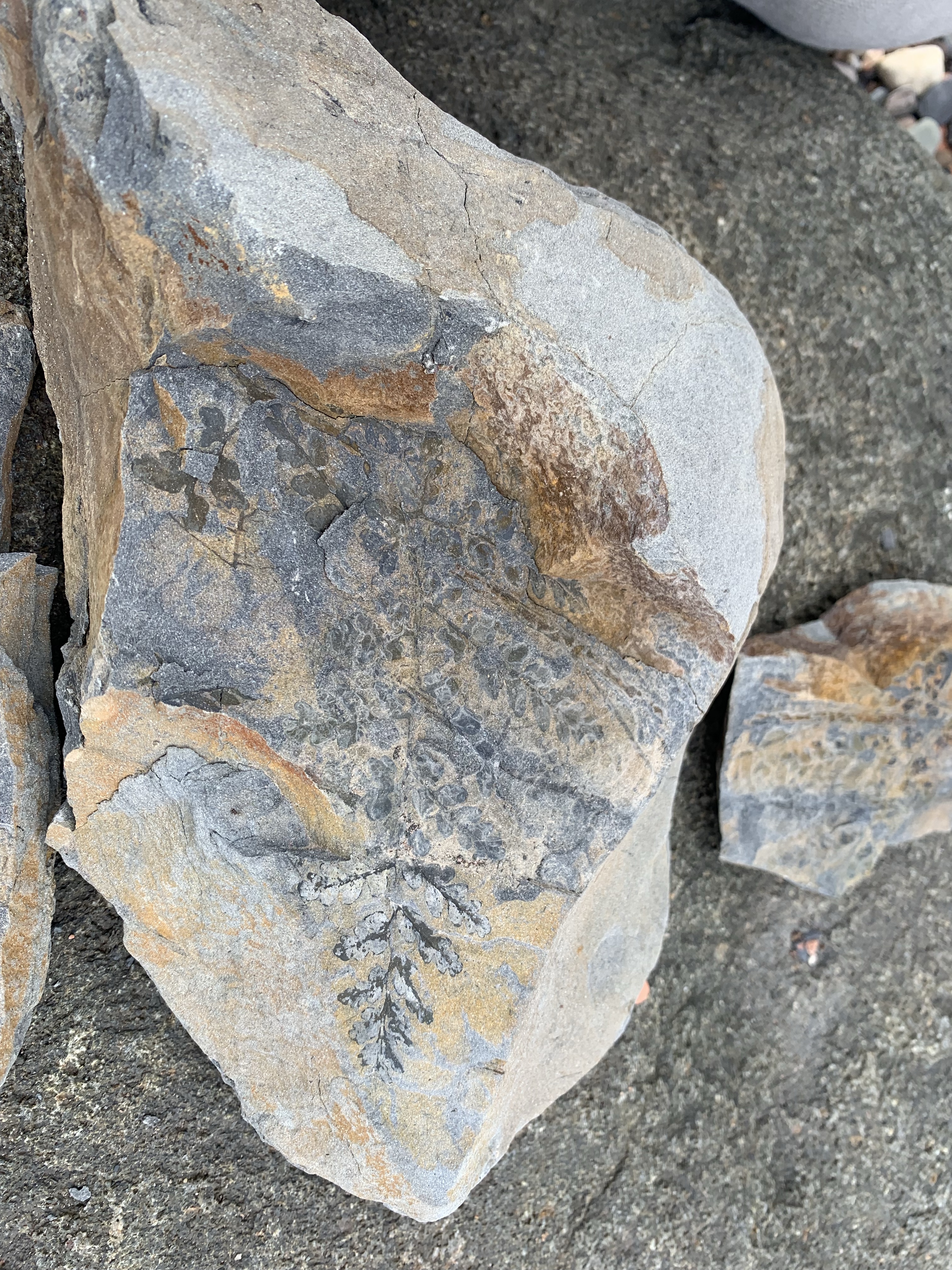
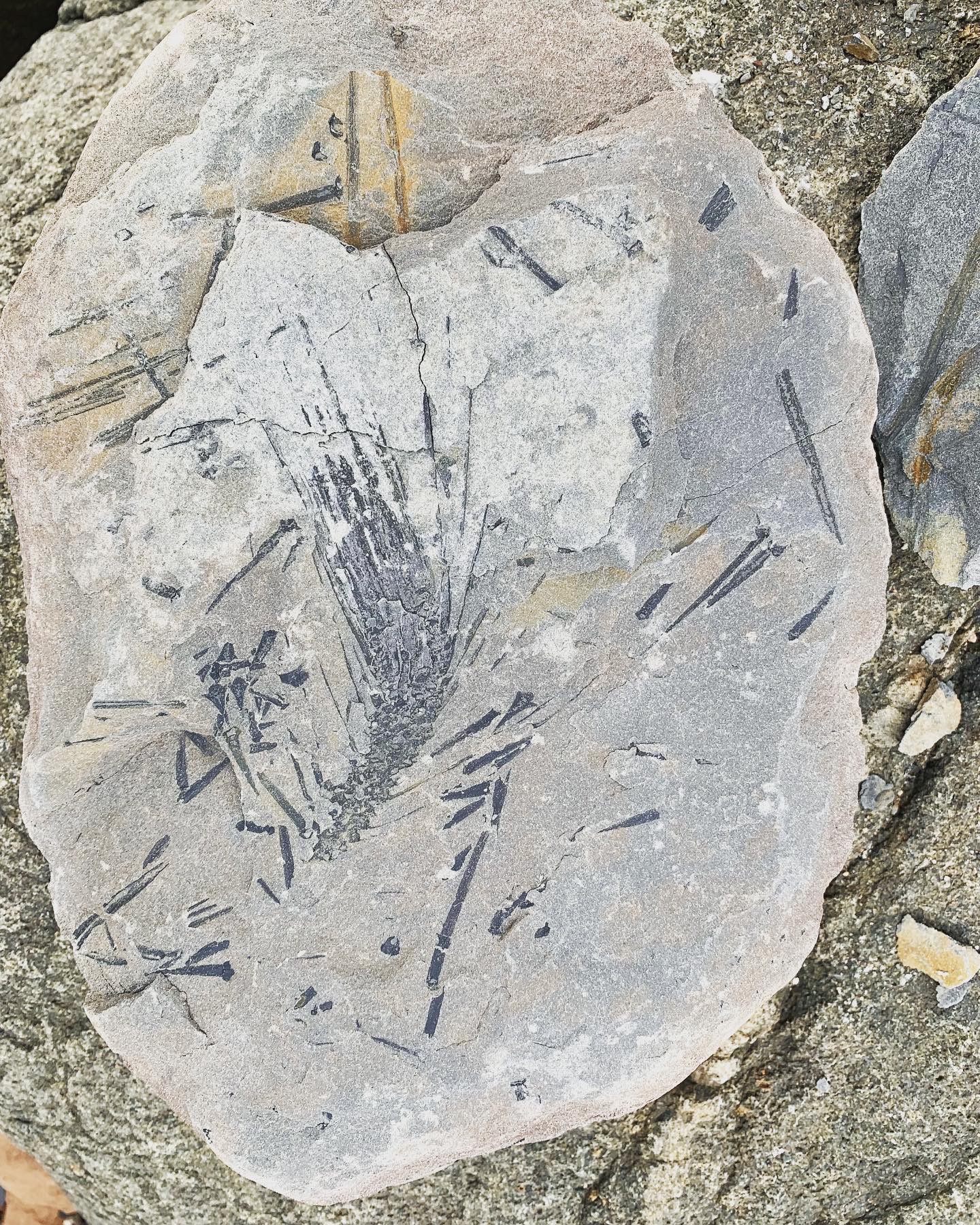
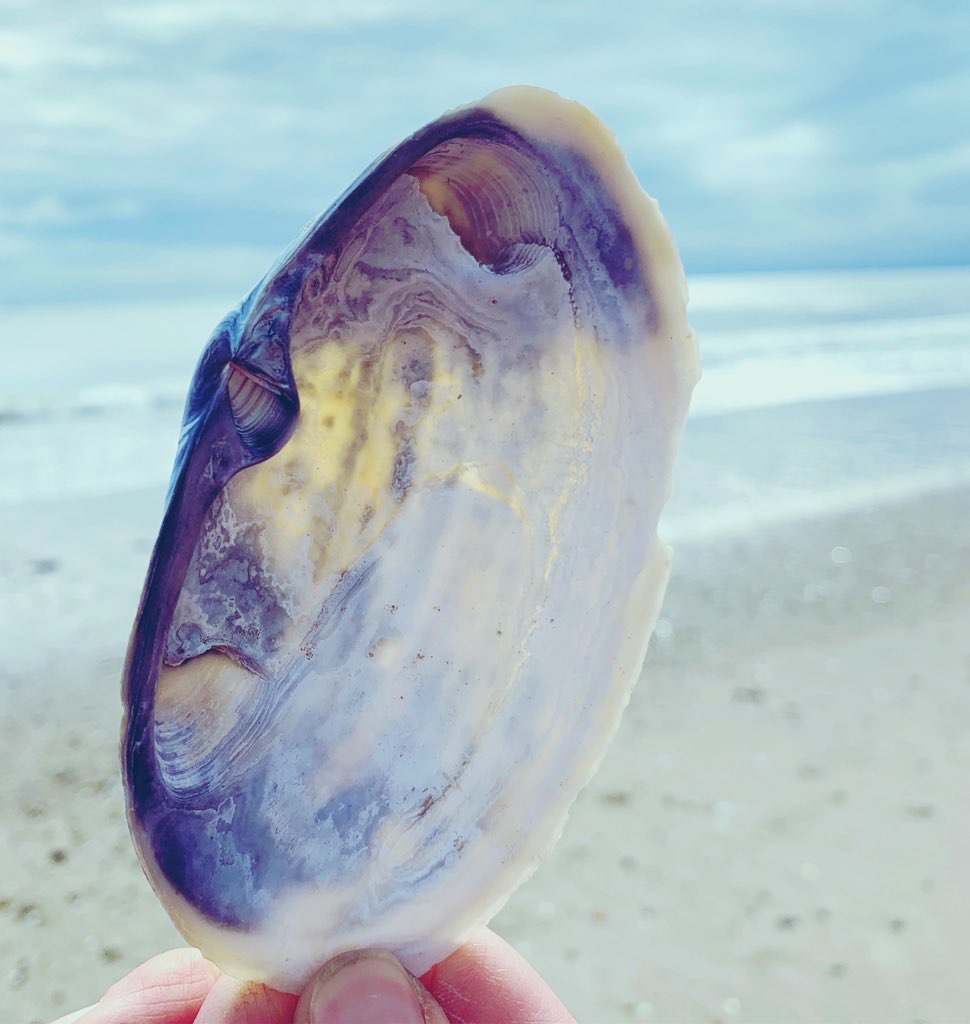
A week on the Scottish Coast. Each day filled with sea air, beach combing and woodland walks. We were lucky enough to find some plant fossils in the shale rocks.

Much needed time for writing and creativity after a busy couple of months. Looking forward to delivering more nature based creative writing courses over the next few weeks including a nature writing poetry master class and a woodland inspired four week writing course which I am planning for June / July.

I always love returning to the home comforts of Base Camp and my gorgeous cats! I think they enjoyed having the house to themselves for a week, although we have been getting lots of cuddles .

Seahorse obsession…

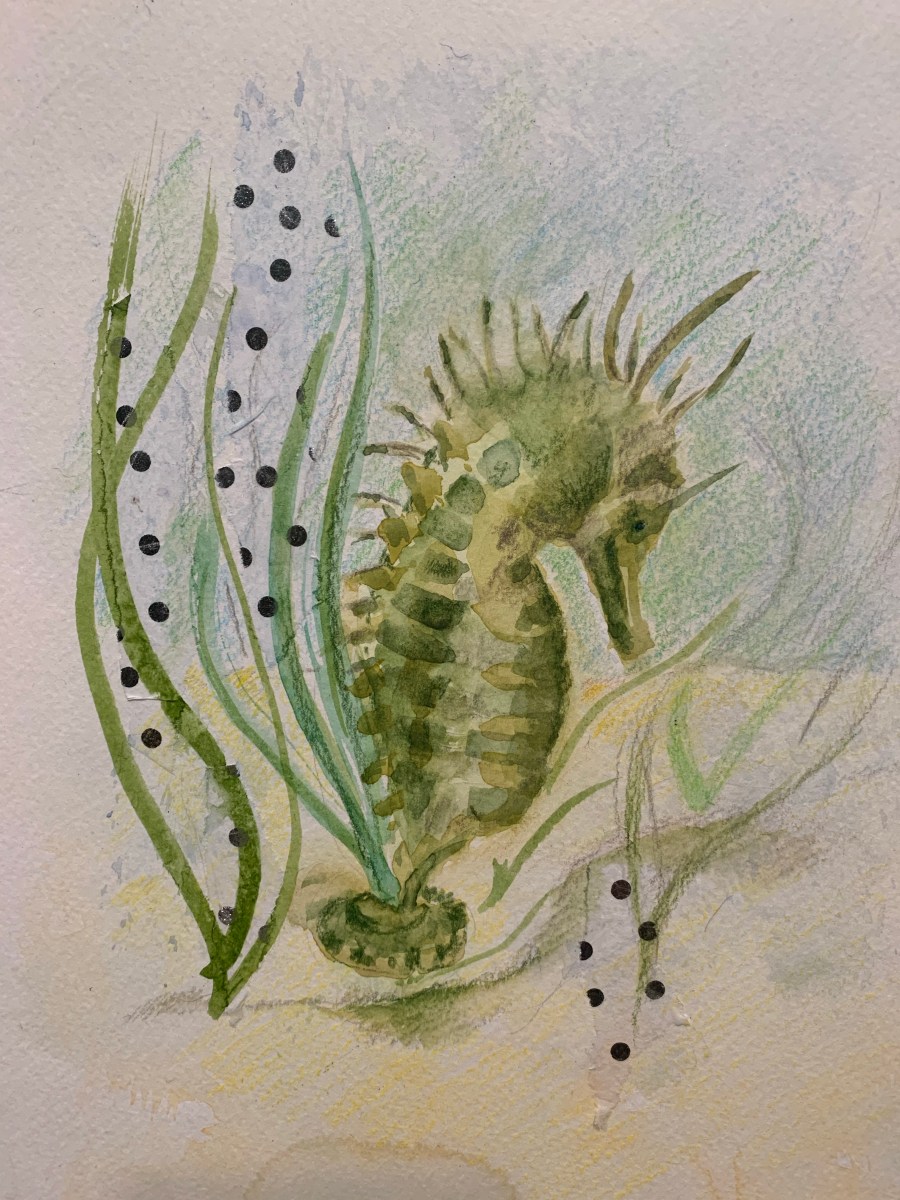
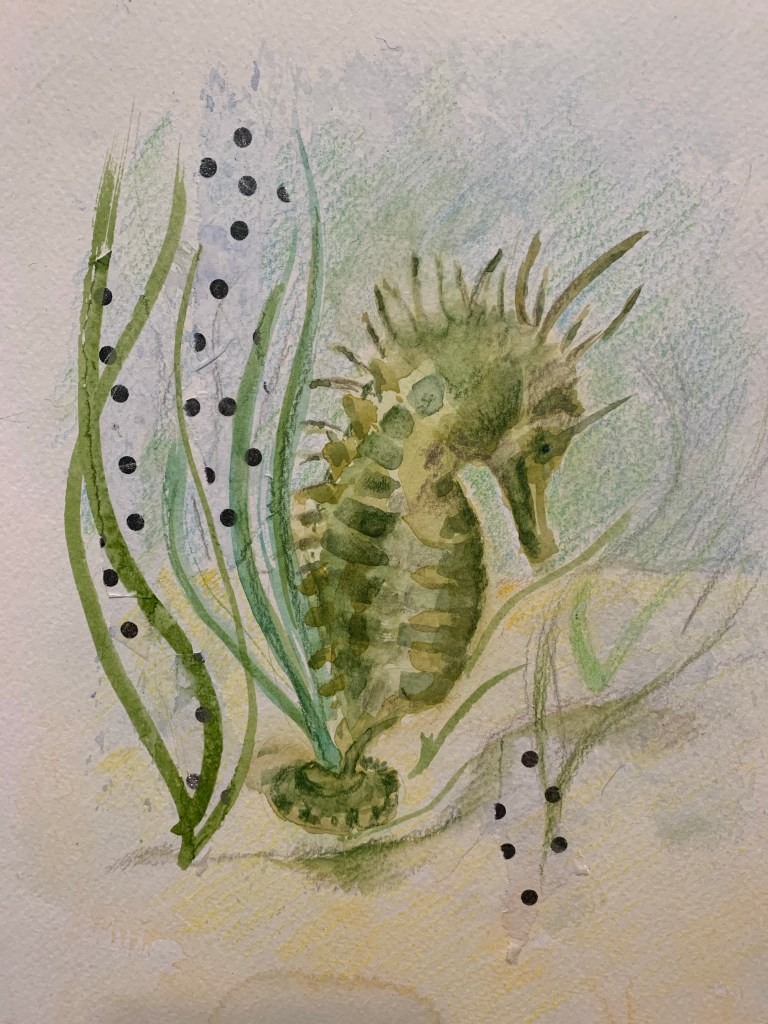
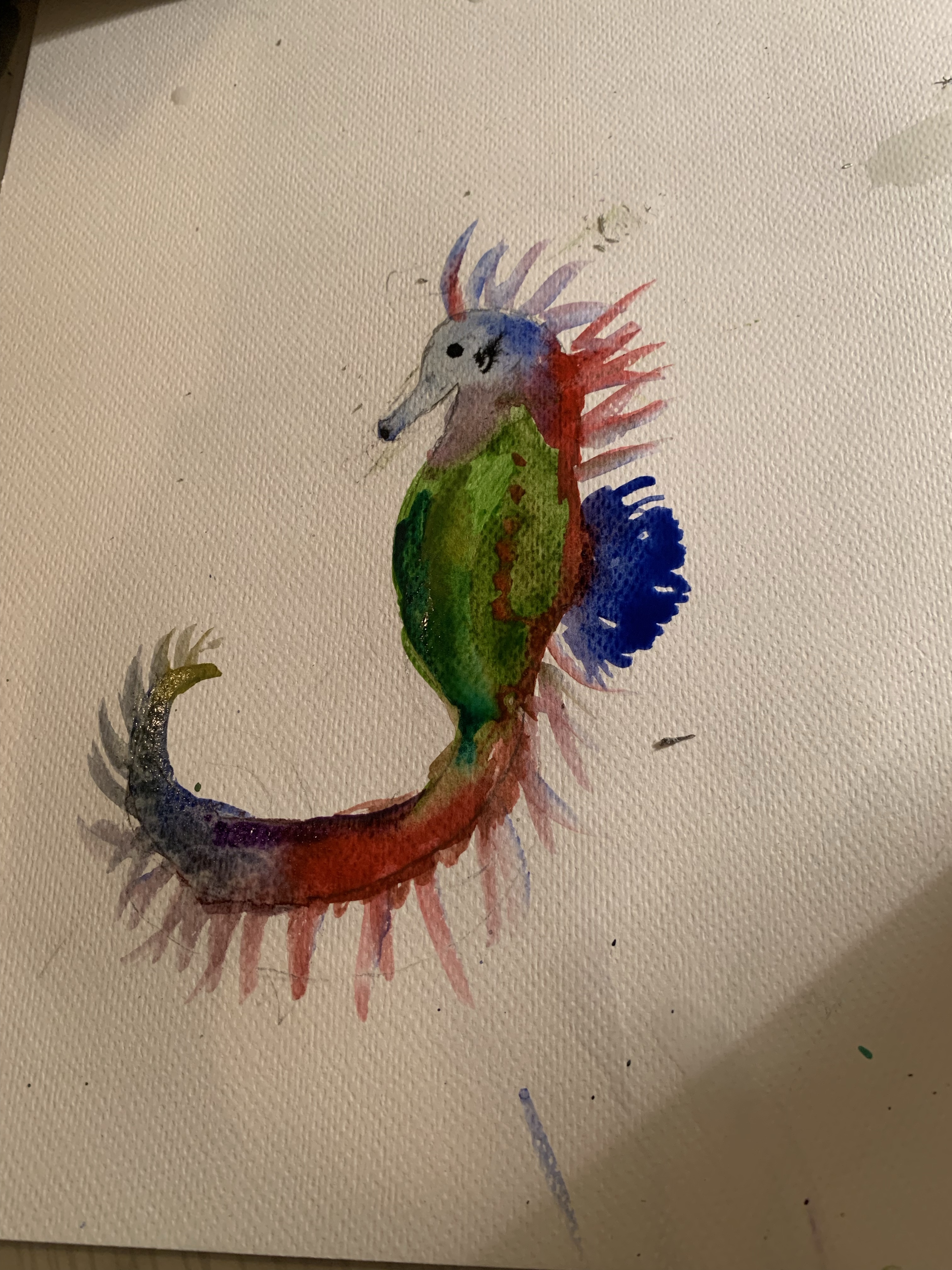
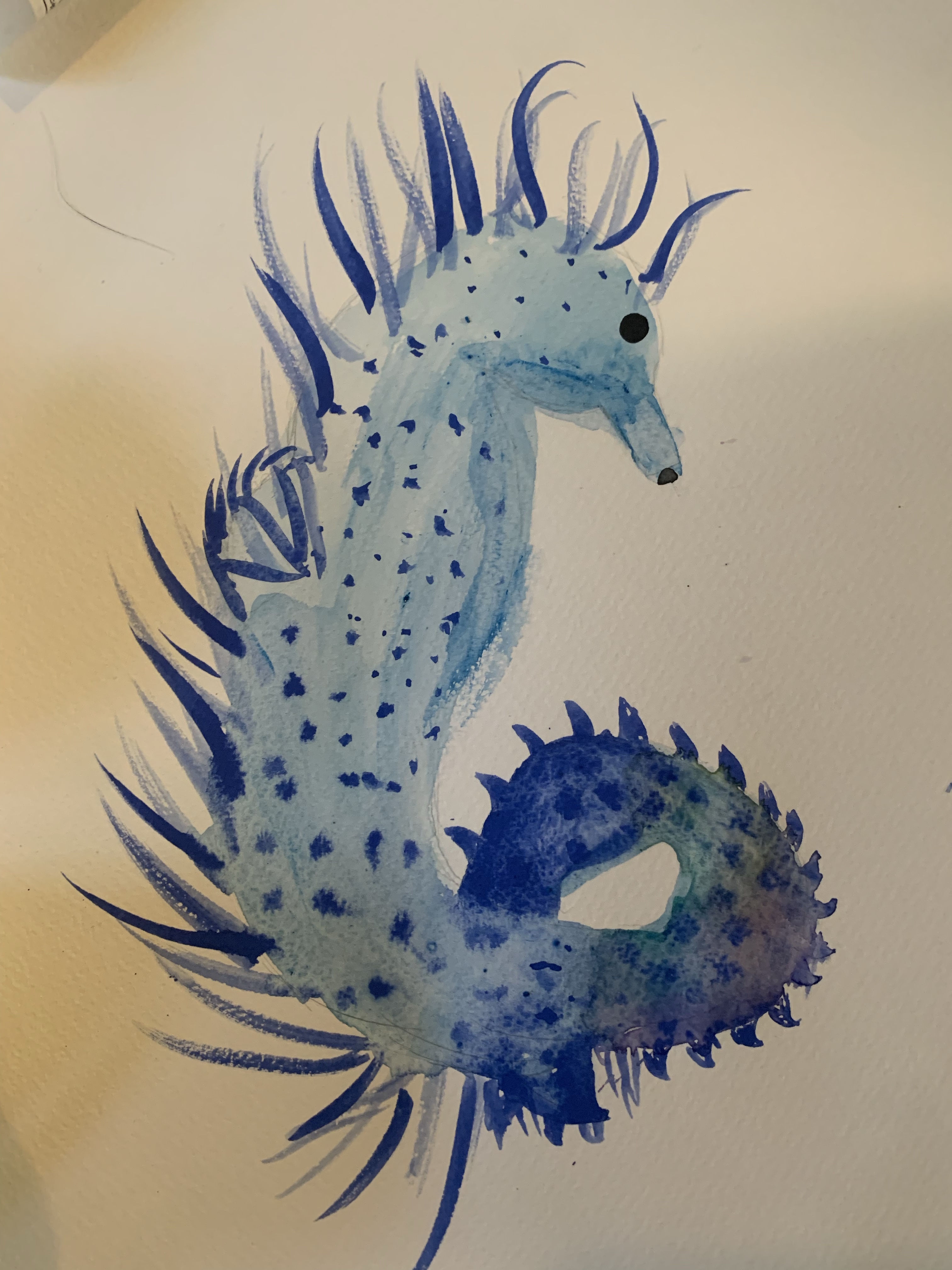
If you haven’t already – check out the Seahorse Trust website. Recently I attended a lecture on seahorses with the Field Studies Council. I had no idea they were all around the shores of the UK.

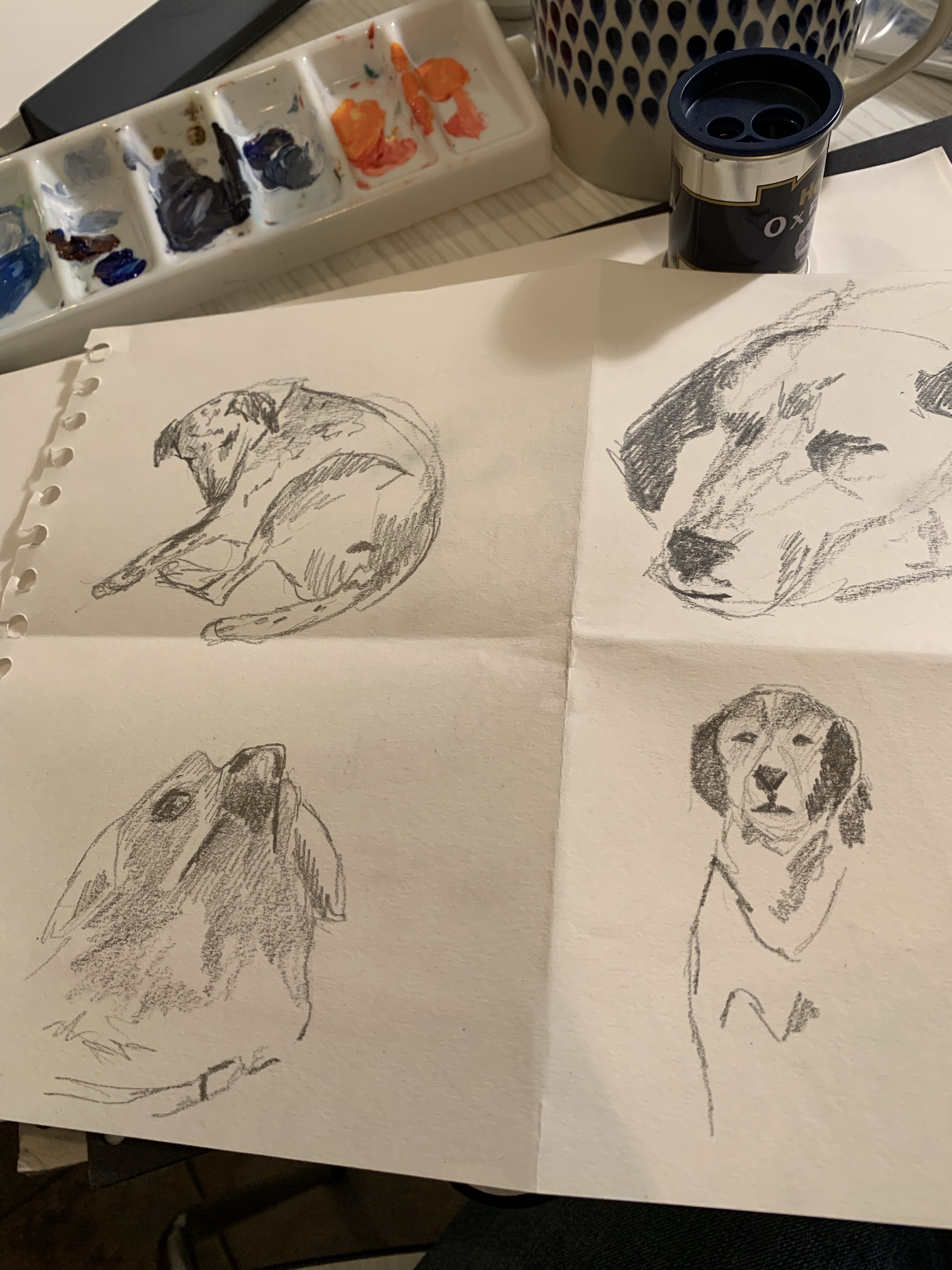
I’ve been trying to learn about them through drawing and observation of the divers footage online. Beautiful creatures!

This has also inspired my painting buddy… she sold the blue seahorse painting to a friend to raise funds for the Seahorse Trust, after I shared it online 💙💙💙

The best and most brilliant thing about the natural world is that every day there is ALWAYS something new to discover!