Cormoranting…

I’ve decided on a new term, ‘Cormoranting’.

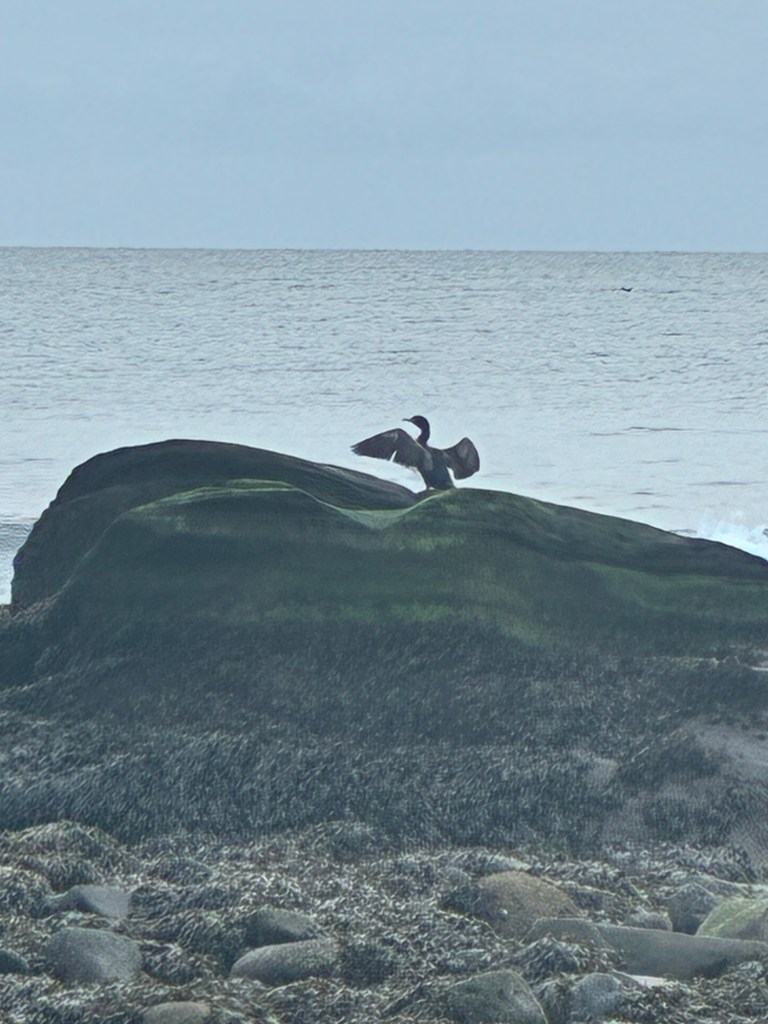
Many months ago during a Field Studies Council course one of my writers wrote a beautiful poem about the lessons we can learn from nature. In the work she used the cormorant as a metaphor for coming out of difficult or challenging life situations when, just like the cormorant we must spread out our wings and rest. This is a habit of cormorants who dive so deeply that their wings become saturated and they must dry them out between swims.

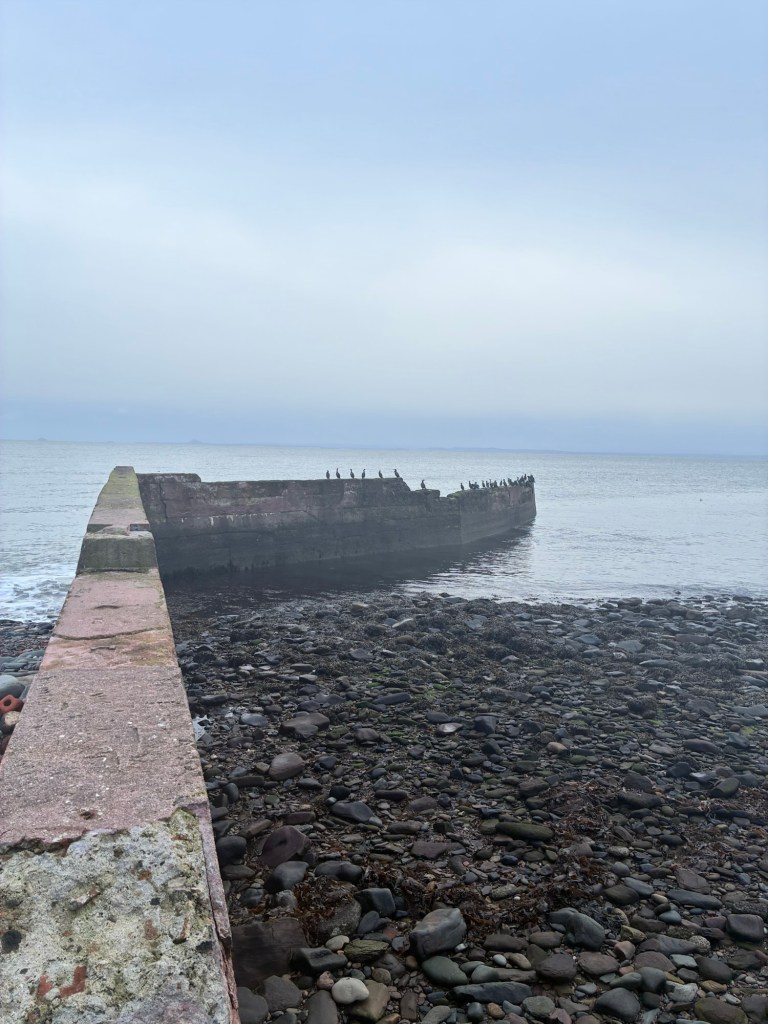
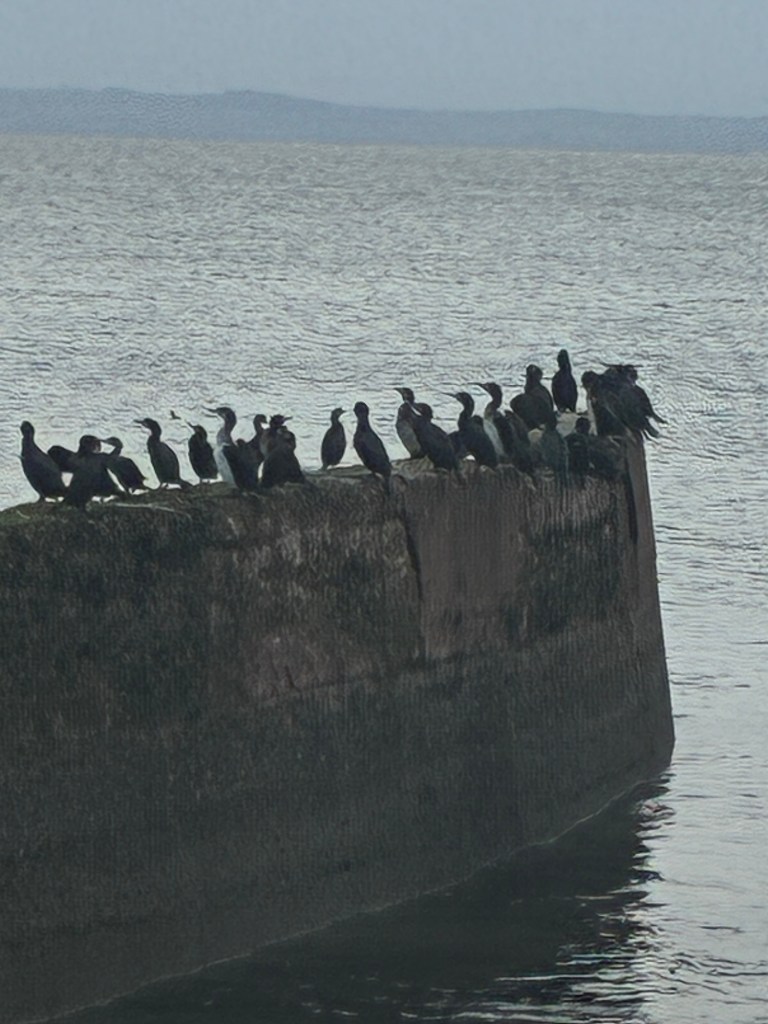
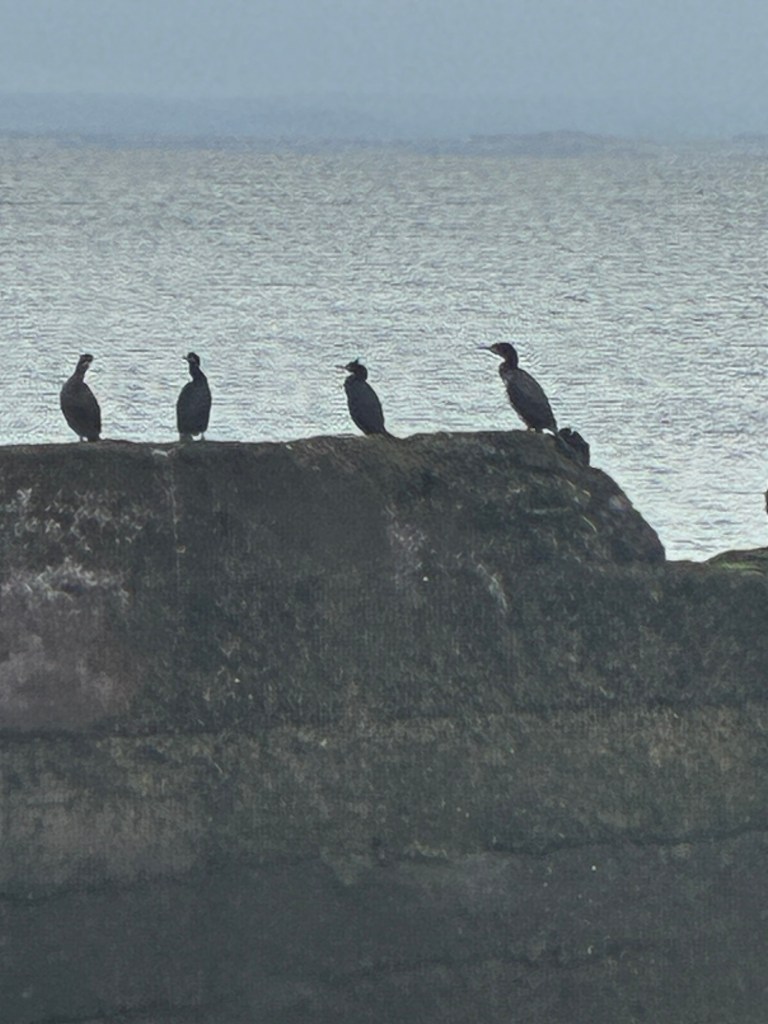
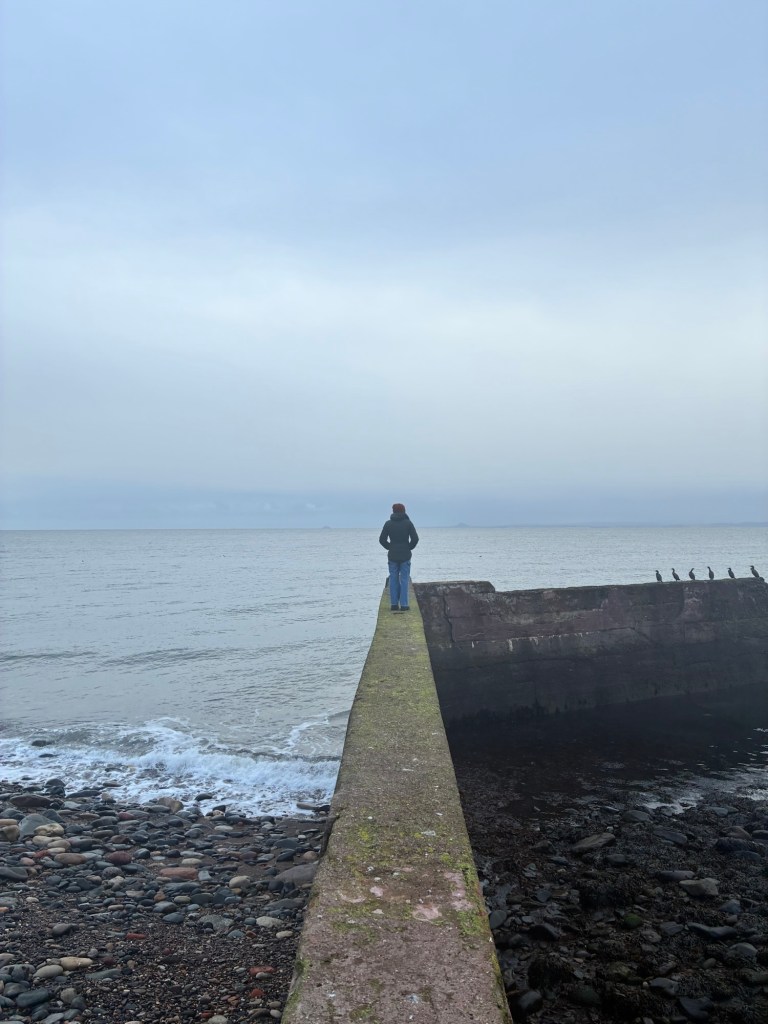
Edit – I assumed the birds that I see on our trips to Scotland were cormorants. They use an old jetty to line up together. I discovered since writing this post that the birds pictured here are a similar species called Shags. They are similar to cormorants but smaller. Like cormorants there’s something quite strange and prehistoric about them. I love their shape and long necks.

I always thought cormorants dived from a height like gannets, but a little research shows that there is no need for this. They are incredibly agile underwater so can swim great depths without the need for an initial plummet. Their bones are heavier than other bird species allowing them to reach deeper water and hidden places. Their feathers become waterlogged after such swims (as do the Shags) so they must dry them off before another swim.

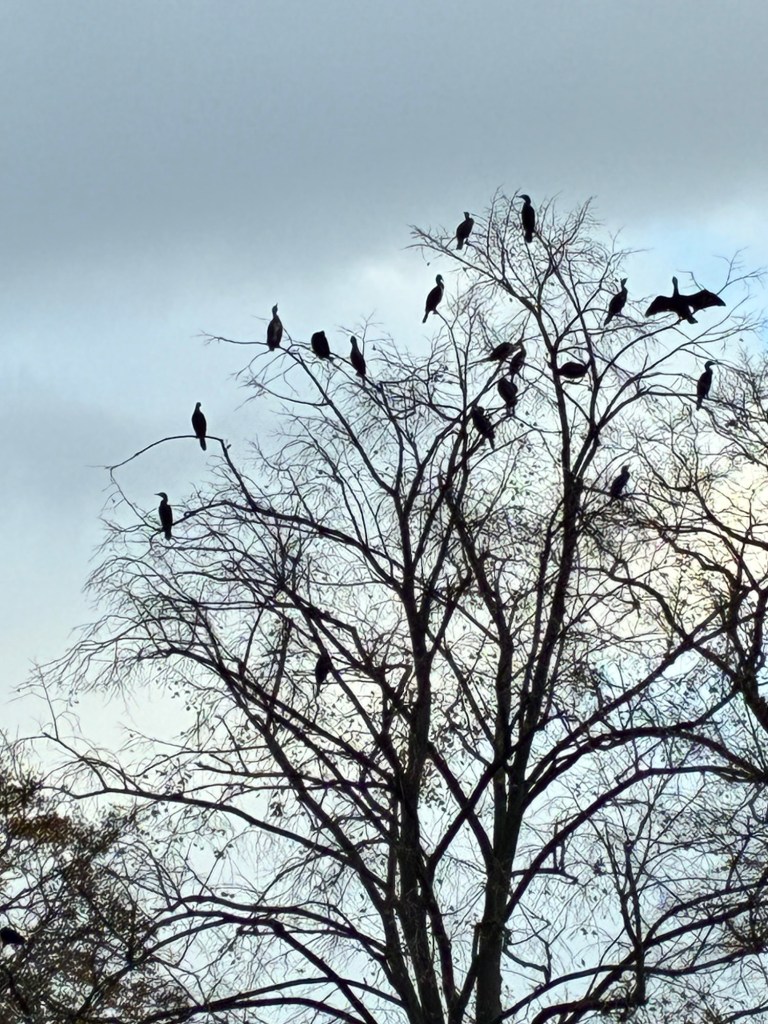
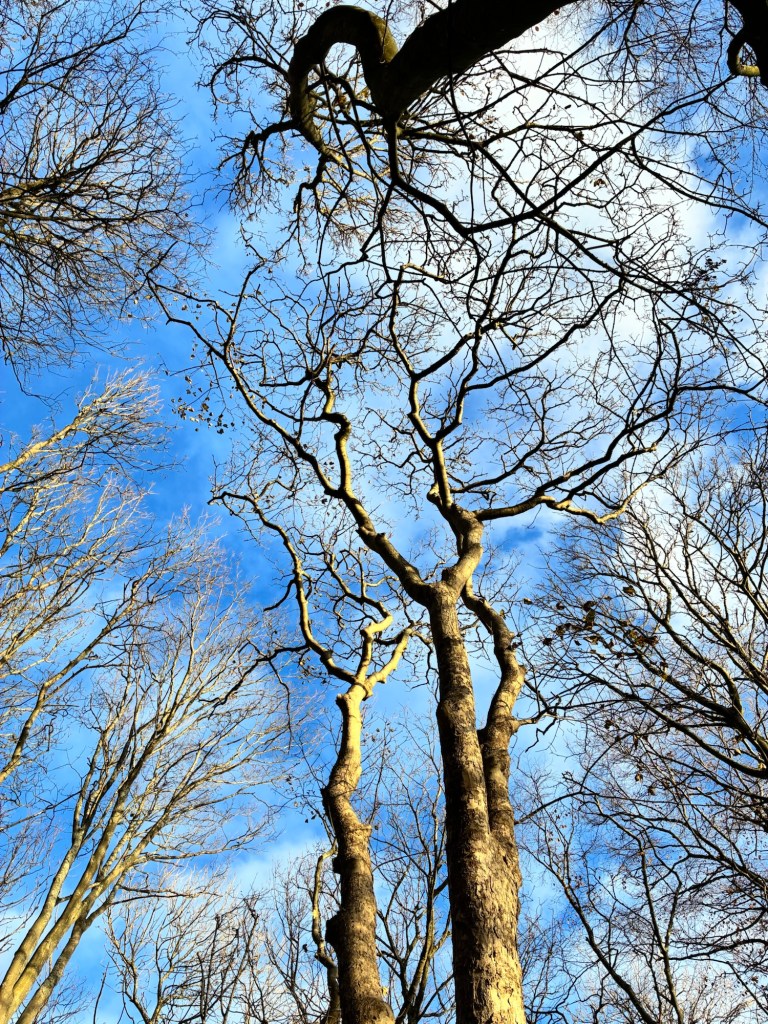
The strange thing is, I’ve recently noticed a colony of cormorants high up in the trees along the river Ouse in York. It started with one, so strange and out of place, to now 10 or 12 in the one tree at any given time. They are usually there as I cycle to work – prompting my husband and I to have started a funny text exchange of ‘12 today’ or ‘only 2 this morning’ on arrival at work.

Apparently cormorants are increasingly moving inland, no one is quite sure why. Perhaps food is depleting on the coastlines? Or they are simply venturing to new places for food sources, like seagulls who now are a familiar site inland.

Cormorants in York

Whatever the reason I’m happy to see them. They are so strange and beautiful. My friend commented that they look like the work of Franz Sedlacek Ghosts on a Tree – a painting of magical realism – you can view the painting here .

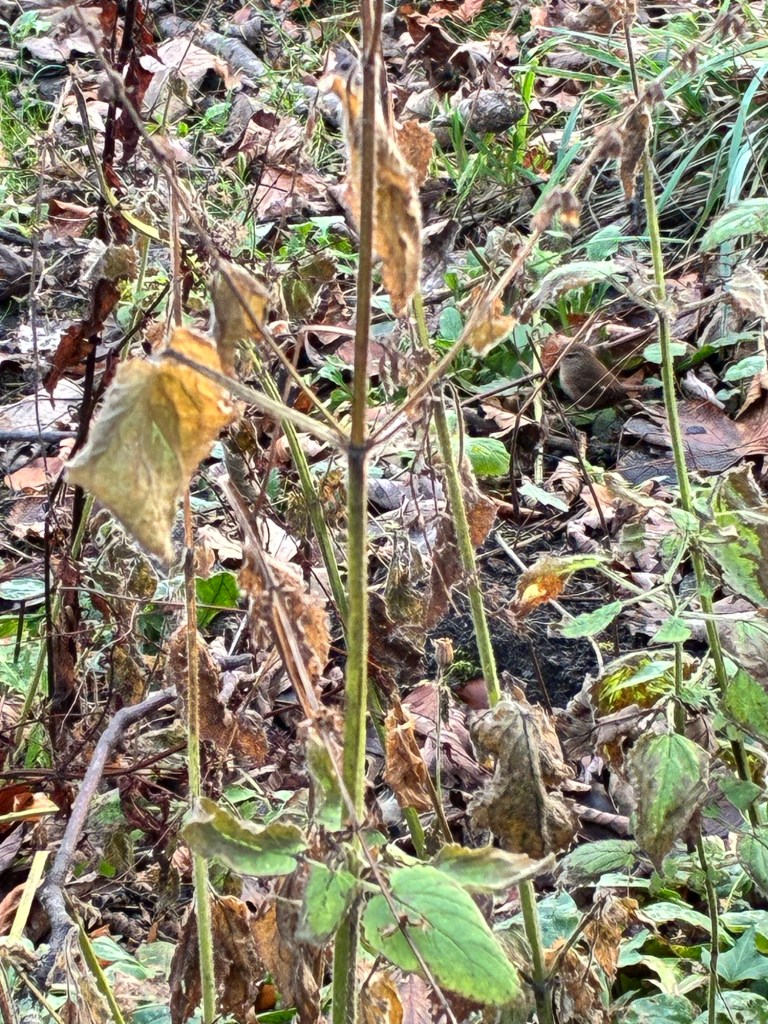
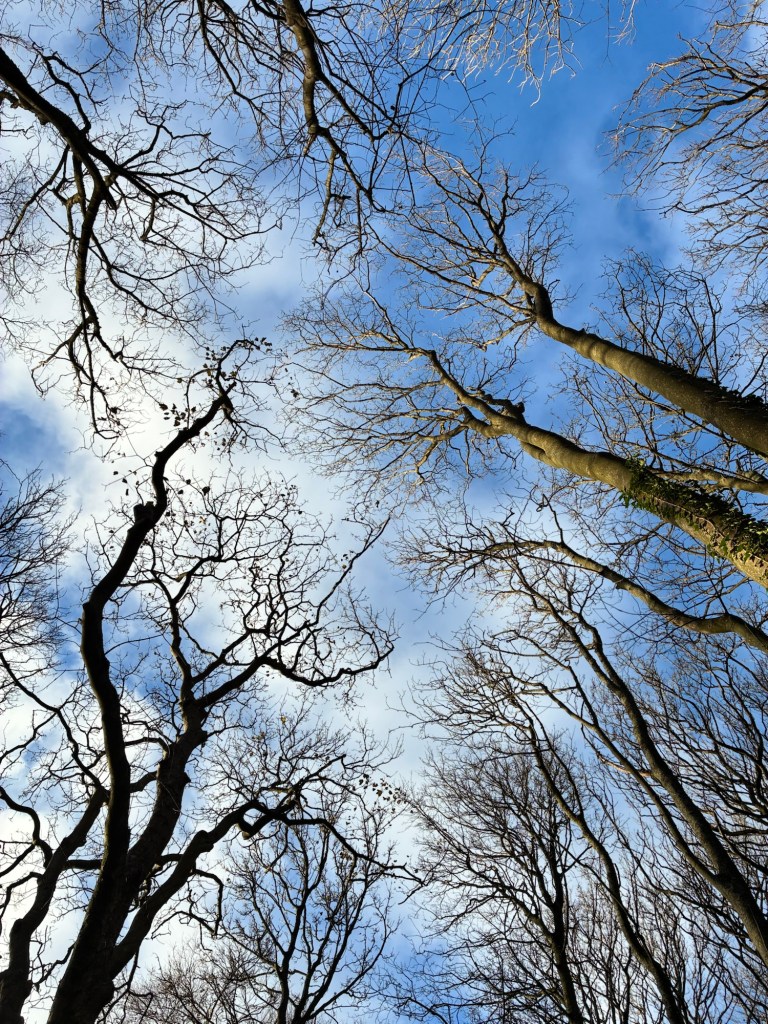
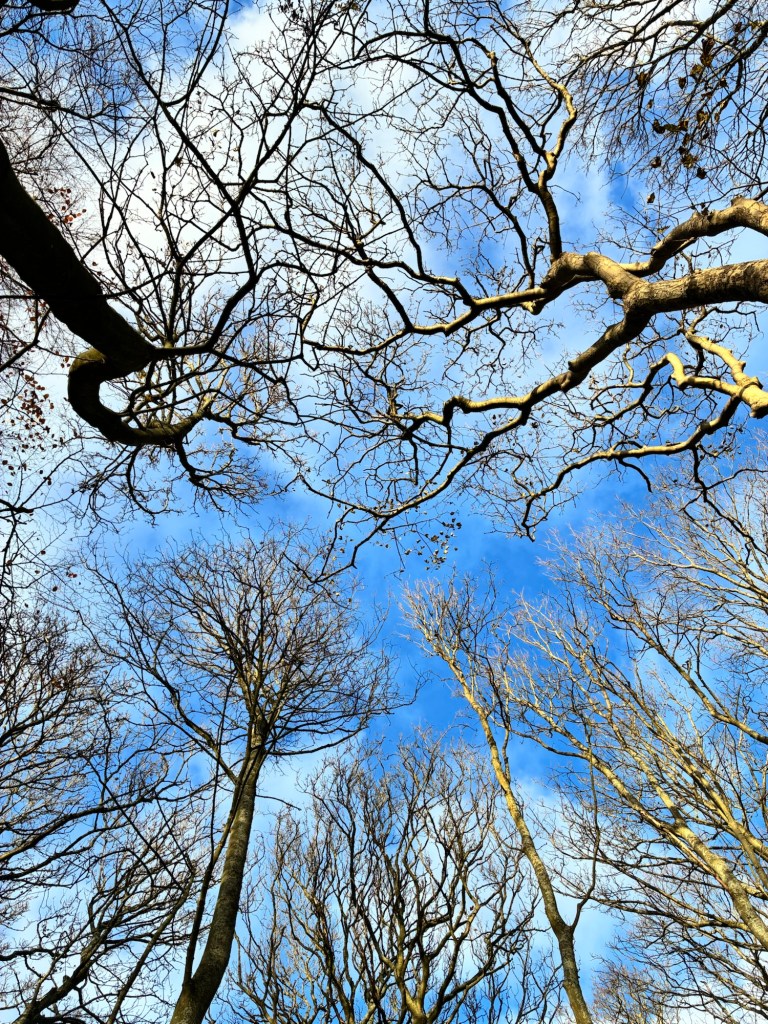
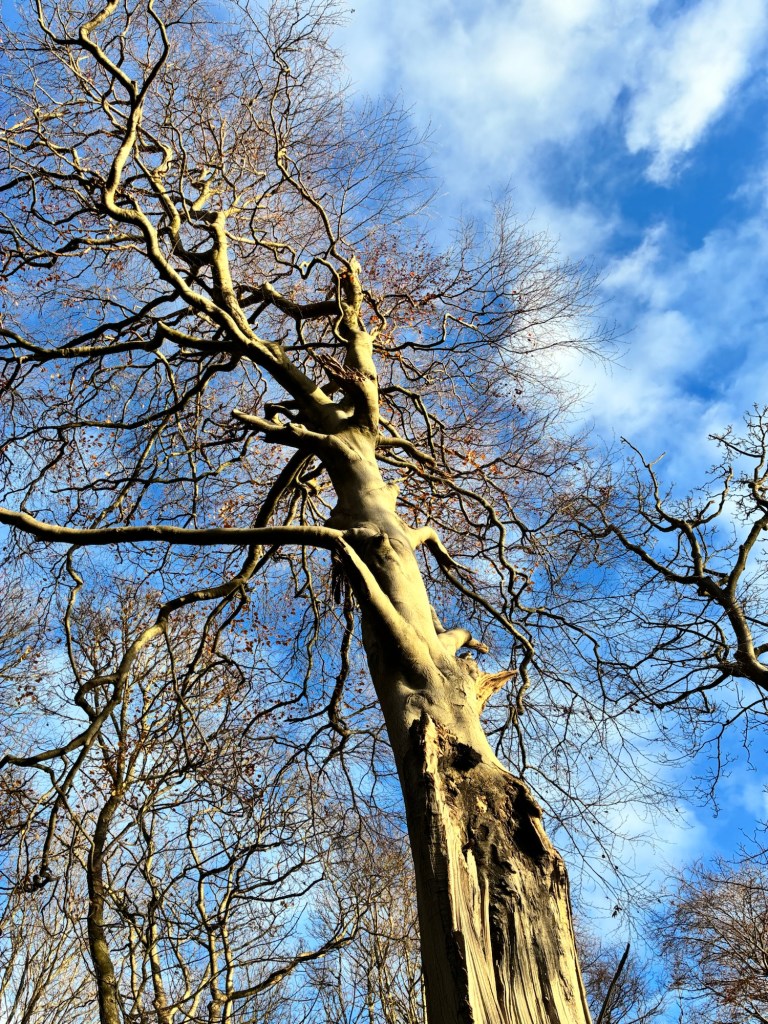
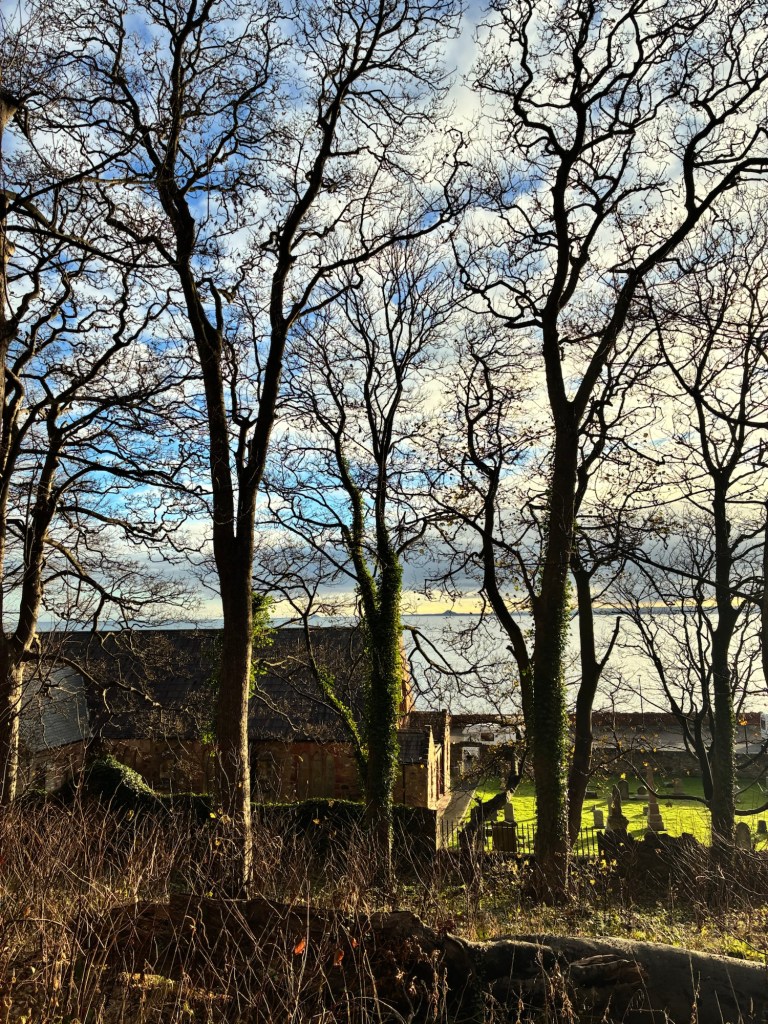
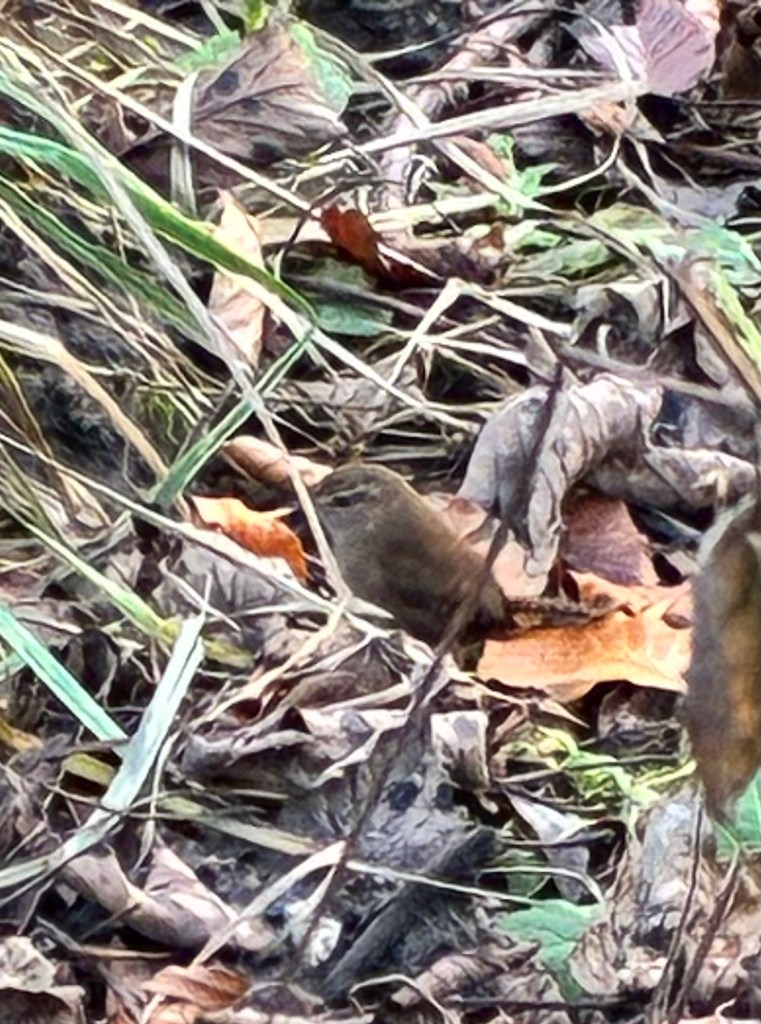
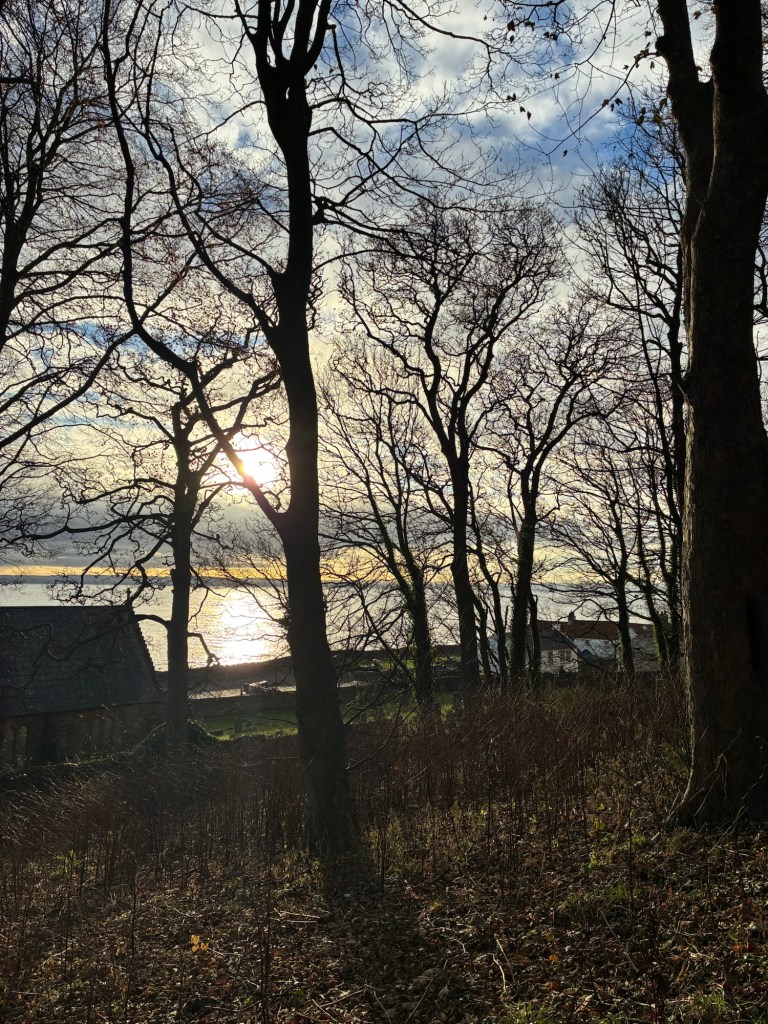
So this morning, I’ve taken a break from PhD writing to tell you about what I’m calling ‘Cormoranting’ a moment to stretch out my wings and rest. I’m currently in the middle of a beautiful ancient woodland in West Wemyss – and I’ve been sitting so quietly a baby wren has been rustling around the earth at my feet. It’s whole body is no bigger than a baby mouse. See if you can spot it…. There’s a close up at the end of this post.

I hope that you’ve enjoyed this post. I also hope that it inspires you to do some Cormoranting. For anyone interested in the spiritual meaning of cormorants you can find some further information here.

Beautiful wren ❤️

Do I really need the rubber duckie? Resisting the seduction of novelty and consumerism.

I’ve been away from my ‘field notes blog’ for quite some time. I’m nearing the end of my PhD now, in the final leg, so I thought I’d start posting again. So, with my love of the natural world and our environment, here’s a new blog post which felt timely in the run up to Christmas and the crazy consumerism that Christmas instils upon us.

A couple of weeks ago I was queuing up in a local corner shop. The guy in front of me had just made his purchase, when his child noticed a jar of Halloween themed green eyeballs on the counter. This kid was about three, very cute with a large set of lungs.

His Dad had just bought him a kinder egg, but the kid changed his mind at the last minute.

‘I want an eyeball,’ was the clear statement that left the kid’s lips as he pointed at the jar and firmly held his dad’s gaze.

‘Come on now,’ his dad said, ‘we’ve got chocolate.’ (Waving kinder egg in front of child’s face).

‘BUT I want an eyeball.’ (Much more determined this time.)

Now, there was a moment here, when things could have swung either way as father and son eyeballed each other, and the queue (now three or four people), waited with mounting pressure for the dad to make the right decision (I’ll let you decide what that was). The kid seeing his dad wavering and evidently feeling close to getting his hands on the novelty eyeball sweet, dug in his heels and opened his lungs.

The thing that interests me here is the anticipation of the purchase. We all know that shopping gives us a dopamine hit, and releases the same feel-good hormones, but apparently so does the anticipation of getting the product.

I found this interesting article in Psychology Today, which gives us a brief overview of an experiment conducted with monkeys (that’s also something else to come back to) which showed that dopamine is released way before the reward. This means that as soon as we are scrolling, browsing, viewing – our brain is releasing dopamine anticipating the joy that is soon to be ours. The issue is, that it doesn’t last when we receive the ‘thing’, our dopamine drops and we move on to anticipating the next thing, it’s a never-ending cycle of consumerism. 

None of us are immune to this. I’ve been resisting the urge to buy a mini model of Zoltar recently. It’s a mini model of a fortune telling machine, which was ironically invented as a stage prop for the film ‘Big’ featuring Tom Hanks in 1988, and then made it to arcades across the world. (There’s a whole rabbit hole to fall down here – if you want to go down that route I suggest following this link.)

Why do I want this? It brings back memories of the seaside and childhood. I love a bit of mystical novelty, so I guess owning ‘stuff’ is also a physical representation of our identity and memories. (For anyone who hasn’t come across these seaside arcade delights – the Zoltar model is a dummy in a glass case, that for the costly sum of £1 will tell you about your fortune via a little bit of card that the machine spits out). There’s a couple of these machines outside the arcades at Scarborough that are notorious for simply thieving the £1 coin and withholding the magical slip of paper that foretells your future. (Not a good omen in my opinion).

I’m anticipating having mini Zoltar sitting on my desk, spitting out daily fortunes for me and occasional visitors. The reality is that after the first few spits, is that I know that it will end up being another bit of plastic detritus collecting dust. I know that the novelty of the fortunes will wear off, and it will inevitably end up in a bag for the charity shop in around a year, when I’ve had my fun and admitted to myself that it was a useless purchase. 

In an age where plastic production and plastic waste is of increasing concern, why aren’t we asking more questions about what we actually need and what we are purchasing? How do we circum-navigate the craving and the anticipation and seek dopamine rewards elsewhere?

We are bombarded with novelty everywhere we go, it’s a cheap thrill. That cute rubber duck to sit on the side of the bath.  A hit of endorphins that soon wears off. I’m trying to wake myself up to consumerism and ask myself if I really need something before I buy it. I wonder if there should be higher taxes on what materials are used for, novelty being the highest? It’s not just about plastic production; it’s about using all our resources mindfully. 

Like everyone else, I want to buy my children toys, I love hiking I want a great waterproof jacket and all the kit, I also love a nick knack, but what if we all consumed things more cautiously and treasured the things that we own? What if we bought the best we could afford and make it last? What if gift giving became the gift of time or experience and the items in our homes were real treasures?

And for anyone interested in making a difference here’s some ideas for alternatives to buying novelty items as gifts….

  • Choose one beautiful thing over many bits of novelty. I recently bought one gorgeous silver ring for my family to give me as a birthday gift. There’s a website here aimed at just this idea: Buy Me Once.(A website aimed at selling goods that will last). 
  • Experiences. I’d rather have your time than a physical gift. Support a local café or attraction as a treat. (I love a visit to Harrogate Spa in Yorkshire. I also love tea and cake…hint hint).
  • Buy a charitable gift (whether it’s a donation twinning someone’s toilet, or planting a tree – do good with a gift and champion our environment.)
  • Make something (OK – no-one would want my baked goods) – but you get the gist. My sister just took the time to knit me a gorgeous hat and scarf, this meant way more than some plastic schizzle.
  • Buy second hand, opt for circular production.

It isn’t always possible to avoid the shop counter with your kids. But here’s some other ideas for dopamine hits when we get the chance:

  • Bake together. (You can get a hit of the purchase choosing and buying the ingredients).
  • Create new things with pre-loved lego (we inherited loads of lego second-hand – its cheap to pick up second hand – what can you invent?)
  • Game together – I fell in love with Minecraft after my son spent an hour creating a cat themed roller coaster – it’s a great tool for the imagination. It’s also great in moderation for buying a little adult headspace.
  • Junk modelling – there’s nothing better than creating a junk model with items from the recycling bin. Our favourite was building model boats which we then attached to string and pulled along on our walk by the local pond.
  • Creating sculptures in nature – You don’t have to be a kid to do this. Andy Goldsworthy is the master. An hour out in the woods making cool stuff out of found items is a great way to spend the afternoon. Combine it with a follow up hot chocolate.
  • Den building / even better a den to watch a film from. Active time with down time in den cosiness (depending on the size of the adult and the den).

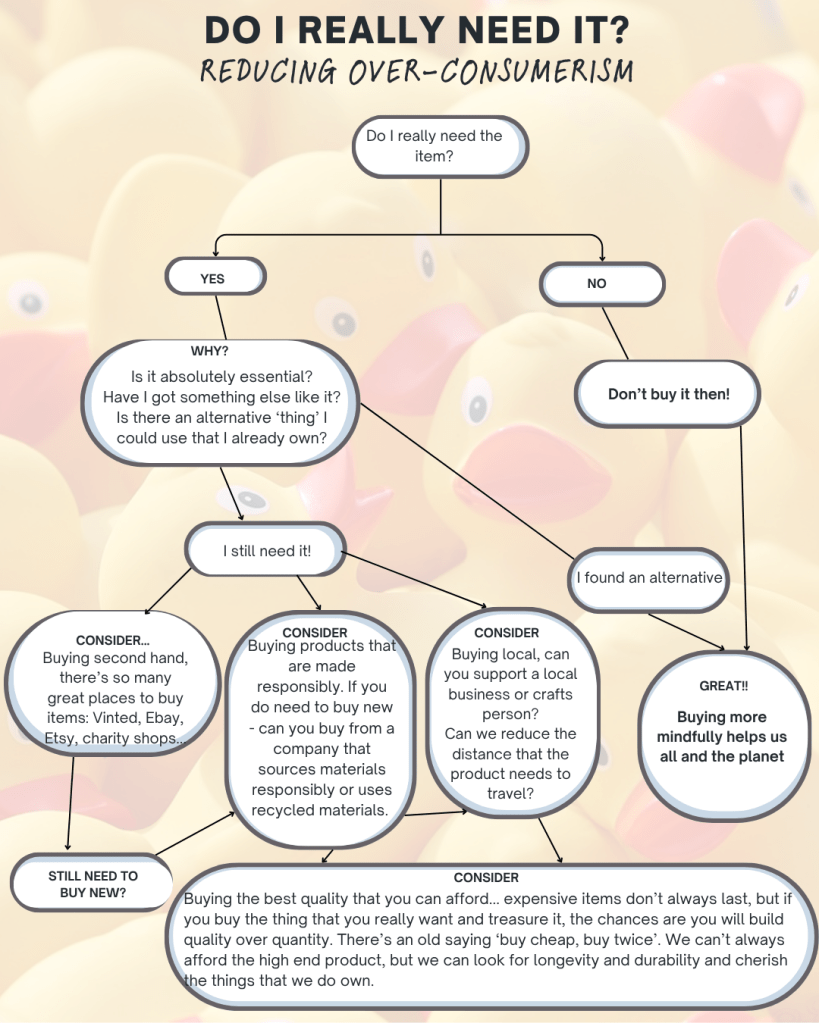
I’ve made this little chart to help make better choices when I shop, feel free to use it too.

Imagination -V- Reality as a painter….

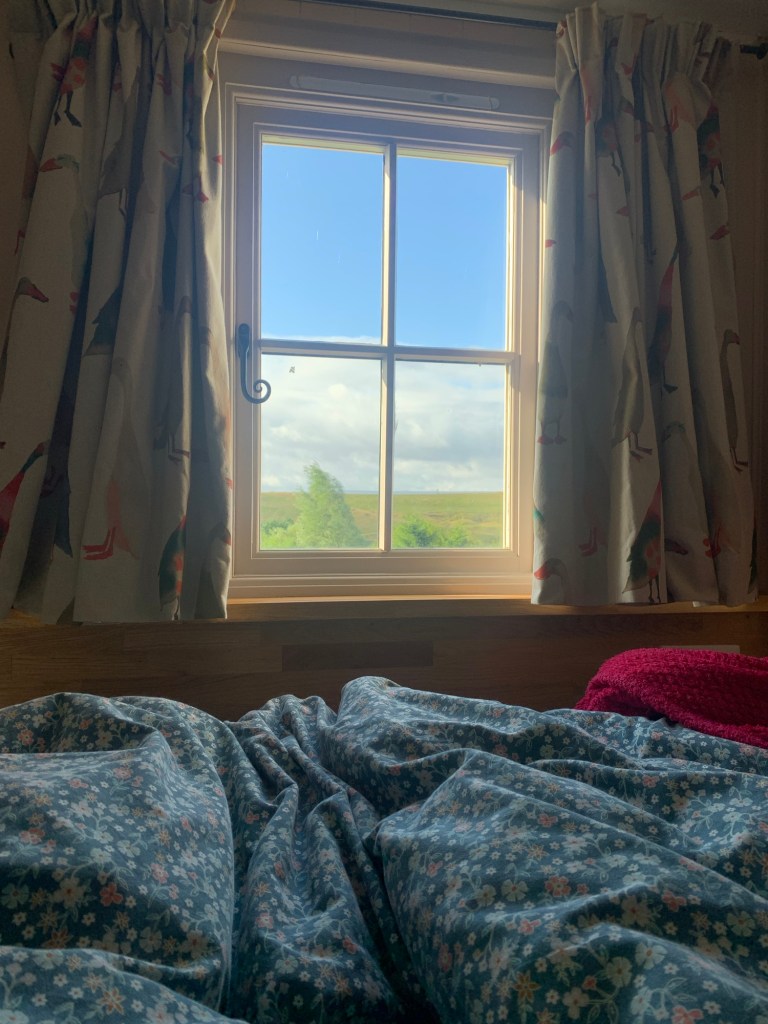
During August I spent two days in a cute little Shepherd’s hut at Hadrian’s Wall Campsite, which is gorgeous by the way, the owners are very eco friendly and maintain a quiet site. It isn’t overcrowded, everything is beautifully thought out and there were lots of lovely touches within the hut we stayed in.

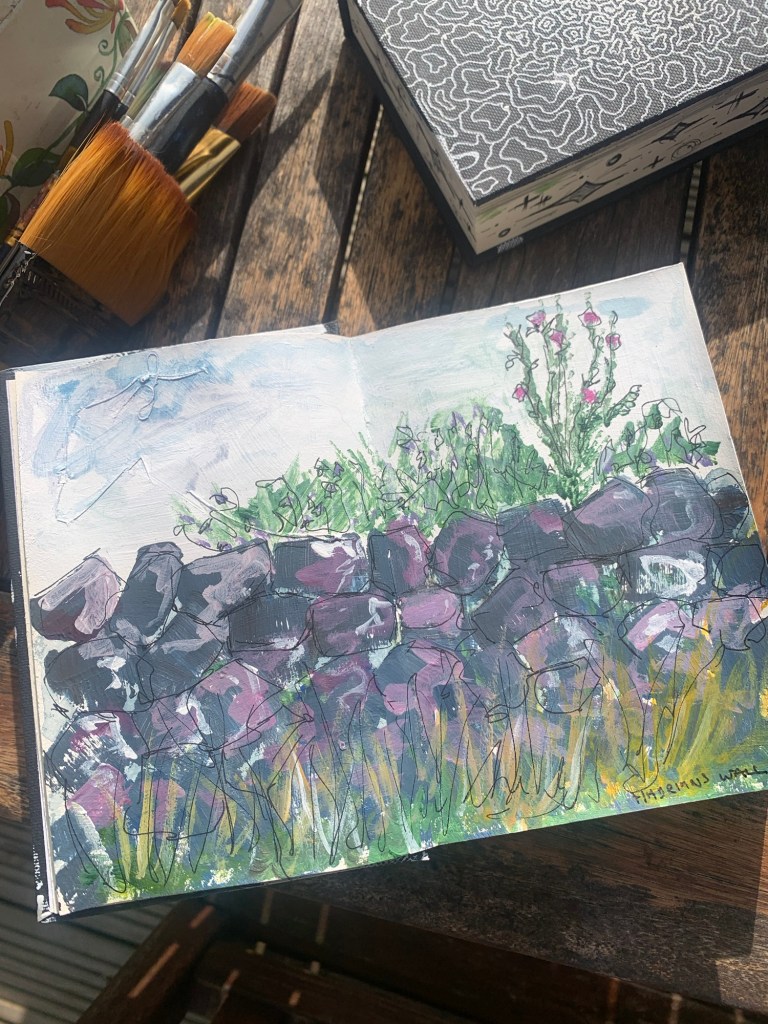
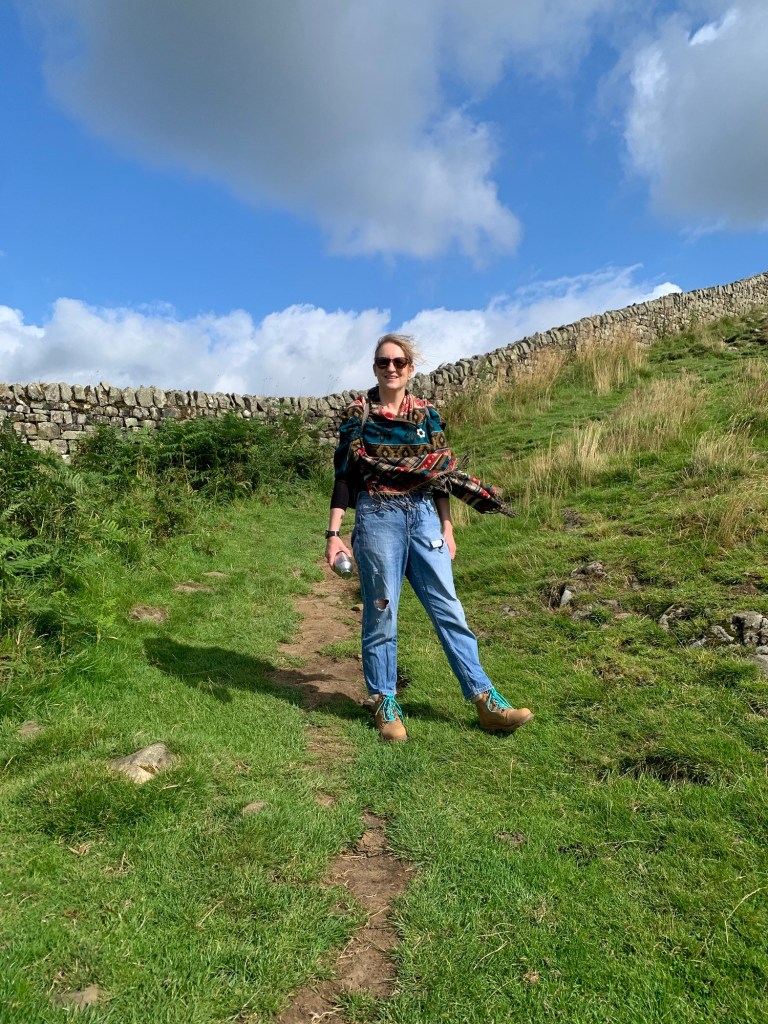
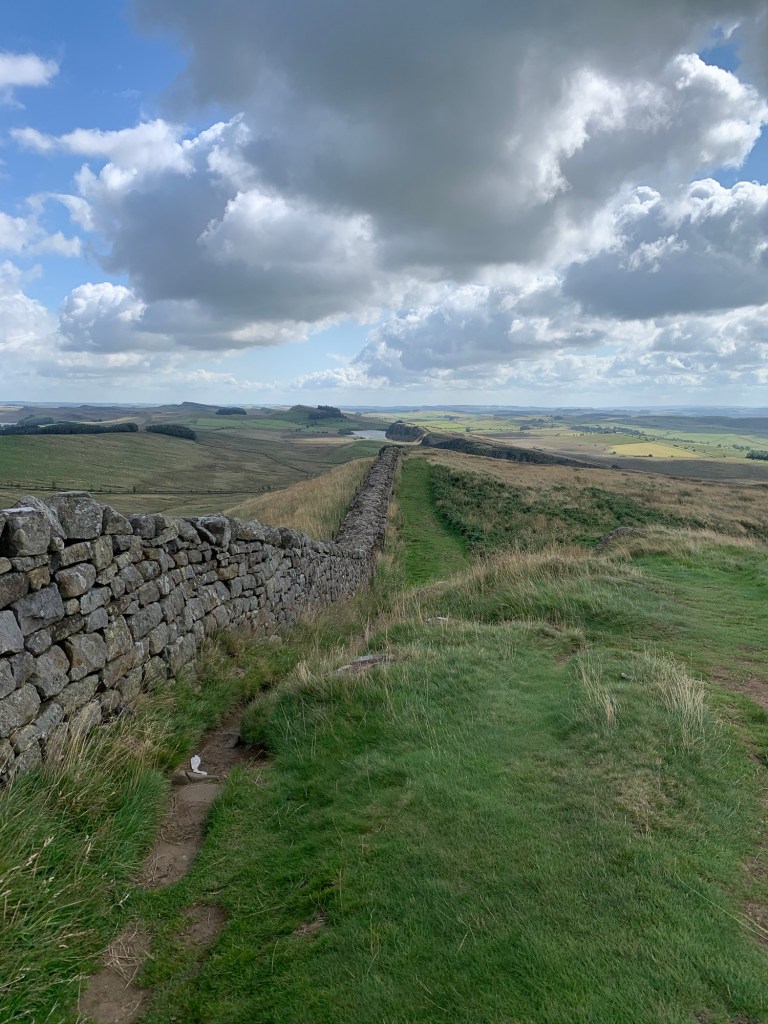
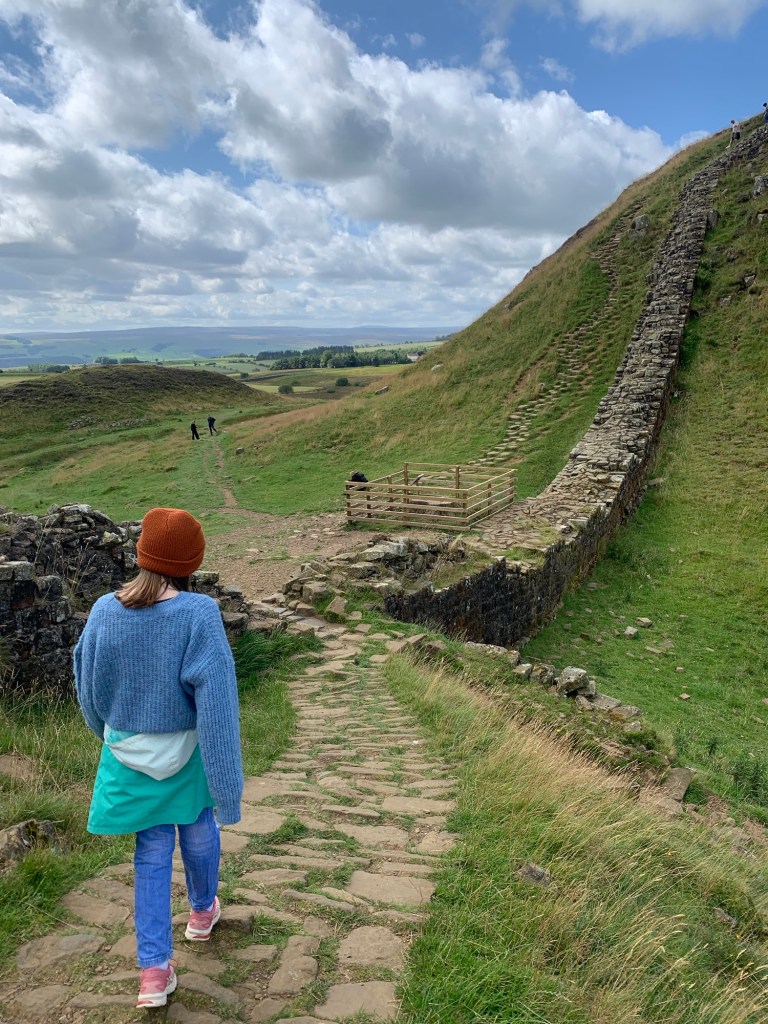
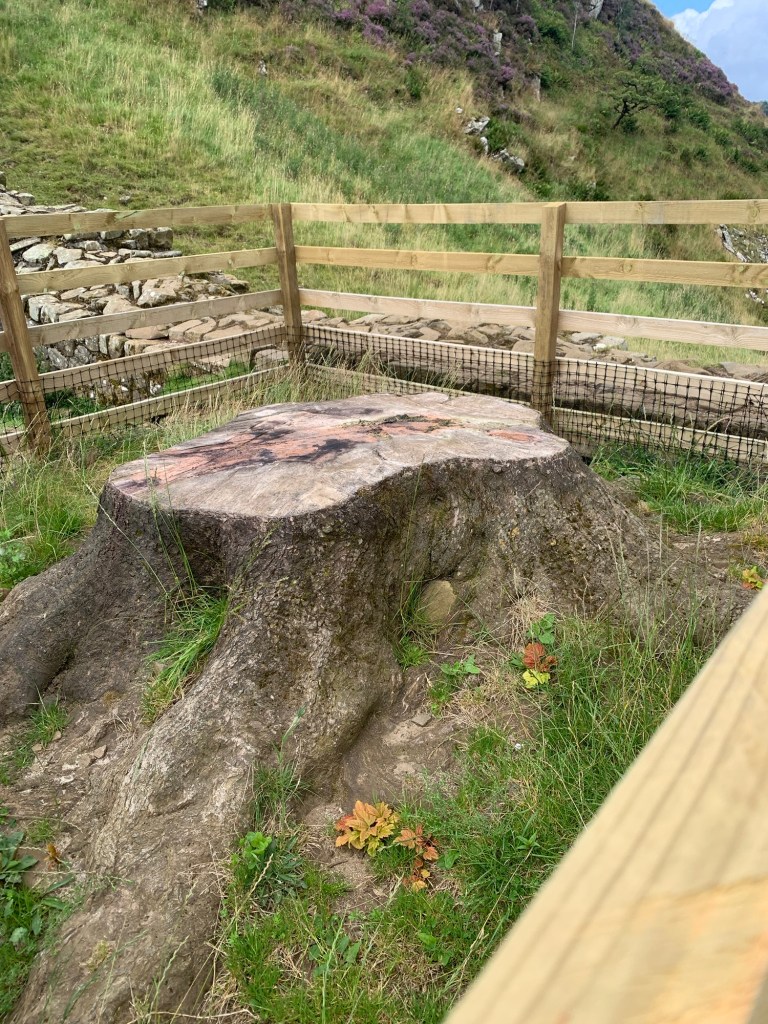
I’ve been trying to move away from photo realistic drawing and painting to putting in more of my own perception and feeling. My daughter and I walked from the campsite following Hadrian’s Wall to the Sycamore Gap, where we payed our respects to what is left of the original tree, and we’re delighted to see new shoots coming up from the stump. From there we dropped down for a welcome rest at The Sill Visitor Centre before taking a walk back along an old Roman road track to complete a circular walk to our campsite.

Feeling tired after our walk (about seven miles) I was delighted to discover that there was a tin of fresh coffee in the hut and settled down into the sunshine with my drink to make an acrylic sketch in my journal.

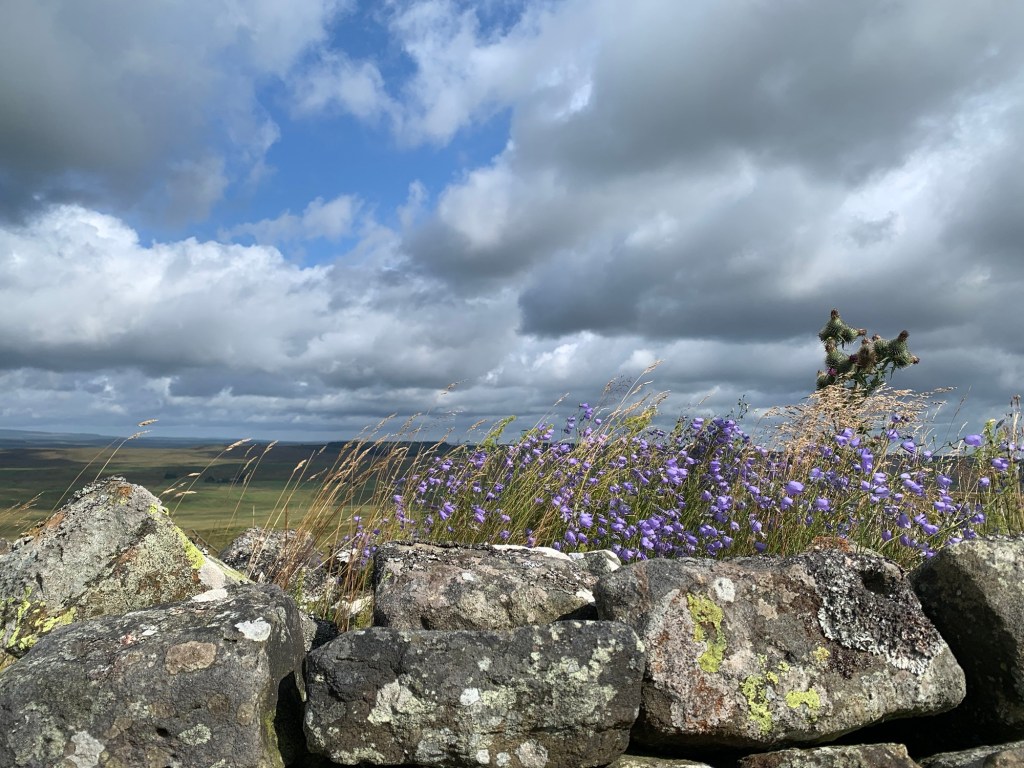
I had taken photos along the way, but decided to paint one image etched in my memory, which I remembered as beautiful purplish blue stones with a huge clump of harebells growing behind it. I set myself the challenge of painting from memory rather than using my photo for reference.

I was really surprised to find how different the colours were in my actual photo opposed to how I remembered them. However this was a good lesson about perception, colour saturation in photographs doesn’t necessarily capture the essence of what we perceive and feel of a scene. It’s a bit like writing down a description of somewhere using only fact opposed to building in layers of feeling. We are all drawn to certain colours, scenes and views – as we are certain words and language. Does it matter that my sketch wasn’t 100% accurate? Not at all. It captured how I felt in that moment.

When I think of some of my favourite painters such as Bonnard – the use of colour is vibrant – almost glowing, vivid and ethereal. To progress in my work I think I need to work from imagination, with sketches and photos for quick reference, but with an emphasis on trusting my instinct and feeling to capture the moment, to showcase how I perceive the world.

I recommend this challenge to anyone interested in stretching their skills in painting and in developing their own unique style. It also made me think of my brilliant friend Bridget Wilkinson who creates amazing art of the North East Coastline in a very distinctive way and colour palette.

Hope you enjoy the challenge!

Walking the Cleveland Way Part 1.

Growing up in Staithes (in my opinion the most atmospheric and beautiful village in the world) the Cleveland Way was a regular feature of my life. The path runs through the village and along the spectacular North East Coastline running all the way along the coast from Saltburn and ending in Filey Bring North Yorkshire.

I regularly walked along the cliff paths to the next village of Runswick Bay, often doing the first part via the rocks at low tide as far as Port Mulgrave which is a stretch of evocative and raw coastline rich in fossils and steeped in history. In the opposite direction we could walk along Boulby cliffs to the alum mines – (where you can see the fantastic Miner’s Bait Table sculpture by Katy Ventress, who happens to be the younger sister of a special friend to me), sometimes going as far as Saltburn along what was the old railway line and past the iconic charm bracelet sculpture, there is a great blog post about that here.

*Links to the Miner’s Bait Table and the Charm Bracelet Sculpture blog posts from the brilliant https://www.realyorkshireblog.com which I have just discovered and look forward to exploring further!

Walking the full Cleveland way was something that I always dreamt of doing, but have to admit (and assumption is the mother of all cock ups), that I wrongly assumed it was a full coastal route. Discussing this with some friends a few months ago, we decided that we would endeavour to walk the route in sections as and when we could, from start to finish. It was then that I discovered the route actually starts in Helmsley, before looping in land and meeting the coast at Saltburn and completing the part that is well known to me.

We completed stage one during June, with 10 of us in total. Two families with five children between us and one grandparent. Starting at the acorn sculpture by the Castle Carpark in Helmsley we ventured off into the hills and spent a beautiful day enjoying the scenery, stopping to picnic by a stream in a meadow full of wild flowers. Having a range of ages (the eldest kids being 16 and the youngest 8) we let the older ones set off ahead of us with walkie talkies and a map! A brave move – that payed off, allowing them to forge ahead but also ensuring we all stayed on the right track.

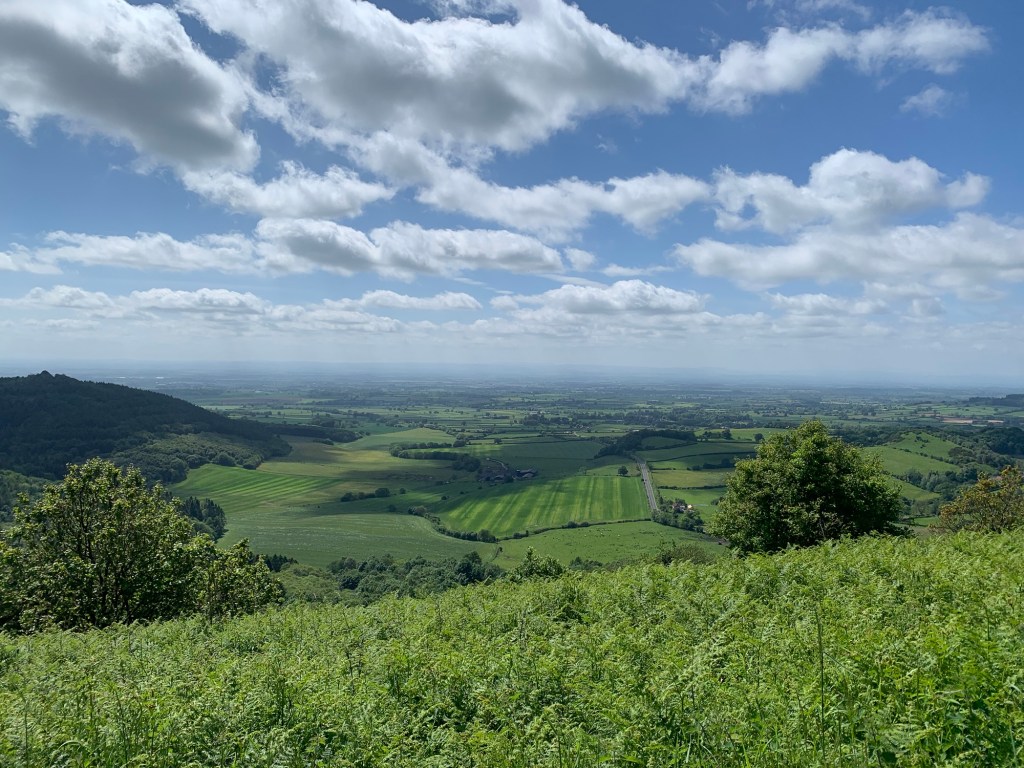
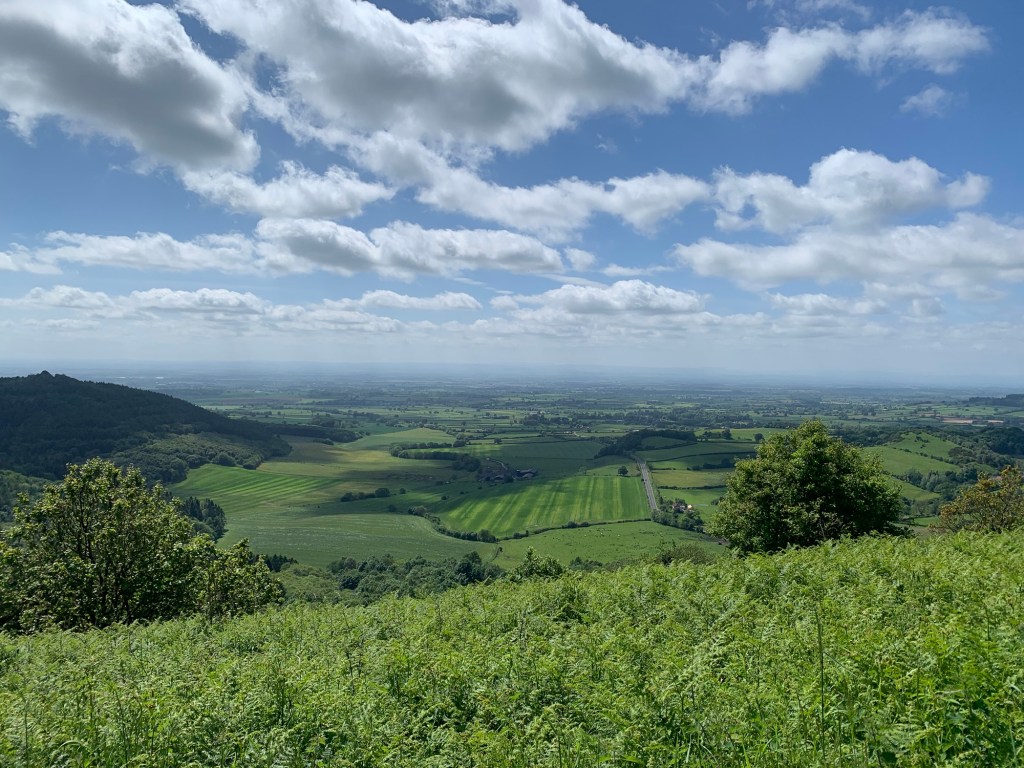
We decided to end the first stretch of the walk at the Sutton Bank Visitors centre, but made the dog loop end part of the walk to stand above the White Horse at Kilburn – this added on another mile or two and some very tired children – but it was worth it for the view! We also all loved watching the gliders take off. I’m not sure when we will complete part 2, it may take us many years to do the whole thing – combining busy family calendars and different challenges along the way, but that’s part of the fun – to have our own little walking collective and shared ambition. Most of all, we loved enjoying this amazing landscape right on our doorstep.

The stunning view above the White Horse of Kilburn, Easingwold.

Creativity breeds content…

It’s been a very busy year so far between my day job, PHD and running nature writing courses for the brilliant Field Studies Council. Family life has been busier and more hectic than ever with one of our children completing GCSEs and lots going on in the wider family.

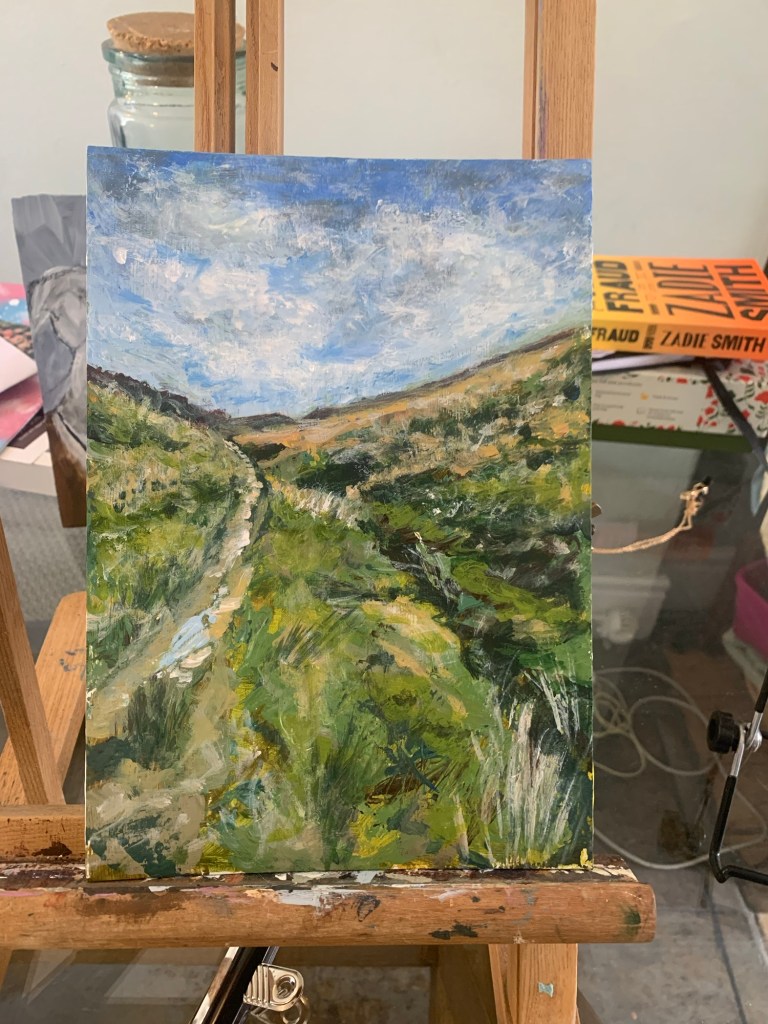
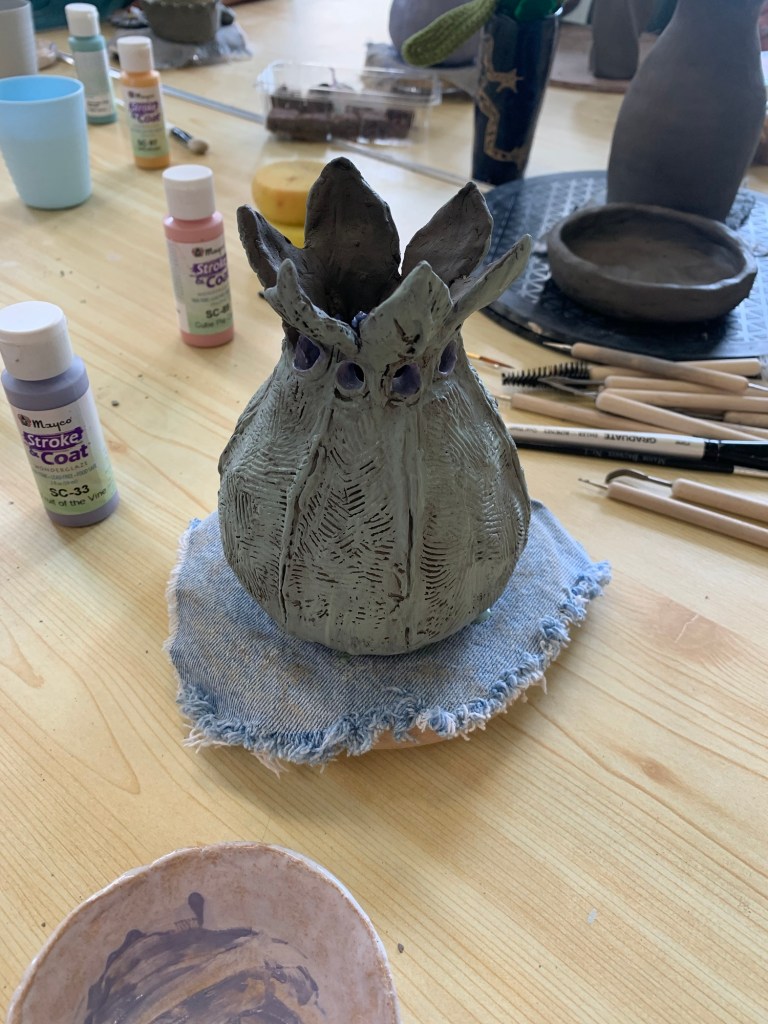
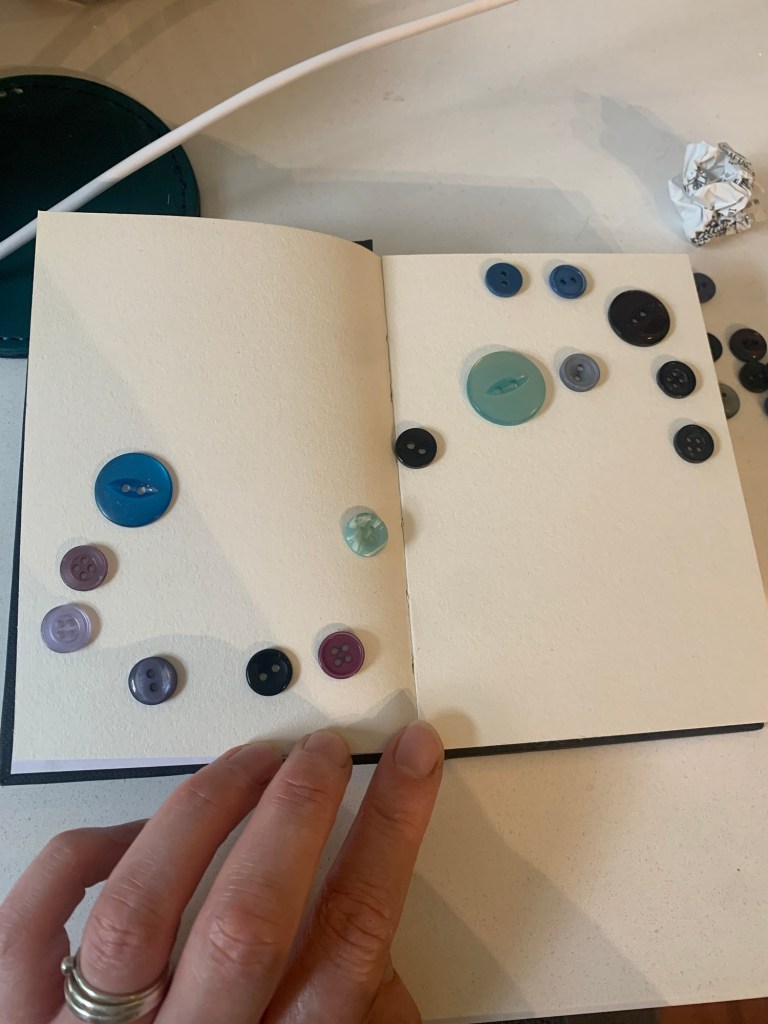
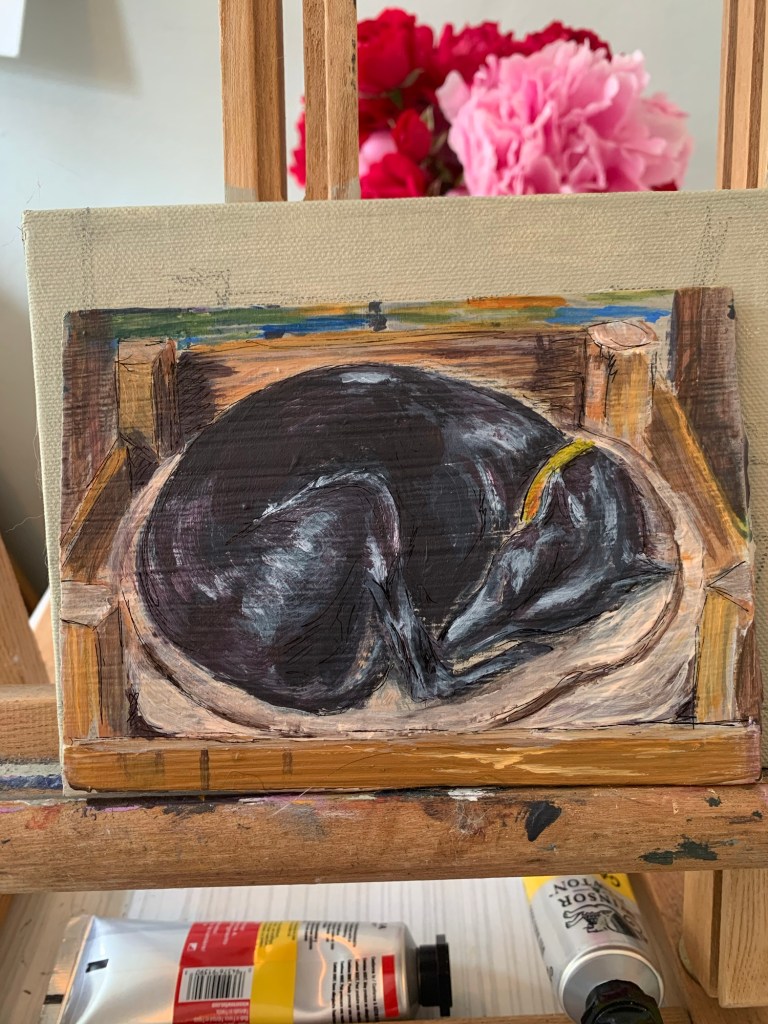
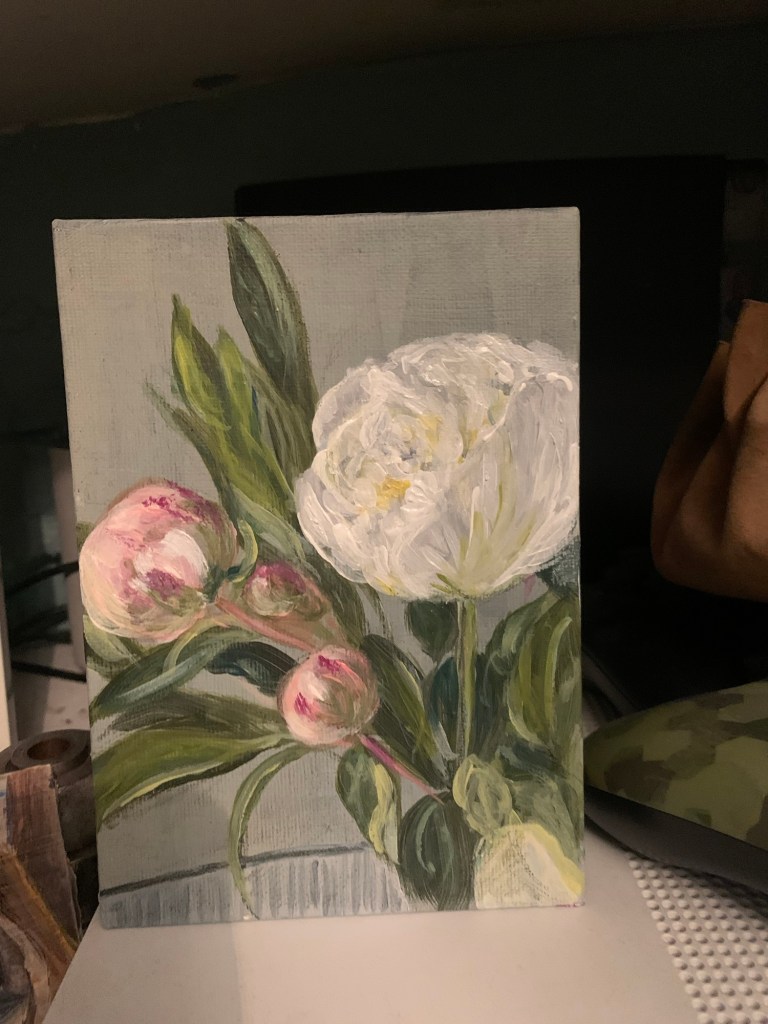
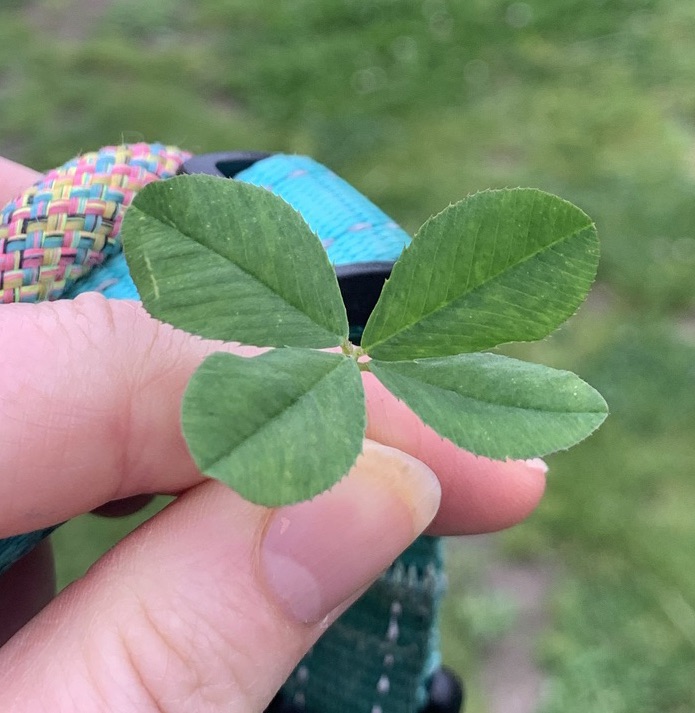
I’ve been using the little slices of spare time to do some acrylic painting, button art and I went on a very awesome one day pottery workshop with my daughter, courtesy of the brilliant Jessica Jenyns. I also recently found a huge four leaf clover when out dog walking … that’s got to be a good sign right!?

Reflections on the Perspectives of Nature Conference

Notes on the importance of collaboration and connection.

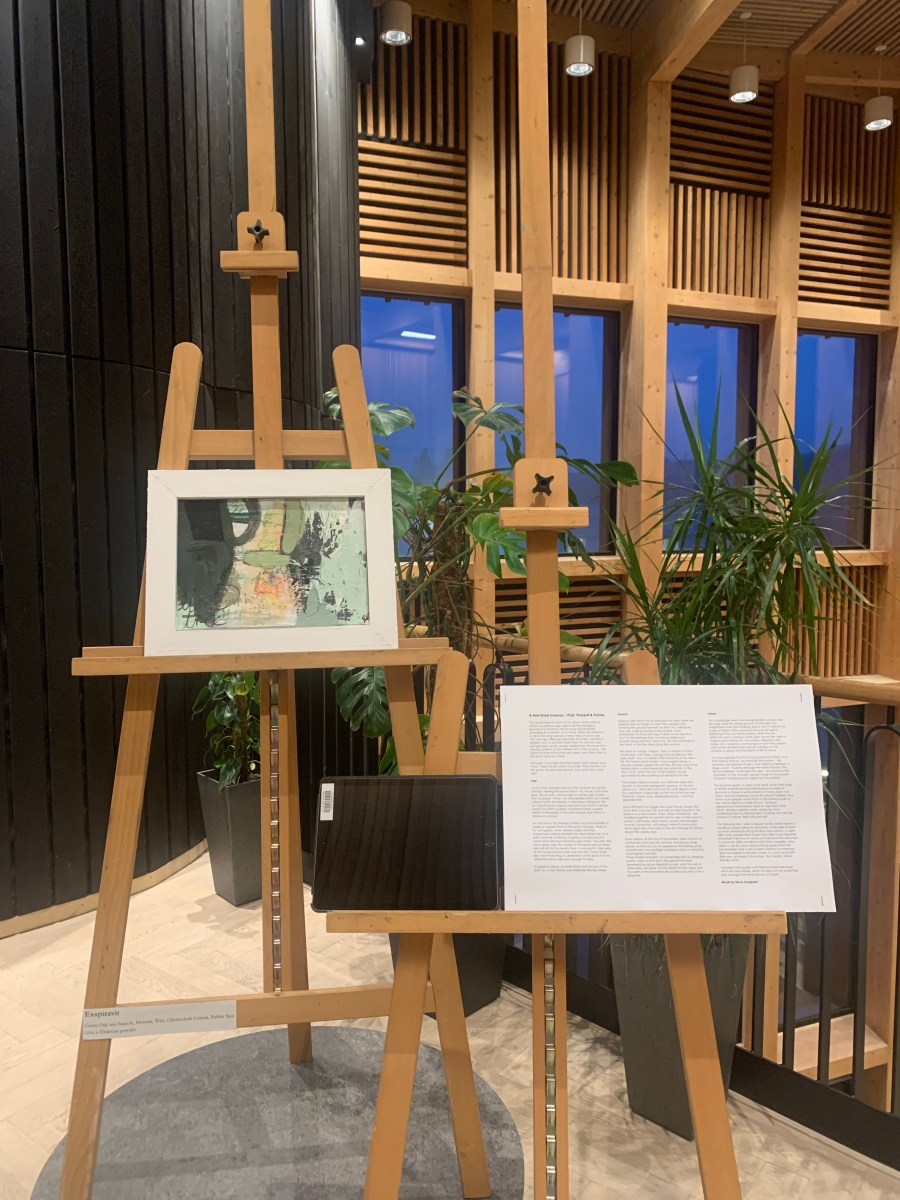
Last Friday on the 1st of December I was standing on a stage at the Creative Centre at York St John University in the heart of York and something magical happened. As I read aloud my observations of the natural world on stage, a musical score began playing, bringing my words to life. I was participating in an event called Perspectives of Nature, a collaboration between myself, Ewan East (Currently studying for a PhD in Music Composition) and Alice Baxter (Currently studying for a Practice based PhD Fine Art and Contemporary Poetry) .

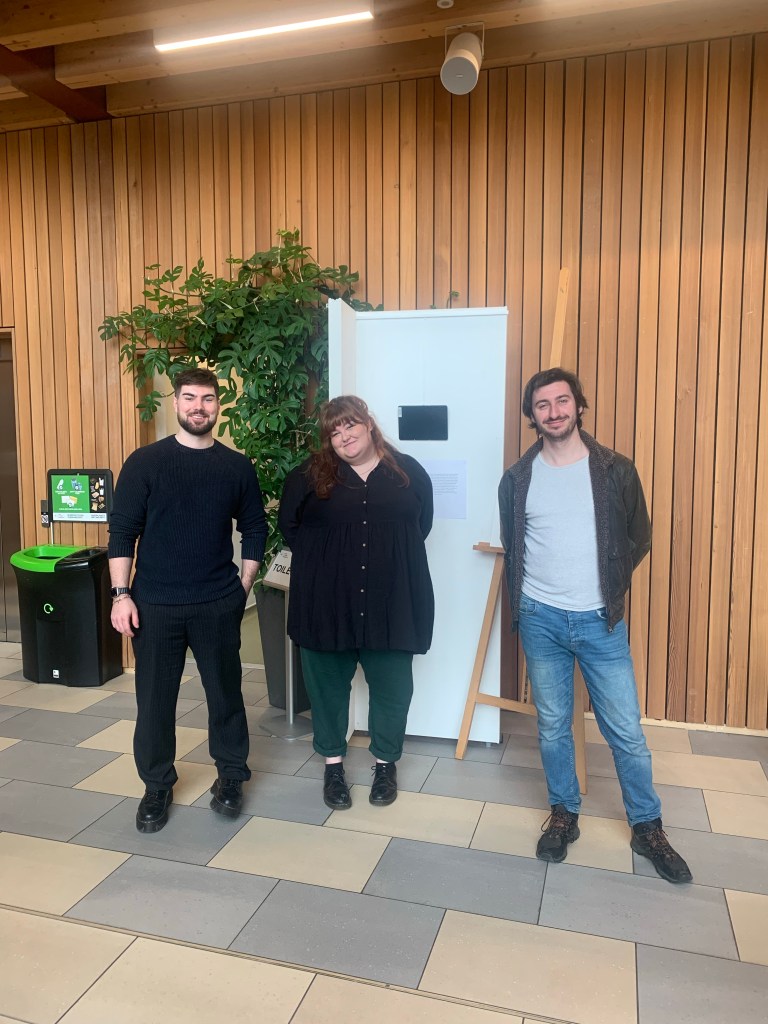
Me and Ewan opening the Perspectives of Nature event.

Last February I and a group of nature writers (from the Naturewrights collective) produced some written observations of the natural world for composer Ewan East. Ewan was was looking for inspiration to compose a collection of music that drew on the natural world and took the listener on a journey of their own creation, travelling through the music to different areas of the country to experience observations of nature.

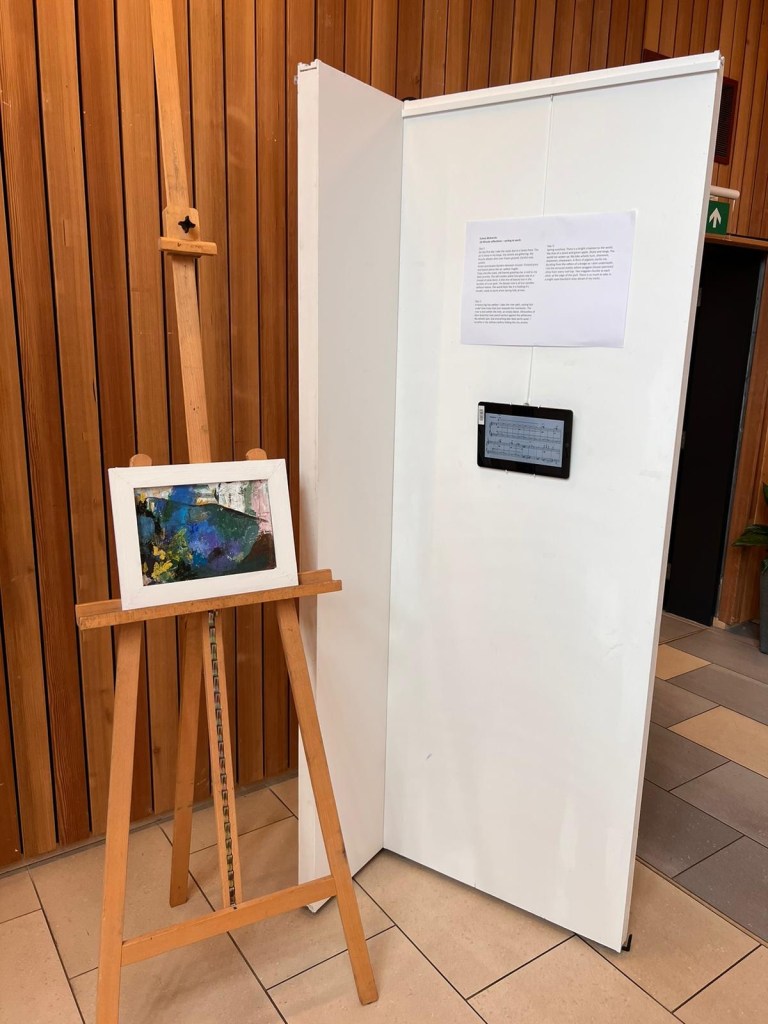
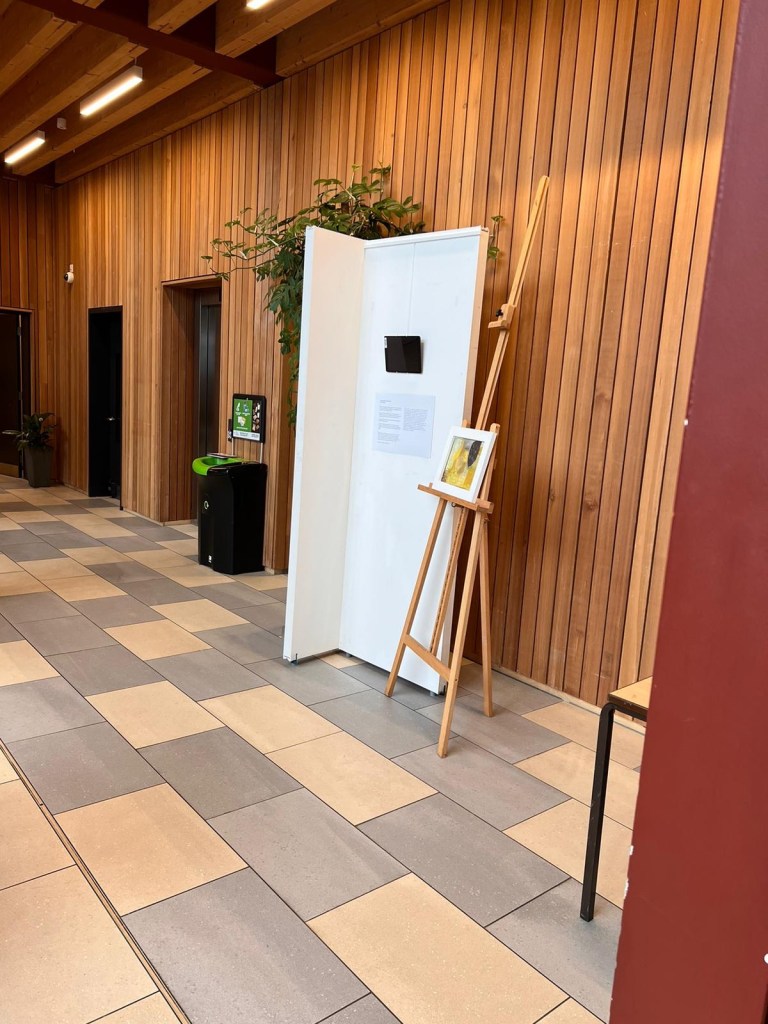
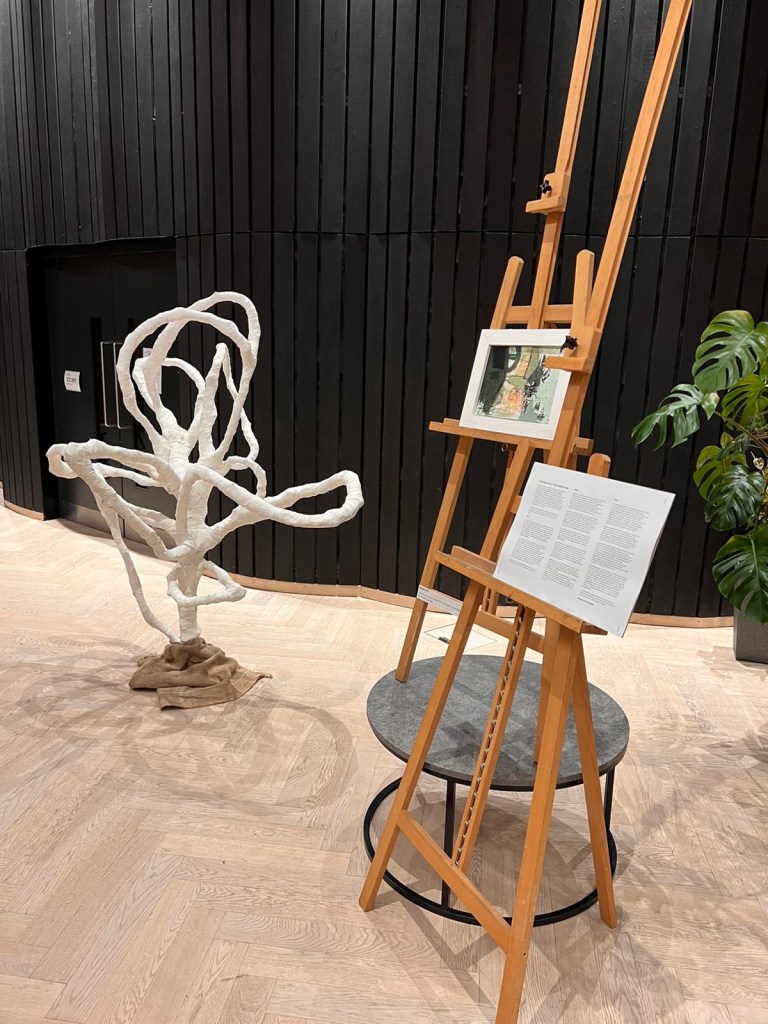
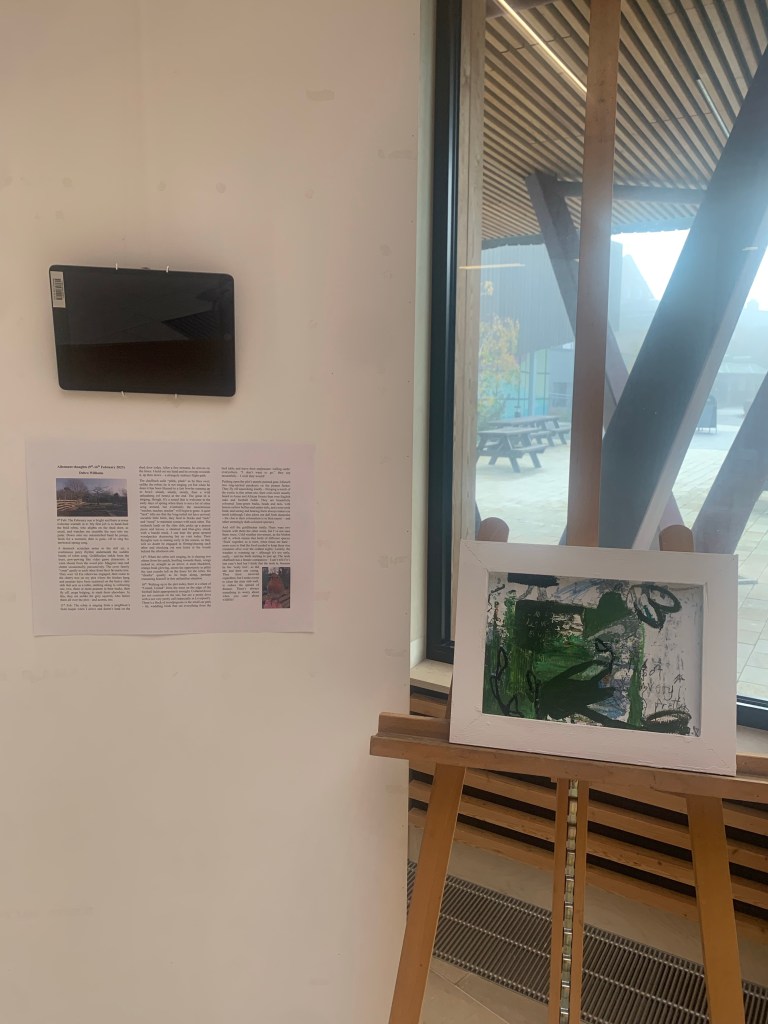
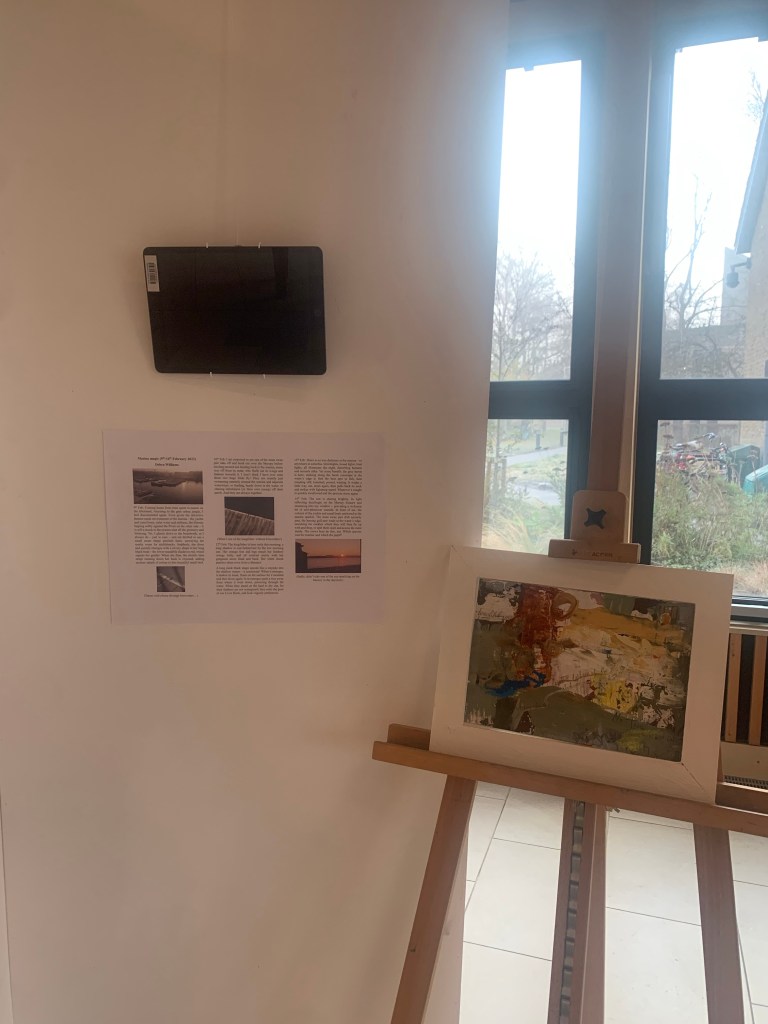
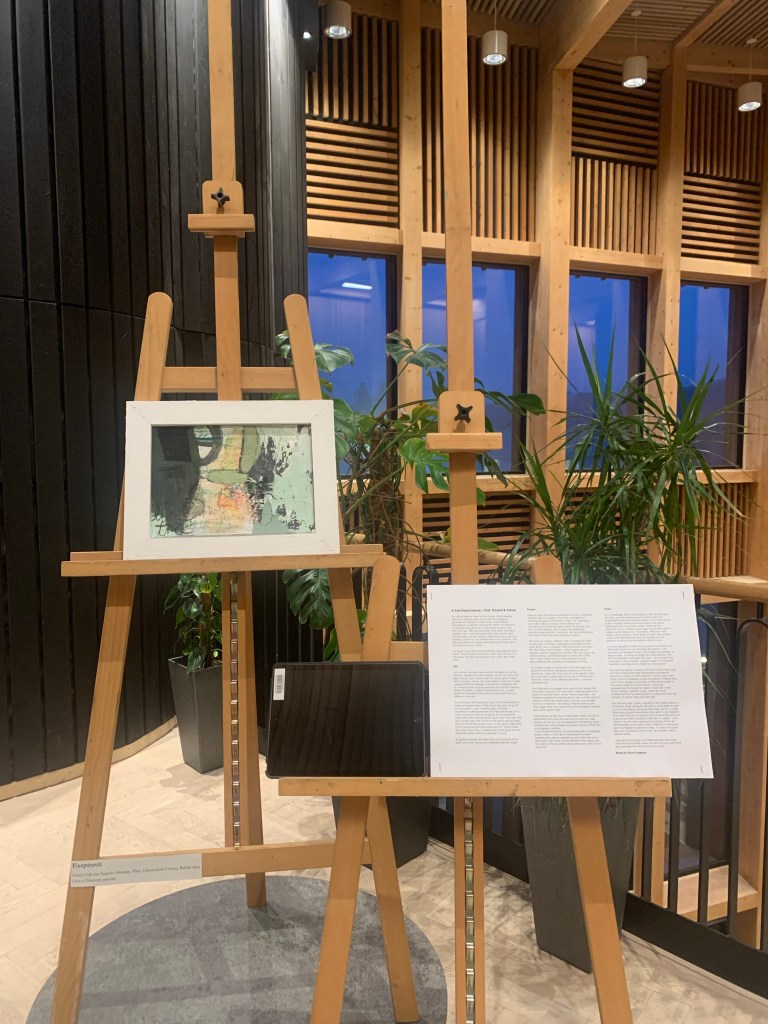
My piece of writing and Alice’s art. The iPads played the musical score for each piece of work giving the viewer a rounded experience of the moment.

Ewan took our words and translated them into a musical score called Journey. He then asked artist Alice Baxter to take the music and words and translate them into Art. The end result was a beautiful and 3D collection of music, words and art that recreated the awe of interactions with the natural world and that we showcased at the event Perspectives of Nature, which was beautifully curated by Simon Ellwood. Journey showcased encounters that in our busy modern lives we so often fail to notice. The music touched my soul, a visceral moment of awe and spirit brought to life.

Alice’s art touched my heart, abstract patterns and colours, patterns etched onto board with paint and mixed media that transported me back into nature.

I started teaching Nature writing during 2015 after I left a very stressful role in the NHS. I offered my services on a voluntary basis to teach ecotherapy nature writing to support people struggling with mental health illness to make a deeper connection to the natural world as part of a recovery journey. When I started running the classes I had a love of both writing and nature but had no formal training in either. However, through the months and years of running the class I found that using writing as a tool to connect people to the landscape transformed both mine and my class participants connections with the natural world, and opened up how much nature can play a huge part in our lives – even living in a city.

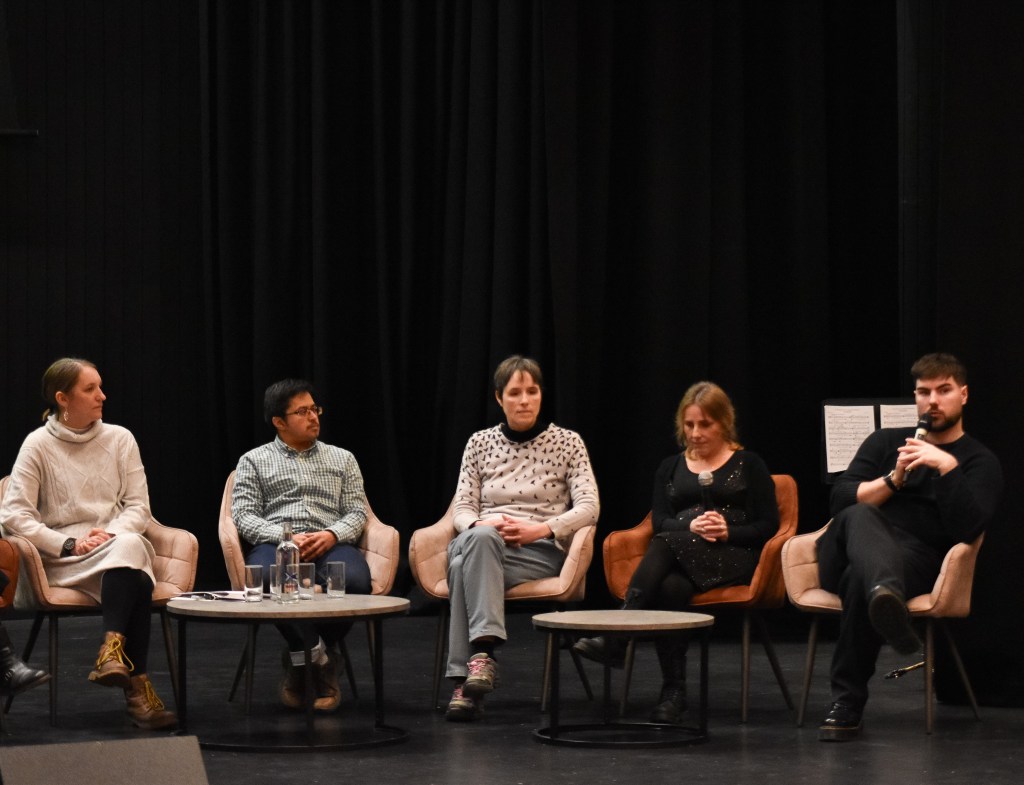
The panel of Naturewrights writers and Ewan East

Leading the ecotherapy class and using narrative to explore themes of nature, such as the beauty of nature in the dark winter months started to open up a world of exploration. Through storytelling and creation I became curious about so many natural wonders and my sense of awe and connection increased. That journey led me to complete an MA in creative writing and now a practice led PhD. My PhD is looking at the desperate need for humanity and compassion to be at the forefront of mental health care. I am writing a novel that takes the reader through a mental health experience, demonstrating that good mental health is about spirit and connection, so much of which is stripped out by clinical processes and environments. Somewhere we have lost who we are, and we have lost our roots. Continued engagement with nature writing and collaboration has been key to keeping my own mental health in balance whilst studying this theme.

Something beautiful happened at the end of the conference. A friend who has been struggling with depression sat with me in the audience to watch Michael Malay read from his amazing book Late Light. My friend said to me at the end of the performance that being part of the event had been like being part of a community for the day, and that he felt there was something that he could take away in terms of connecting to nature independently, but still feeling connected to others as part of that relationship.

Ewan, Alice and Simon.

Nature is providing me with the opportunity to re-engage with others in a way that celebrates awe and wonder of the world. I wonder if more people engaged in this way how differently we would spend our time and consume things in this world? 

One of the most wonderful things that has happened time and again since I have been teaching nature writing is that I have been approached by students who say:

‘It’s not the same now Emma, I have to introduce my family and friends to walk like you, they just want to rush by everything.’

What they mean by that is that by spending time noticing, they have formed a connection and a curiosity that wasn’t there before.

I engage with nature as an act of non-violence and stillness, a spiritual experience which can be as simple as a nod to the trees that line the river on the cycle path to work, or the moment of noticing two blue tits hopping from branch to branch in the honeysuckle that is growing from a pot in my city back yard. I spend time writing and creating art out in nature, a meditation on my place in the world and my connection to the landscape. I recently read a fascinating blog post by Ellen Vrana in The Examined Life called Stillness As Art in Times of Chaos: Toni Morrison on Art as Human Necessity. 

Vrana has drawn on the writing of Toni Morrison and others to investigate how we react to chaos and trauma. Varma discusses the way that Toni Morrison has described an answer to violence and chaos as stillness, the act of creating meaning and understanding. This was echoed during our conference by Anita Sethi who read form her book I Belong Here: A Journey Along the Backbone of Britain in which Anita describes how a racial attack on a train led her to walk The Pennine Way as a way of reconnecting with the landscape in which she belongs and as a stance against the violence that she experienced against her.

Collaborating as artists gave me the sense of bringing together and communicating something essential. A translation of the natural world into something beautiful and engaging that hopefully was an awakening or a heightening of that sense of awe and connection for others that attended the event.

Today I teach freelance nature writing for the Field Studies Council alongside leading a project called Converge which aims to support people to re-access education to reclaim identity and human spirit.

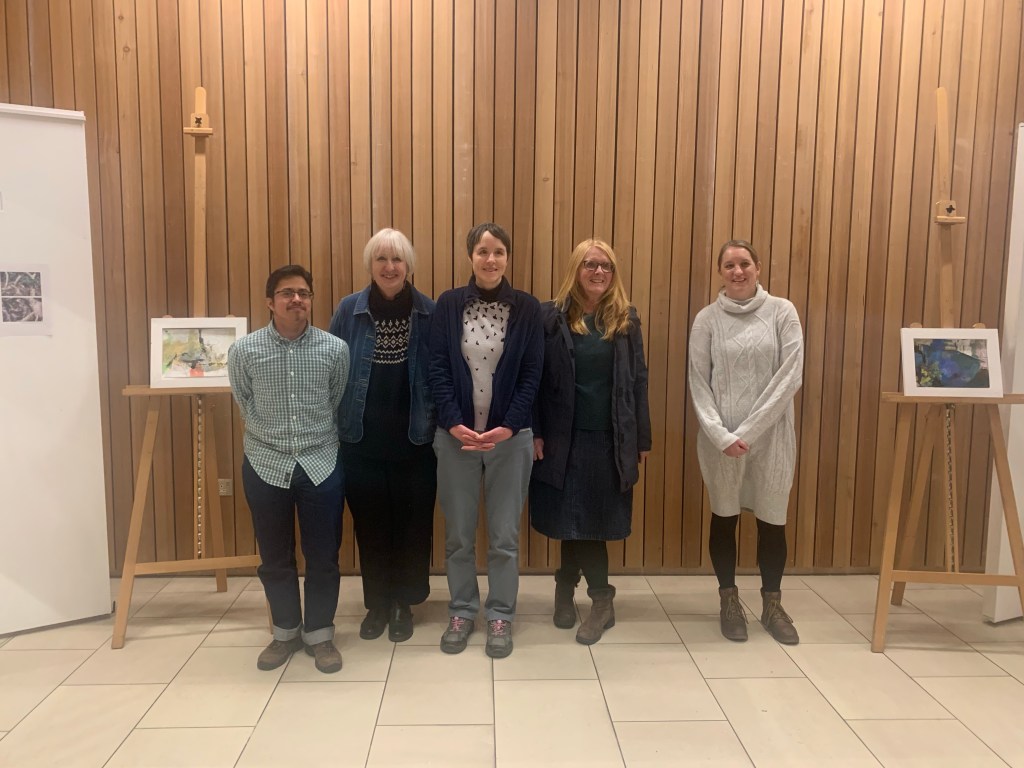
Some of the Naturewrights collective. (Left to right: Gurnam, Nicky, Berenice, Sarah and me)

Continued connection with nature is essential to me as part of keeping me well and grounded, if you are interested in engaging with the work that we produced you can experience Journey here. Last Friday was the first time that I had met with the writers from the Naturewrights collective in person, we have been working together online after the group originally formed from one of my first cohorts of students with the FSC. The Perspectives of Nature conference has opened up my eyes to how much more can be done to re-connect people with the natural world through the arts and humanities, and to the raw and beautiful power of creativity in giving a voice to so many and to our experiences in the world.

Thank you to Ewan for making this event possible and creating such inspirational music to accompany our pieces of writing and to Alice for the beautiful art work and to Simon for helping us to curate the event and to make it happen.

With huge thanks also to:

William Davidson for chairing the Perspectives of Nature Panel.
Claire Hind for chairing the contributions.
Michael Malay for his brilliant end note speech and reading.
Anita Sethi for sharing her work.
Max Stephens - Performing Seasons

Contributors:
Dr Carolyn Drever
Berenice Tregenna
Amy Ertena
Stephen Jackson

Last but not least - my wonderful Naturewrights contributors:
Nicky Hutchison
Christine Surridge
Berenice Tregenna
Sarah Drysdale
Dr Carolyn Drever
Kate Ruth
Debra Williams
Steven Songhurst
and Gurnam Bubber for joining us to read Steven’s work.

All the Gear and No Idea…

As a teenager I had a Saturday job at a surf shop. To be fair, it was more that a family friend humoured me- I didn’t do much work! I loved hanging out on the beach and helping out hiring out the surf boards and wetsuits. My sister was an avid surfer (actually making it on to the British surf team at one point), but I’ve always preferred drinking tea and cuddling the cat (a young fogey as my 90 year old friend lovingly calls me). But I did understand what I was talking about, I knew something about surfing and the geography of the beach. Occasionally you would get someone turn up with ‘all the gear and no idea’ as we would say. Keen as mustard, but before giving it a proper go has splashed all the cash on the image rather than learning the skill.

So….that’s how I’ve felt owning a very fancy Plein Air painting box. It was gifted to me by my Dad a few years ago, when he (like me) decided the comfort of his sitting room was more appealing than standing outdoors for long hours. He had never really used the box, other than the simple pleasure of kitting it out, filling out the little satisfying trays and dreaming about all the wonderful art that he might create.

The box has sat dormant in my house. A layer of cobwebs lining the grooves, the metal trays inside shop bought new and gleaming. A pristine layer of kitchen roll lining one, and a dried up roll of masking tape in another. I’ve been worrying that my skill level isn’t good enough to use it and instead spent at least four years dreaming about ‘one day’ when I might be ready.

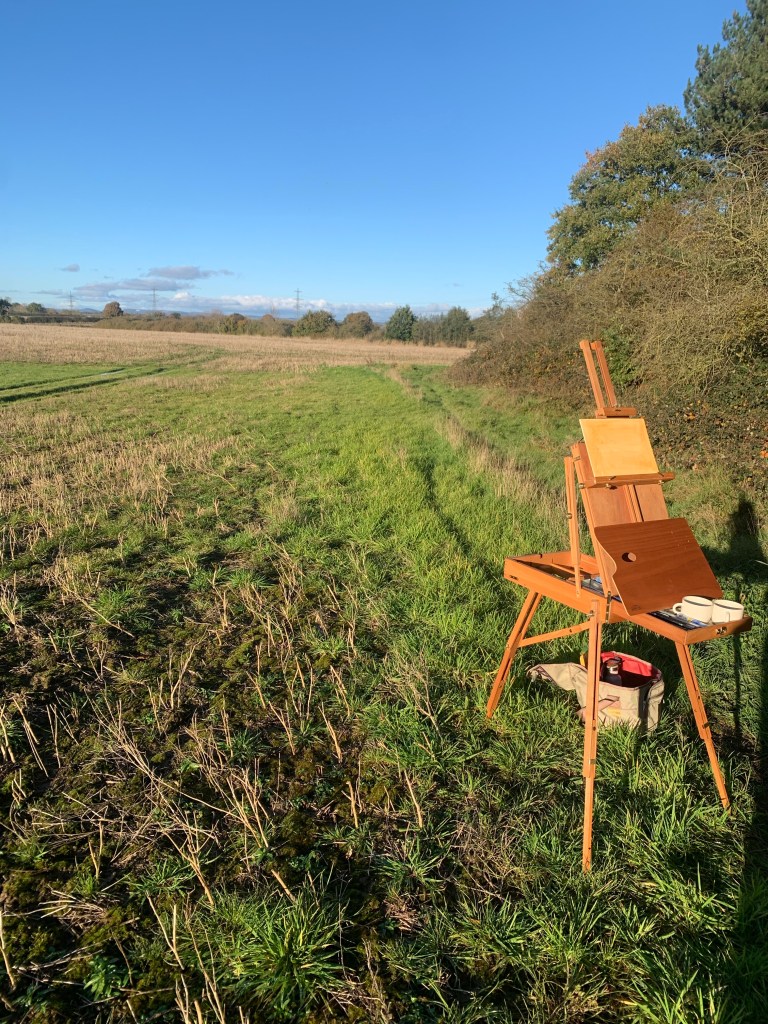
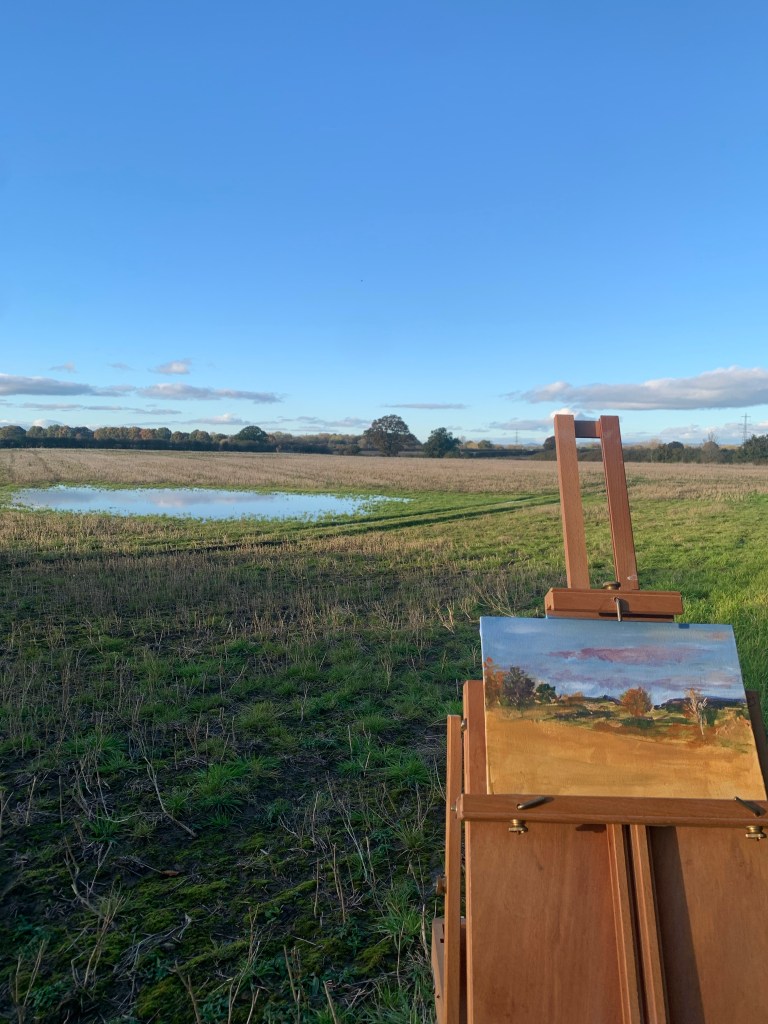
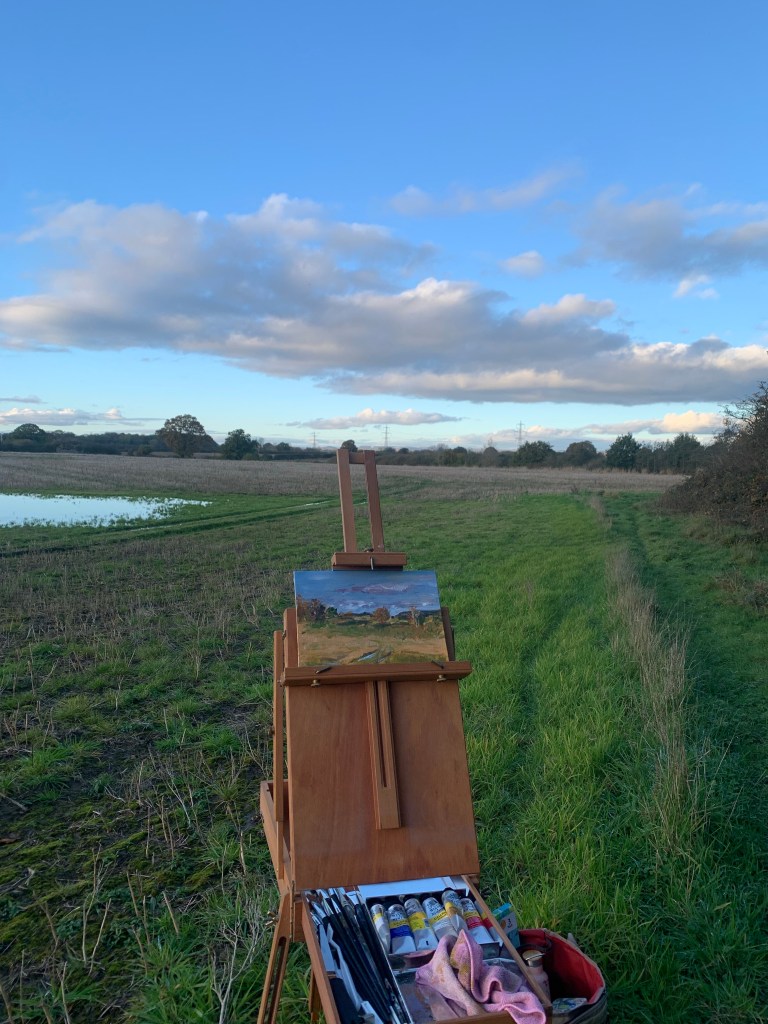
So this morning, I was brave, I cleaned the box up, removing some shrivelled spiders in the process. Knowing I had an afternoon to kill while my son is at a Forest school, and also knowing I could paint in privacy – away from the judgement – I decided to christen the box and give it a go.

I can now proudly say, I have the gear… and some idea. Still a way to go, but I thoroughly enjoyed every minute 🙂 I am going to finish the painting at home, I will post it up here when I do along with some of the things that I learnt in the process, in case anyone else is gearing up to give it a go.

Plein-air painting, a lesson in bravery.

It’s been well over two years since I’ve taken out my acrylics or oils.

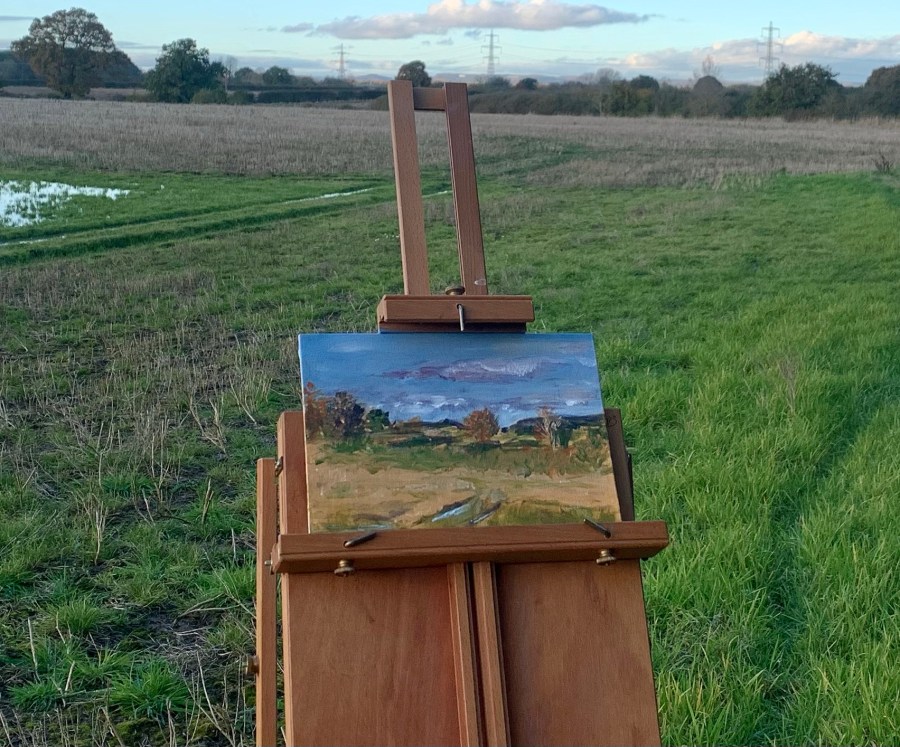
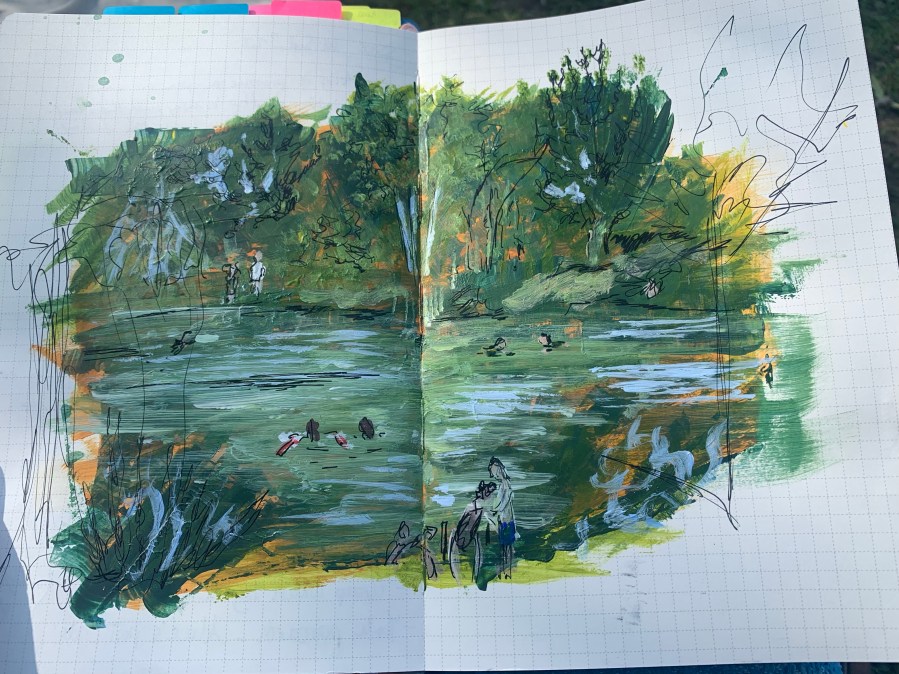
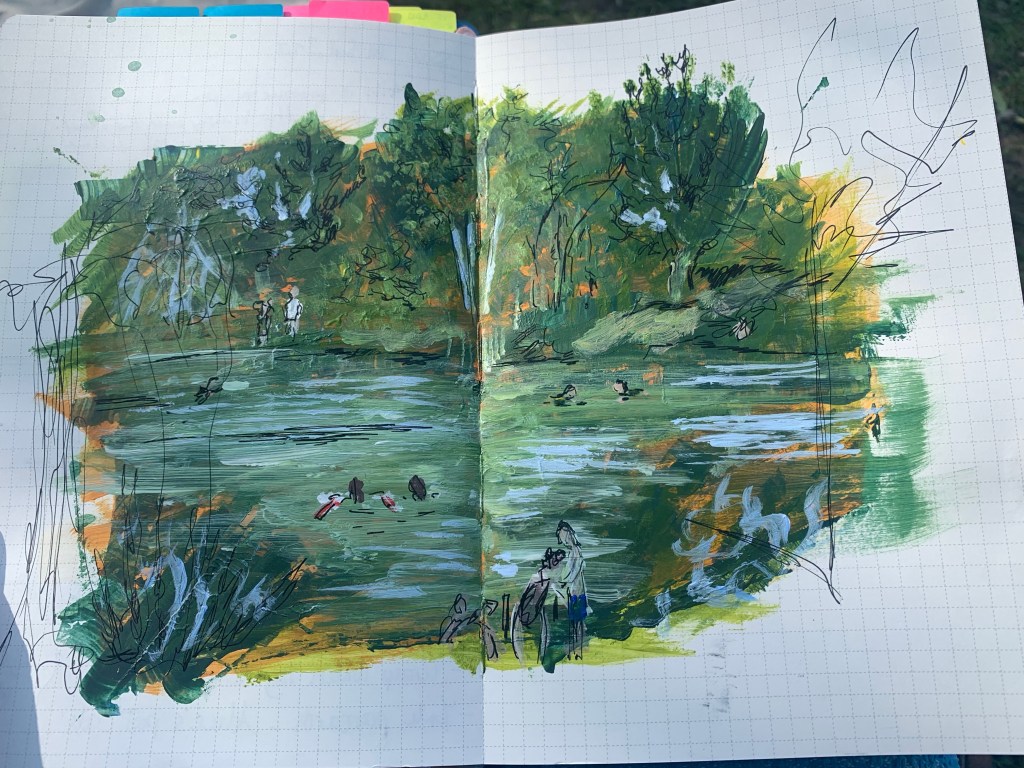
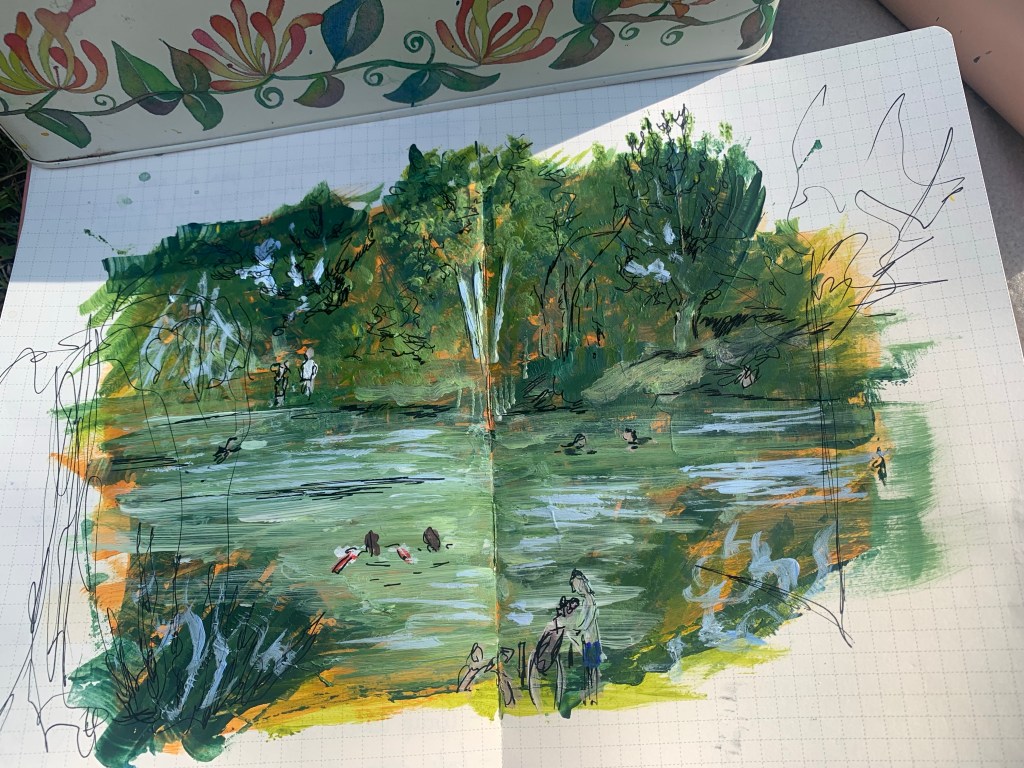
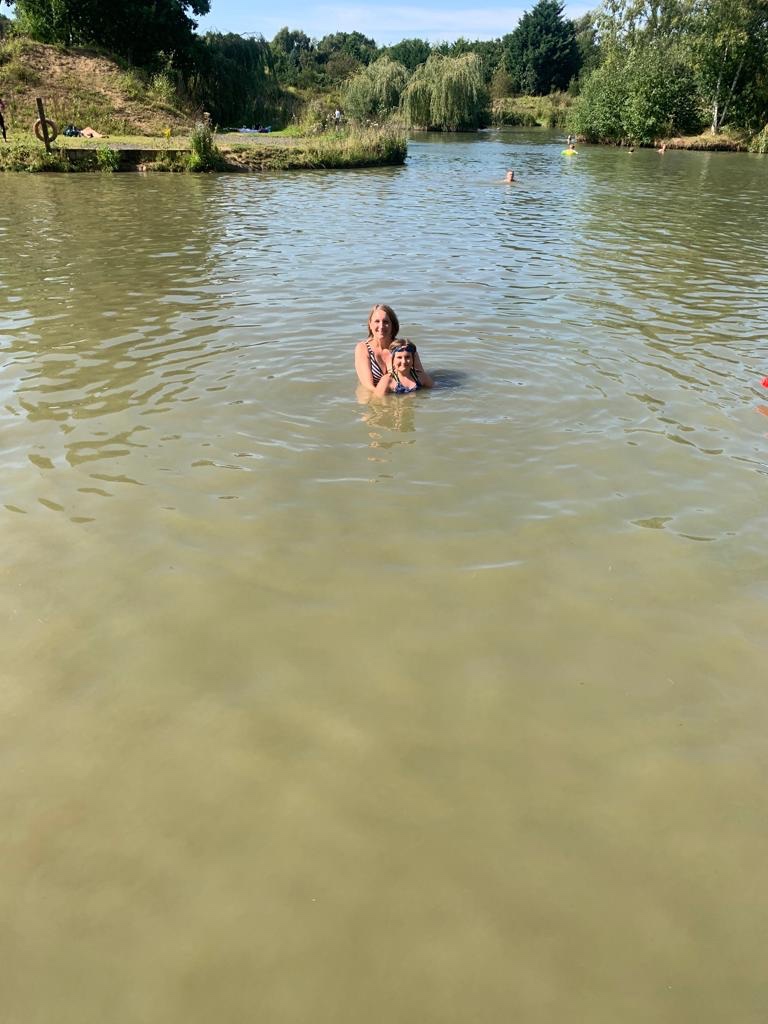
There’s also a big difference between painting from a photograph to painting a scene outdoors in situ. Today we visited Pool Bridge Farm for some wild swimming and I took my acrylics to dive back in head first to painting.

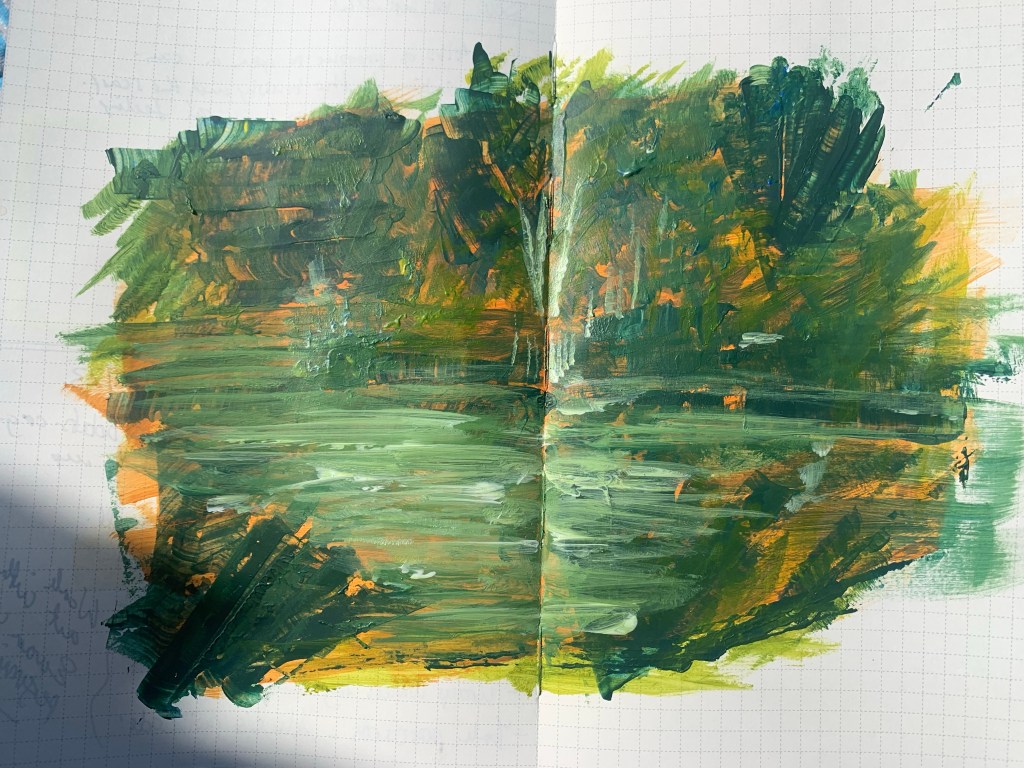
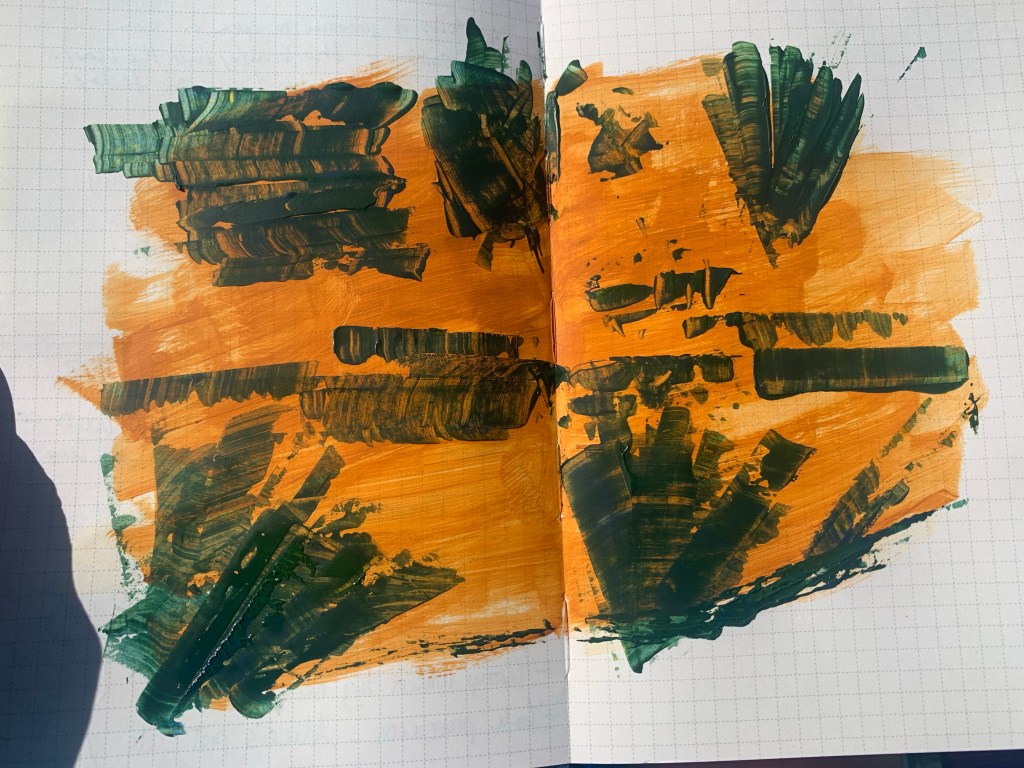
The hardest thing about painting outside is other people’s curiosity. I try and see it as a positive thing, but when you put down your undercoat and first blocks of shadows – it can be quite daunting when passers by are giving you funny looks (work down the pics to the last one – which is the first stage of my painting!).

Final sketch (I used titanium white for final highlights – which in hindsight was a bit much, I was going to work into it further at home, but sadly some of the paint stuck tog on the journey home and tore the sketch).

I’m always very heavy handed with oils and acrylics – I had also forgotten how quickly acrylics dry (note to self look into products to extend drying time).

I’m pleased I did it though. Painting for me – isn’t about being gallery worthy, it’s about relaxing and absorbing a scene, appreciating every detail.

It’s amazing how tiring it is trying to concentrate on painting. It makes you appreciate the skills of great artists who spend hours in the studio. This kept me entertained for well over an hour. At the end I reverted to my pen to add some finer details as this was just a sketch.

I’m glad I did it, and also glad I braved the icy waters for a dip, although I’m going to have to build up some tolerance again!

2nd stage of painting..

End result:

1st stage of painting, using an undercoat – which next time I would lighten, and blocking out shadows with an old credit card.
Braving the icy waters with my daughter 🙂

Crow Encounters…

I’m running a creative writing course in September on The Folkore and Mythology of Wild Birds. I have long been fascinated by the wild birds in the UK. The course will aim to inspire creative writing through learning about Gaelic folklore amongst others.

I have had some fun encounters with crows in particular. A good friend has been adopted by a crow that she has nicknamed Bobby. Bobby flies to greet her on her dog walk every day.

There is also a fantastic crow nicknamed Captain Jack, a jackdaw, which was hand reared by the owners of Pool Bridge Farm wild swimming lakes. He loves nothing more than landing on your head when you are swimming across the lake or jumping onto your lap. You have to watch out though, he has an eye for sparkly things and I’ve heard about an engagement ring and hearing aid recently stolen and deposited in the lake!

If you are interested in booking on my course the details are on my courses / tuition page.

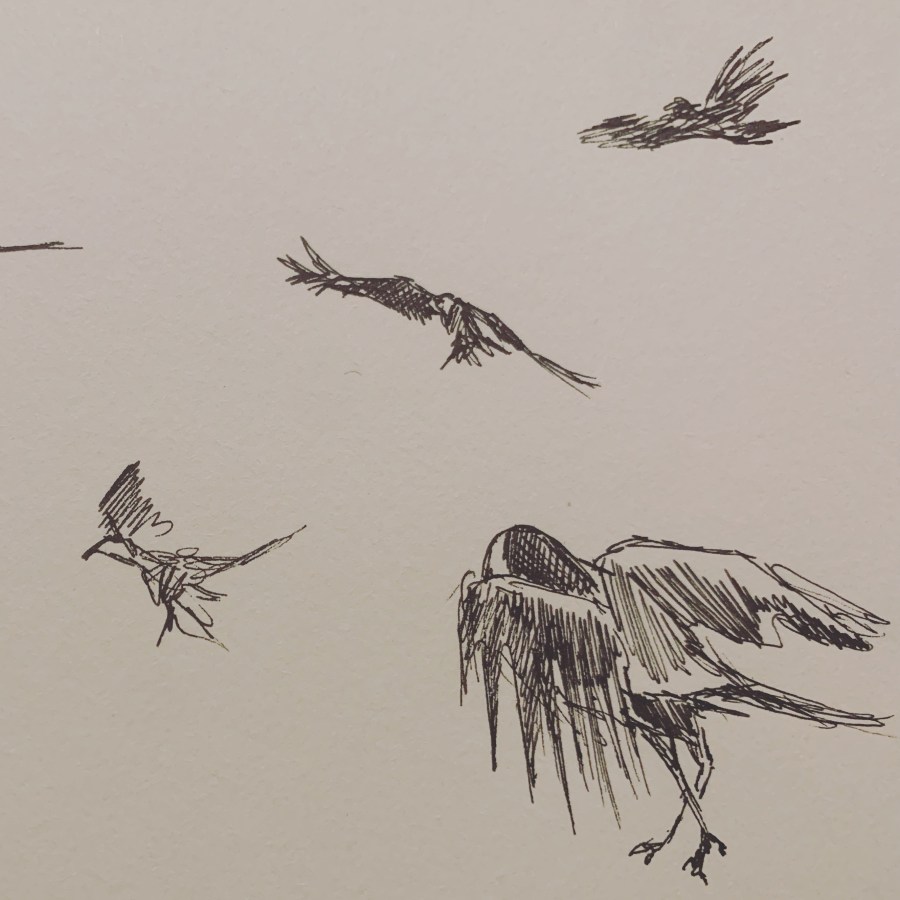
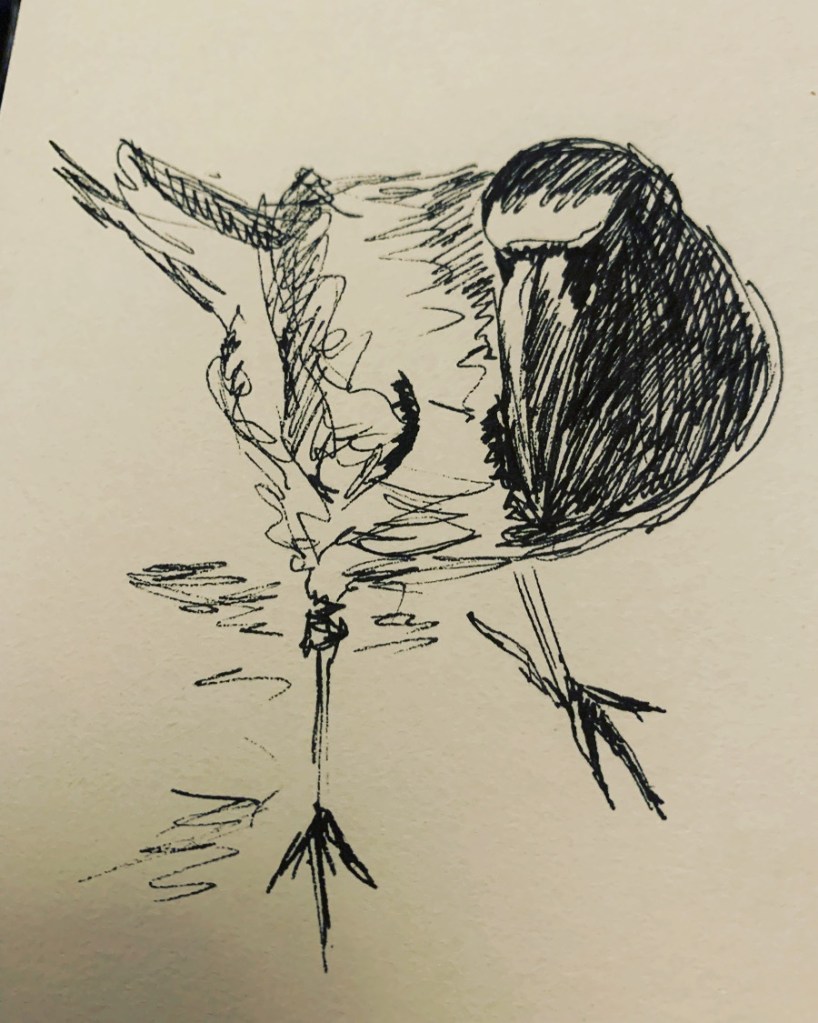
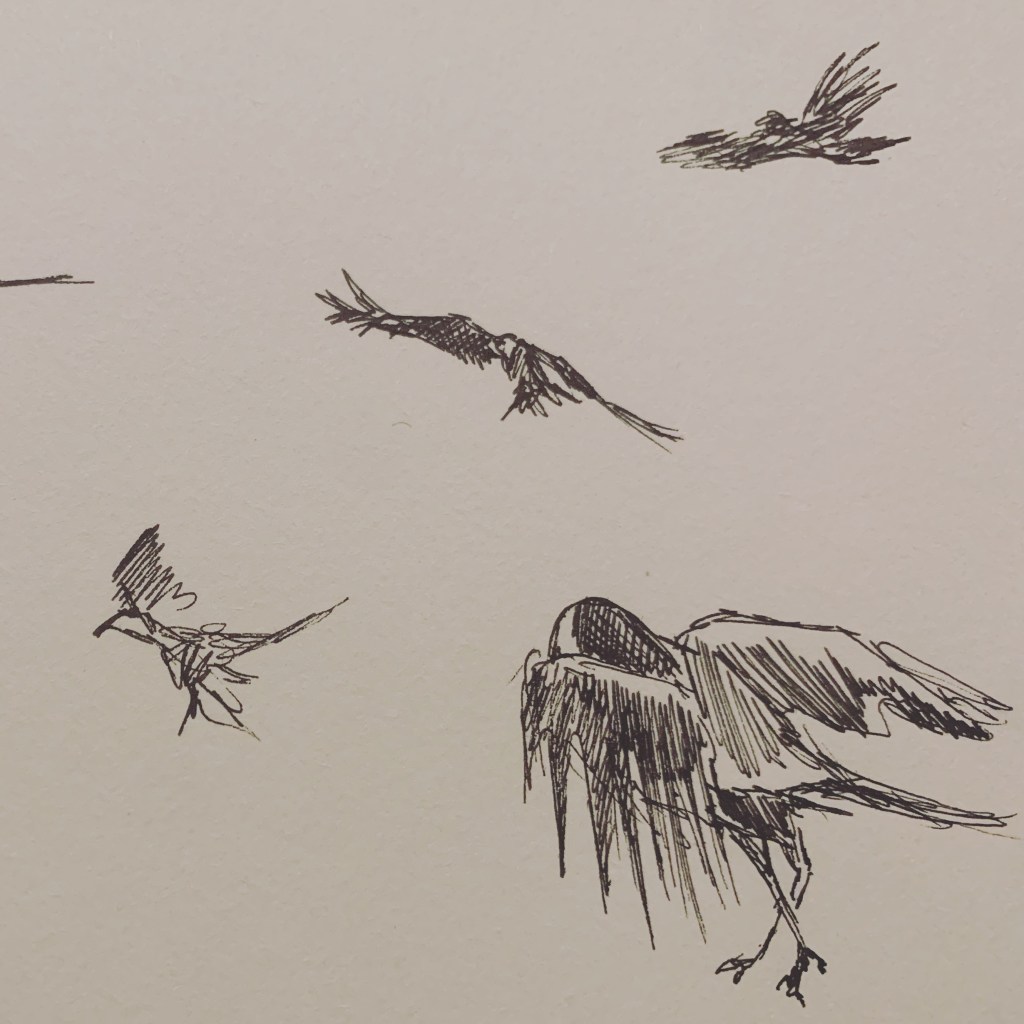
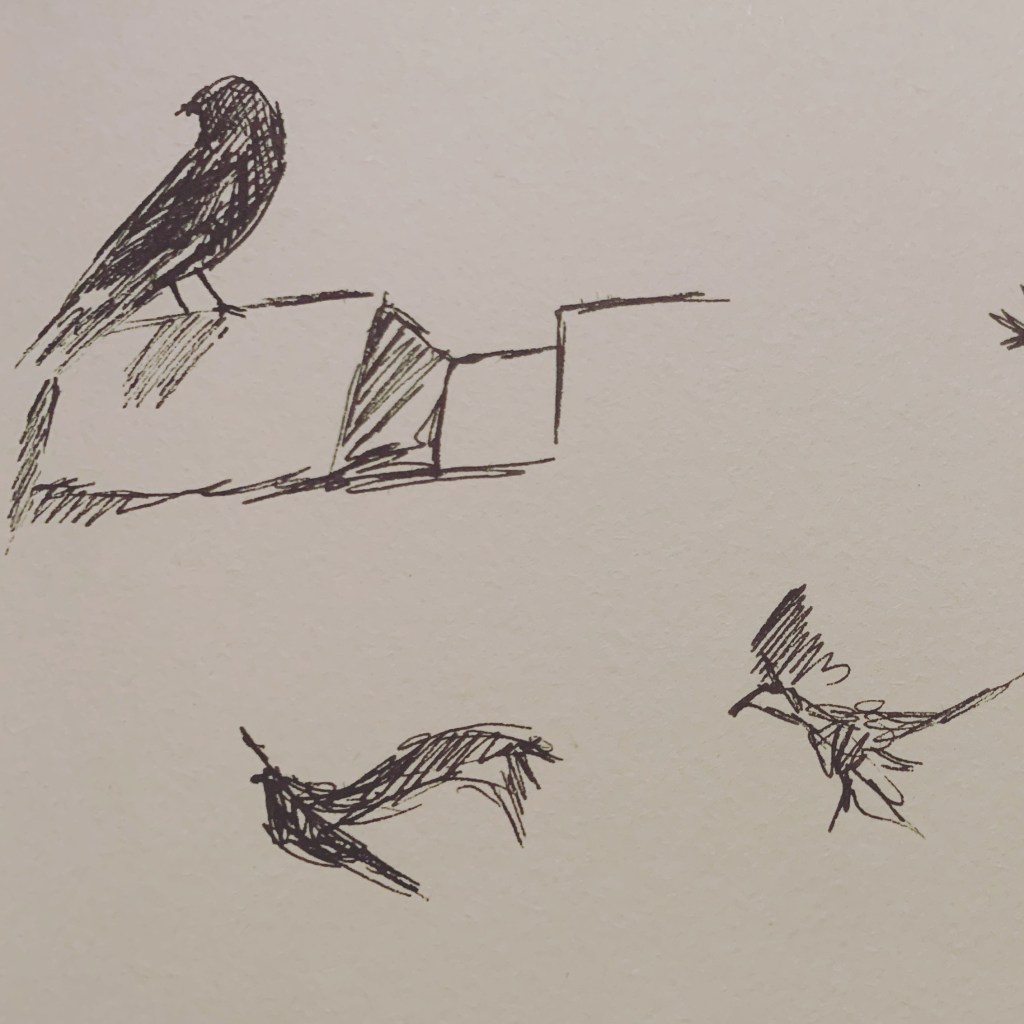
My daughter and I have been sketching crows!

Getting pecked by Bobby

Getting back to Nature…

I recently wrote this book review of Woman in the Wilderness by Miriam Lancewood- so I thought I would share it here, so that if like me you are often trapped indoors, when you would rather be out adventuring – this is a little slice of happiness to dip into as you please.

‘If I really know what it is to live in the great Dao, then it is above all busy-ness that I fear.’ (Lao-tzu)

‘What do you think that means?’ I asked Peter, reading it out loud.

‘Well if you are busy, you’re occupied. Then it’s very easy to lose awareness. Without busy-ness there is time and space to look at yourself, to find a way out of your mental prison.’

Lancewood, 2017

Woman in the Wilderness is the memoir of Miriam Lancewood, a woman who has spent her adult life living in the wild with her partner Peter Raine. Miriam met Peter when she was travelling in India as a young woman aged 21. Peter, 30 years her senior, had already been living and travelling in India for five years, having previously completed a PhD in environmental studies and working as a full time lecturer in New Zealand before giving up everything to travel. Today he describes himself as a writer and philosopher and has been heavily influenced by philosophers such as Friedrich Nietzsche. Miriam completed a degree in physical education and had spent a year working in Zimbabwe before travelling to India, she had also been a top performing athlete in pole vaulting. The pair formed a strong partnership and travelled together across eight mountain ranges in the Himalayas and then spent many years travelling through South East Asia, including Papua New Guinea , before eventually returning to Peter’s native home of New Zealand. With Miriam’s physical abilities and strength and Peter’s calm and philosophical outlook on life they make an intriguing couple with many shared skills that have given them the ability to adapt through many challenges.


Woman in the Wilderness details six years of their travels, focusing specifically on living wild in New Zealand. Reading it filled me with an inner sense of peace and calm. Despite them facing challenges of survival, what this book does really well is to hold up a mirror to modern life, looking at it through fresh eyes. Miriam describes with energy and enthusiasm her love of the outdoors, the feeling of freedom and happiness she experiences when exploring and the way that time stretches when there is nothing to do but get through one day at a time.

‘Can you imagine a way of life so quiet, so timeless, so abundant and full that watching a single leaf fluttering from the trees, lifted into the air by a little breeze, turning silver in the sunshine in the sunshine is meaningful? ( (Lancewood, 2017, p. 88)

Miriam also fills the book with beautiful sharp imagery, such as this small observation of a hare:

‘Its ears would lie flat on its back, its body would take the shape of an arrow and it would effortlessly fly at tremendous speed straight up a steep slope.’ (Lancewood, 2017, p. 200)

When Miriam and Peter travel into populated areas to stay with friends between trips and to re-stock, they question what they see. The frenetic pace of modern life, the strange habits, rules and time schedules of society, the constant pressure, and burdens that we give to ourselves, the effort of interaction when so many expectations are placed on us. It makes you question materialism and how much we actually need, compared to what we think we need, to be happy. The thing that I enjoyed most however, is that they are not purist in their views, they can appreciate a comfortable armchair, enjoy using the internet when it is available to them, relish taking a hot shower when possible, but they don’t take anything for granted and greet everything with curiosity and contemplation.

Dipping into this book over the Easter holidays I felt like I was seeing the world with fresh eyes, although I won’t be moving into the wilderness just yet, it made me appreciate the very simplest of things, sitting out in the sunshine with the cat purring on my lap, a newly opened tulip, an affinity to the natural world. Miriam describes everything in our houses as dead, when everything outdoors is living and breathing. I appreciate what she means by this.

‘Nature provides all the living beings with everything we need to exist in this world,’ Peter said. Air, water, gravity, light, ground, soil, food-everything. Even well-being is provided by nature and beauty.’ (Lancewood, 2017, p. 114)

Reading the reviews for this book some people expressed disappointment that Miriam doesn’t detail practical skills such as starting a fire when the wood is damp, or navigating wild spaces. Some people also commented that the story became monotonous because nothing major happened. I didn’t feel this way at all, in fact I found it hard to put the book down. I felt that Woman in the Wilderness was the perfect combination of adventure and philosophy, it hit the nail on the head of so many of my own thoughts and values and each chapter helped me step into the natural world that I so often crave to experience.

It has inspired me to live more simply, to follow my intuition and above all to continue seeking time in nature, and if I can’t be in nature to connect to the natural world through writing and drawing,  something I am very grateful to the Naturewrights group to inspire me with daily.

To read this book is also to appreciate that we are ourselves just natural beings, and sometimes we need a reminder to slow down, to focus on what is really important and to allow ourselves the time to just ‘be’ in the moment.

‘I understood that we’re so focused on becoming that we miss being, and being is where we all are.’ (Lancewood, 2017, p. 187)

References

Lancewood, M. (2017). Woman in the Wilderness: My Story of Love, Survival and Self Discovery. London: Piatkus.

*Here is my confession – I first stumbled across Miriam and Peter on Channel 5 – on an episode of New Lives in the Wild with Ben Fogle of whom I am a huge fan. They were the most intriguing couple that I have seen on this show, which made me want to find out more, hence how I stumbled across Miriam’s book, a highlight on the show is her making Ben Fogle wash his hair in his own wee! (Sorry Ben – but it was funny!)

You can read more about Miriam here: https://miriamlancewood.com and Peter also has a webpage: https://peterraine.wordpress.com/